The detailed comparison
A closer look at the daily routine, the tools and the limits of each product.
Choose a section
Build today's writing habit before guessing yesterday's reason
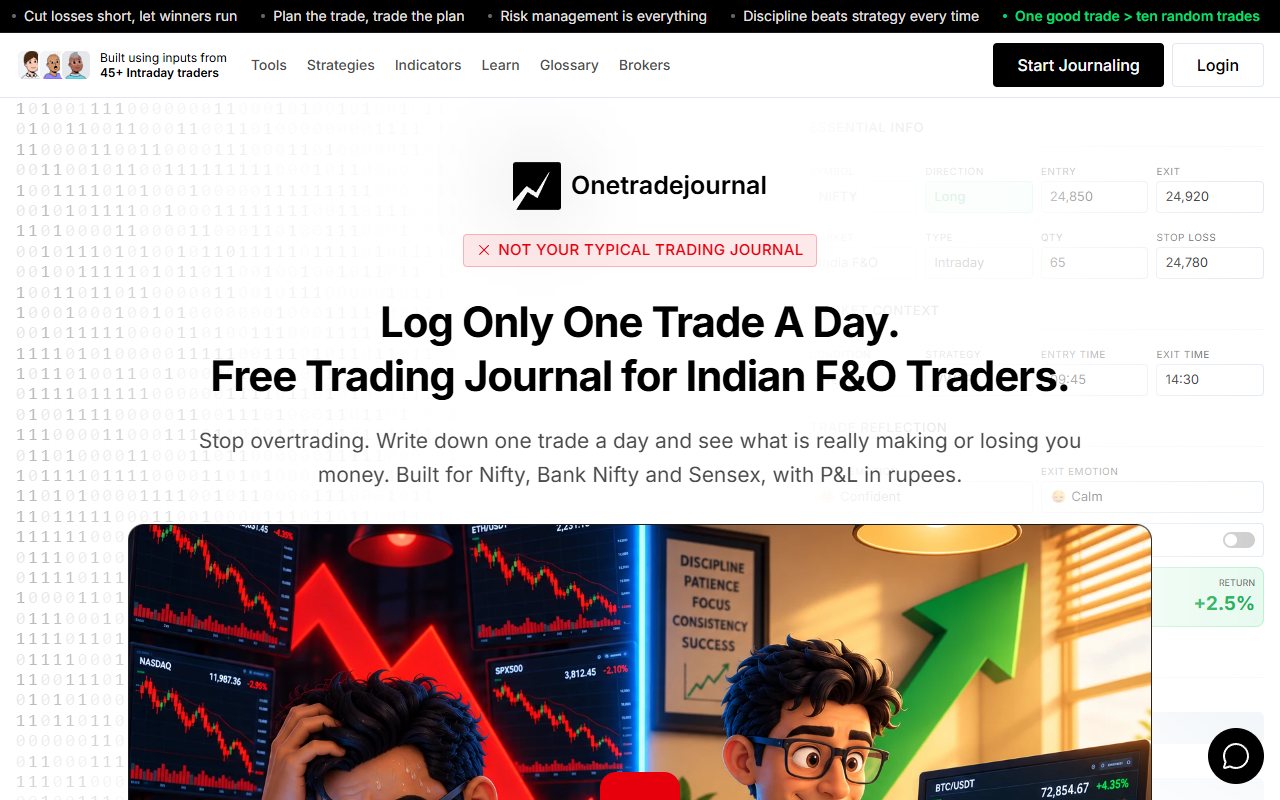
An old trade file can show that your Bank Nifty quantity rose after a loss. It cannot prove why you did it. OneTradeJournal is built around writing one daily trade while the reason is fresh, with emotions and any change from the plan beside the result.
The aim is to notice repeat mistakes, including a rushed attempt to recover a loss. Write what qualified the setup and what made you change the risk. Return to those notes during the next review. The journal cannot stop orders or promise that the daily habit will prevent a loss.
Free OTJ permits one saved trade per day per market. Paid plans allow extra entries. One focused trade is the core routine, not a reason to hide real follow-up trades. Keep a full broker record even when the daily journal begins from a new date.
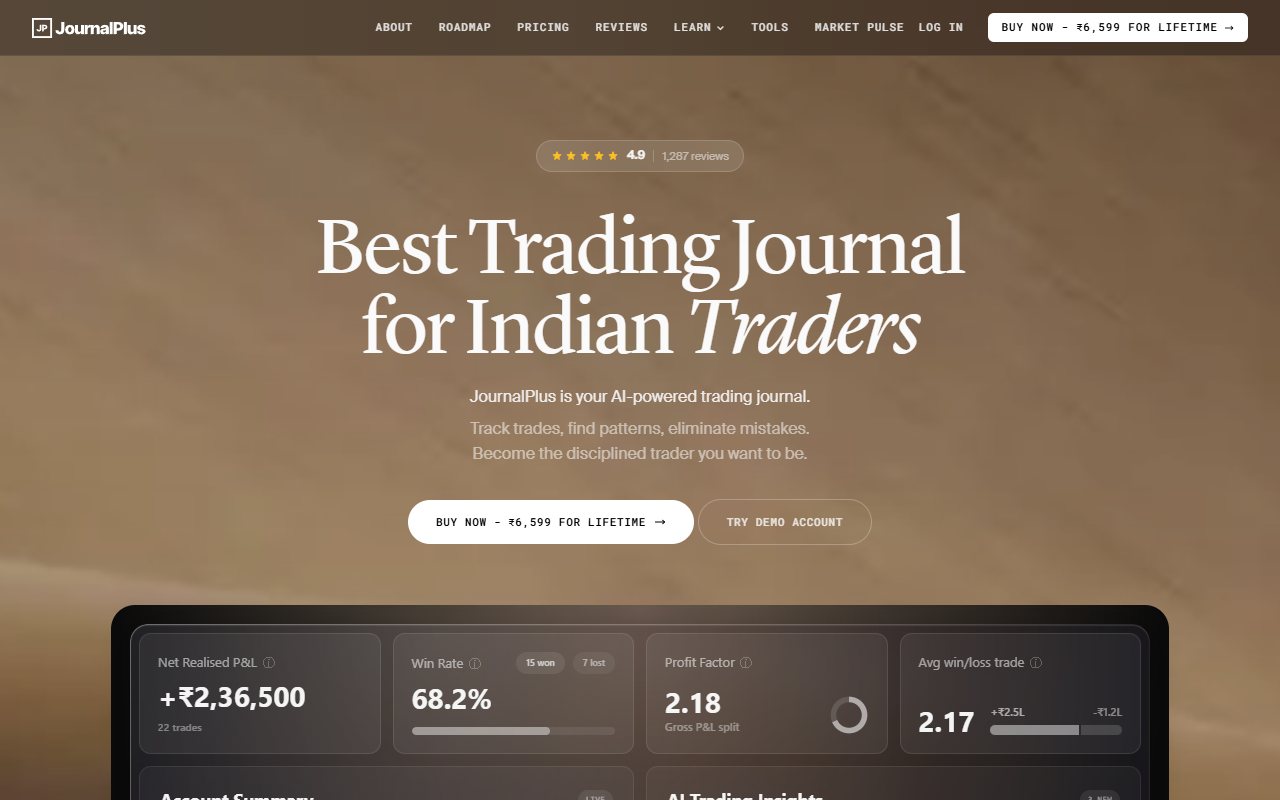
JournalPlus offers another useful route. Its features page advertises psychology tracking and AI alongside imported history. Its homepage lists yearly and lifetime access. Those tools can help if you need past numbers in the review environment.
The comparison is how you build the habit, not whether one product alone offers psychology. OTJ starts with your own manual writing. JournalPlus can start with imported trades, then add the personal context you know. Indian futures and options, often called F&O, are contracts linked to a share, index or other asset.
We checked public sources and OTJ code, without testing a JournalPlus account or importer. Price, history and lifetime access matter, but first choose a daily routine you will actually keep.
Old results and new explanations need separate treatment
A past record is good at showing what you did. It is less reliable at showing what you thought. Months later, you may remember a neat reason for a choice that was unclear at the time.
Imagine a made-up Bank Nifty trader examining a difficult past month. The records reveal several large trades after losing mornings. The trader recalls wanting to recover losses. That does not prove the same reason caused every larger trade.
Keep the uncertainty visible. A note made today about an old trade is a memory. Do not treat it as a note made before entry. The distinction matters when comparing emotional patterns over time.
OTJ is well suited to building a new daily writing habit from a clear date. Enter the trade while you still recall the reason clearly. Use the broker history as the financial starting point without claiming that the shorter journal covers your whole trading career.
JournalPlus can be attractive for a trader who wants the historical numbers inside a review environment. Its features page includes psychology tracking and AI insights. It offers more than just trade totals.
Ask how you will add reasons to the imported numbers. If you can add clear context to current trades while preserving uncertainty about older ones, an imported history may support a good routine. If you prefer to write the explanation as part of each entry, OTJ makes that writing the starting point of the daily habit.
A made-up review note
How much can you recall about an old size change?
Made-up example: a Bank Nifty month's records show larger trades after losses, but the old reasons were not saved.
- Observed record
- Larger size after morning losses
- Missing evidence
- A note made at the time
- New-entry habit
- Record the impulse before memory fades
- Review focus
- Which increases were planned?
Start saving reasons in your daily note now. JournalPlus can bring in old numbers, but neither importer nor AI can turn an unwritten old motive into a fact.
Write the recovery urge even if the trade won
A made-up Nifty options trader has a losing trade that followed the plan, then a winning trade entered impulsively. Looking only at the outcomes would punish the planned loss and reward the impulsive winner.
In OTJ, save the planned stop, target and strategy for both. The stop is where you planned to limit a loss. The target is your planned exit goal. Add entry and exit emotions, stress, confidence, an impulse reason, a mistake and any deviation. The reason stays beside the result even after profit or loss changes your mood.
A brief statement can be enough. “I increased quantity because I wanted to recover the earlier loss” is specific. “Need to improve discipline” does not explain the decision.
OTJ's free behaviour analytics compare saved feelings and habits with the results. Its behavioural flags can highlight possible revenge trades, size spikes and overtrading. They are rough checks on your saved entries. They are not diagnoses, they can be wrong, and they do not block orders at a broker.
JournalPlus also advertises psychology tools. Test how its trade record connects to the notes and emotions you need, rather than assuming the presence of an emotion label makes the review complete.
OTJ's specific fit is starting the daily entry with known questions about the reason and emotion. A trader who wants those prompts while saving a decision may prefer it even when an importer would save typing. Another trader may find it easier to import first and write notes later.
Read the import process before paying for the promise
JournalPlus's Zerodha page advertises Kite API import and Console CSV uploads, including Indian F&O. Its India guide explains a CSV export and upload process. These pages describe both methods. They do not prove that a live connection works for your account.
The CSV onboarding guide discusses settings, matching file columns to fields, and checking the result. CSV is a file of rows and columns. An API connection lets software exchange data. Read these steps before assuming every file will import without work.
OTJ has no CSV import or broker sync. You enter trades manually, with paid voice fill to help complete the form. If you need years of broker history, JournalPlus's file route is worth testing. OTJ cannot bring in that history.
Consider a made-up trader with Zerodha F&O records from several months. An imported record can give you a starting point without retyping every price. Check the type of trade, date range and quantity. Also check how fills are grouped before reading the reports.
Start with a small file that has your normal kinds of trade. Include a trade bought and sold in parts. Each part is a fill. Compare the result with the broker tradebook. An upload can work but group the fills differently from you. That can change what one trade means in a win-rate report.
Importing the numbers does not finish the review. The file contains the execution history. It rarely contains the reason you moved a stop or the emotion behind a second entry.
AI is shared, and the evidence still matters
JournalPlus's features page describes AI insights into trading patterns. OTJ also offers paid AI, including Ask Your Journal, Trading Mentor with chart screenshot analysis and pattern feedback. AI is available in both products.
AI can be useful when the question is narrow enough to check. “Which trades marked as a deviation occurred after a loss?” gives the assistant saved entries you can inspect. A request for steady profits asks for a result neither journal can promise.
Suppose an AI review says a made-up trader performs poorly on one weekday. Check whether those trades used the same strategy and whether a small number of unusually large positions drove the result. The day itself may not explain the outcome.
Also check your labels. If “breakout” meant one method in the imported past record and a different method in the new journal, AI may compare two different kinds of trade as if they were the same. Give the notes enough clarity to separate those periods.
OTJ's AI does not know unrecorded trades or private reasons you never wrote. It may misread a screenshot or infer a motive incorrectly. Treat the feedback as a prompt to inspect the entries, not an instruction to trade.
For JournalPlus, verify the included AI access and the input range in the plan you buy. A plan saying all features are included does not prove unlimited AI use. It also does not show which fields an answer uses.
India claims should be checked at the contract level
JournalPlus's India page describes F&O analysis and imports from several Indian brokers. That is enough to reject the idea that it is only a foreign-market journal. You still need to check your own file and contract.
OTJ includes Nifty, Bank Nifty, Sensex and Indian stock/F&O fields, an expiry picker and lot-size hints. These help describe the Indian contract in fields as well as notes.
For either product, verify the contract and quantity from the broker record. An index name on a page does not prove every old expiry, lot size or partial fill is handled correctly.
OTJ calculates estimated brokerage and statutory charges. Those estimates help a trader see why repeated small trades may have a disappointing net result. They do not replace actual broker contract notes or create certified tax filings.
JournalPlus advertises reports on its Zerodha page. That page also has tax examples. We did not check those examples against current law or test a report. This page does not approve them for filing. Broker records remain the financial source.
Keep the journal's learning purpose clear. It can help ask why costs rose or why a strategy changed. Use broker statements when matching money figures. This comparison is not tax advice.
Look for a question that the analytics can actually answer
OTJ has a profit and loss calendar and views by strategy and time. The equity curve shows recorded results over time. Drawdown means a fall from an earlier high. Profit factor compares total gains with total losses. These views can help narrow a question. They use the records you entered.
If you want to compare a Nifty trader's planned entries with impulsive late entries, use consistent labels and notes. Do not invent a precise historical pattern from a handful of selectively logged trades.
A risk multiple compares the result with risk from a valid planned stop. OTJ's exit review compares your saved exit with your saved target. It does not measure the largest price move against or in favor of the trade while you held it. OTJ has no old-price replay or rule testing on past market data.
If your question needs old market prices, more trade rows or longer notes may not help. You need those prices. Verify that exact capability in a tool designed for the task.
If the question is why you abandoned the target, your notes may be more useful than a complex chart. OTJ's structured behavioral context can keep that narrower review close to the trade.
Compare the first payment and the longer-term cost
The published JournalPlus lifetime price is higher than one OTJ yearly subscription. Repeated subscriptions add up, while a lifetime offer changes the longer-term arithmetic. We cannot know future prices, how long access will last or whether you will keep using it.
A made-up trader unsure whether they will maintain the habit may value OTJ's monthly or quarterly option. A trader committed to JournalPlus's workflow may prefer paying once. Neither choice proves which purchase will suit your whole trading career.
OTJ's free allowance is one trade per day per market. It is an ongoing capped plan, not a paid-plan trial. Paid plans permit extra manual entries, while AI and voice have usage limits. A trader making several decisions a day should budget for paid access so the record stays complete.
JournalPlus displays a demo option on its homepage. A demo can help you examine the workflow, but example profits and dashboard percentages are not evidence of results you will achieve.
Before paying, check how you can take records out. OTJ exports CSV, JSON and text reports. CSV gives rows and columns, JSON keeps structured fields, and text gives a readable report. Check any alternative's actual export output for notes, strategy labels and other context, rather than assuming import automatically implies complete portability.
Choose a daily review you will keep
Use one ordinary week as a practical test. Include a planned loss, an impulsive winner and a trade with several executions. Keep the broker tradebook alongside the entries.
Choose OTJ if you want to name the urge behind today's Indian options trade and read that note before repeating it. Free daily entry lets you begin the habit; monthly or quarterly paid access is available if you need more. Check that manual writing still feels manageable on a tired evening.
Choose JournalPlus when importing history and its published purchase options better match your routine. Verify the precise broker method, inspect the imported groups and add current explanations while they are fresh.
Keep uncertain memories about old trades separate from current notes made while you remember the reason. That makes the daily reflection more honest. Test the habit before choosing by the payment model alone. No journal promises that fewer trades or better notes will produce a profit.
Sources and limits
We checked these public product pages and OneTradeJournal’s current product on 12 October 2026. We did not test a private JournalPlus account, broker import, payment or AI answer. Check current plans and limits before paying.
- JournalPlus prices and demo · Checked 12 October 2026
- JournalPlus Zerodha routes · Checked 12 October 2026
- JournalPlus Indian file guide · Checked 12 October 2026
- JournalPlus CSV setup guide · Checked 12 October 2026
- JournalPlus AI and psychology tools · Checked 12 October 2026
A journal cannot promise trading profits. AI answers and fee estimates can be wrong. Check trades and charges against broker records. This page does not give trading, investment or tax advice. Competitor names and website pictures do not imply a partnership or endorsement. Any example is an explanation, not a private account screenshot or a real customer result.