The detailed comparison
A closer look at the daily routine, the tools and the limits of each product.
Choose a section
Start with the habit behind your next Nifty trade
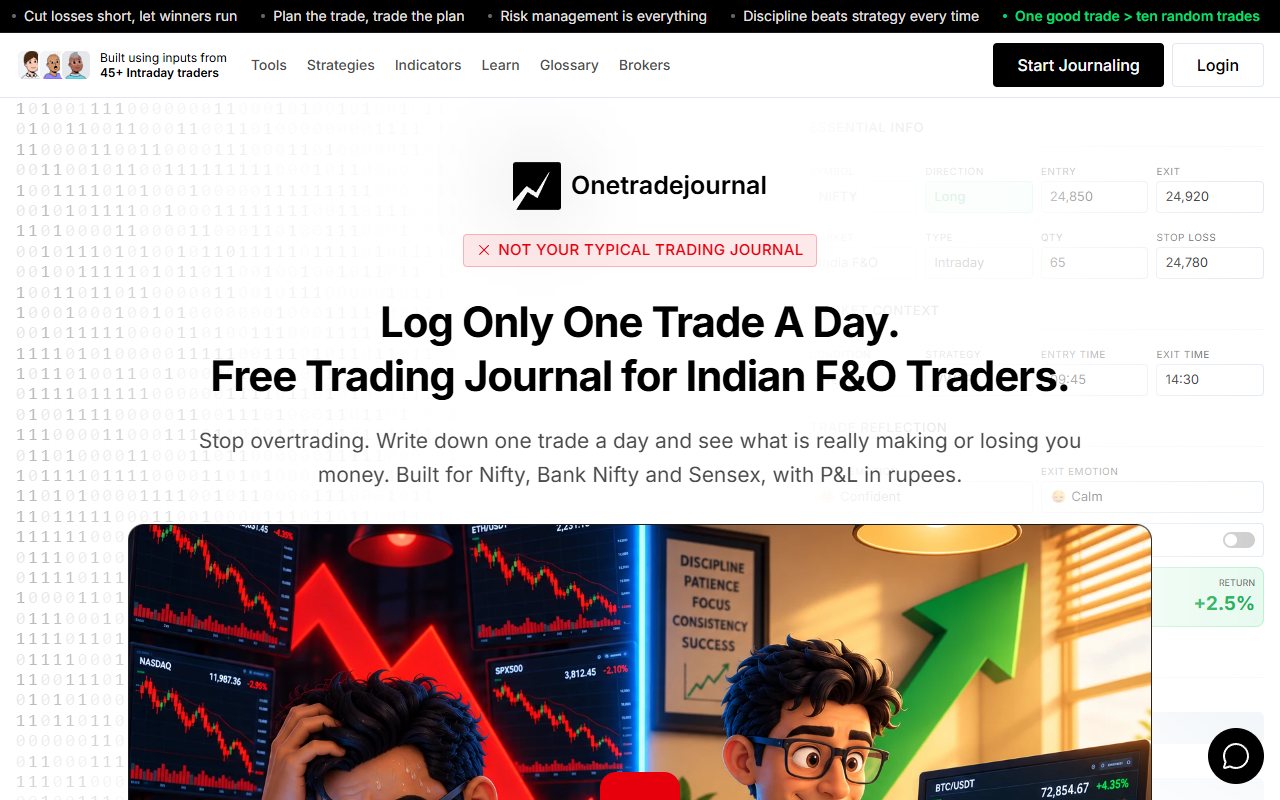
A stopped Nifty trade can be followed by a calm review or a rushed attempt to win the money back. The broker records both orders. The reason for that second entry is something you need to write yourself. OneTradeJournal is built around that daily pause, with one planned trade, your own notes and a review of the habit behind it. The aim is to help you become more careful, reduce overtrading and avoid repeating costly mistakes. Write why the setup qualified, how you felt and whether you followed the exit plan. One trade can still lose. The journal cannot stop broker orders or set a hard loss limit. OTJ's free plan allows one trade per day per market. Paid plans allow extra entries. The one-trade idea is the product's daily habit, not a rule that hides any other trades you actually took. If you took more, keep a full financial record and review those decisions honestly. TradesViz offers a broader route. Its India page describes Indian exchanges, futures and options, and broker connections. Futures and options are often shortened to F&O. TradesViz also has notes, tags and AI review. Imported numbers can save work, and you can add the personal reason beside them. It has real Indian support; this is not a comparison with a foreign-only journal. We checked public pages and current OTJ code. We did not test a paid TradesViz account or broker connection. The question is which daily routine you will keep using, alongside the tools your market needs. ## Notice the urge to recover a loss
Imagine a Sensex options trader who loses on a planned trade, then raises quantity to recover the loss. This is an illustration, not a customer story. The broker can show the larger order. It cannot show whether the change came from a new plan or from anger. OTJ has separate fields for entry emotion, exit emotion, stress, confidence, impulse reason and plan change. You can also save a mistake, stop, target, strategy and notes. These fields help keep the reason beside the result. They do not make an entry honest on their own. A useful note might say, “I raised size because I wanted the loss back.” A weak note might say, “Bad market.” The first gives you something to check. Did the next entry follow the same setup? Did its stop still match the risk you intended to take? OTJ's free behaviour analytics let you compare saved habits and emotions with recorded results. OTJ can also flag possible revenge trades, size jumps and excess trading from recorded data. A flag is a prompt to look again. It can be wrong. It cannot diagnose your state of mind or stop an order at the broker. TradesViz also addresses these issues. Its AI Coach page describes checks for risk and trading behavior on paid plans. Its notes and tags let you add personal context too. OTJ's strength for this trader is starting with one daily entry and writing the emotion while the memory is fresh. ## Imported fills still need a written reason
TradesViz's Zerodha guide describes Kite API sync and a Console tradebook CSV upload. A CSV is a file of rows and columns that a broker can export. The guide lists stock and options instruments. It also explains how to download the file for a chosen date range. This can save work if you already have months of records. Suppose, as a made-up example, you enter a Nifty option in three parts and sell it in two parts. Each part is an execution, also called a fill. You need to check whether the journal joins those fills into the trade you meant to review. Do not judge the import only by whether a file uploads. Check the symbol, expiry, quantity, date and final result. Compare a position held overnight with one closed the same day. Also try a day when you traded the same contract twice. These checks help you find grouping errors before you trust a weekly total. OTJ has no broker sync or CSV import. Paid voice fill can help complete the manual form, but you must check and save the details yourself. It does not move a broker archive into the journal. For a trader with many fills, that is a serious OTJ drawback. The time needed may make the habit hard to keep. For a trader with one planned position, a short manual entry may be easier to maintain. The right test is the work needed on an ordinary day, including a day when you are tired. ## Both products address Indian trades
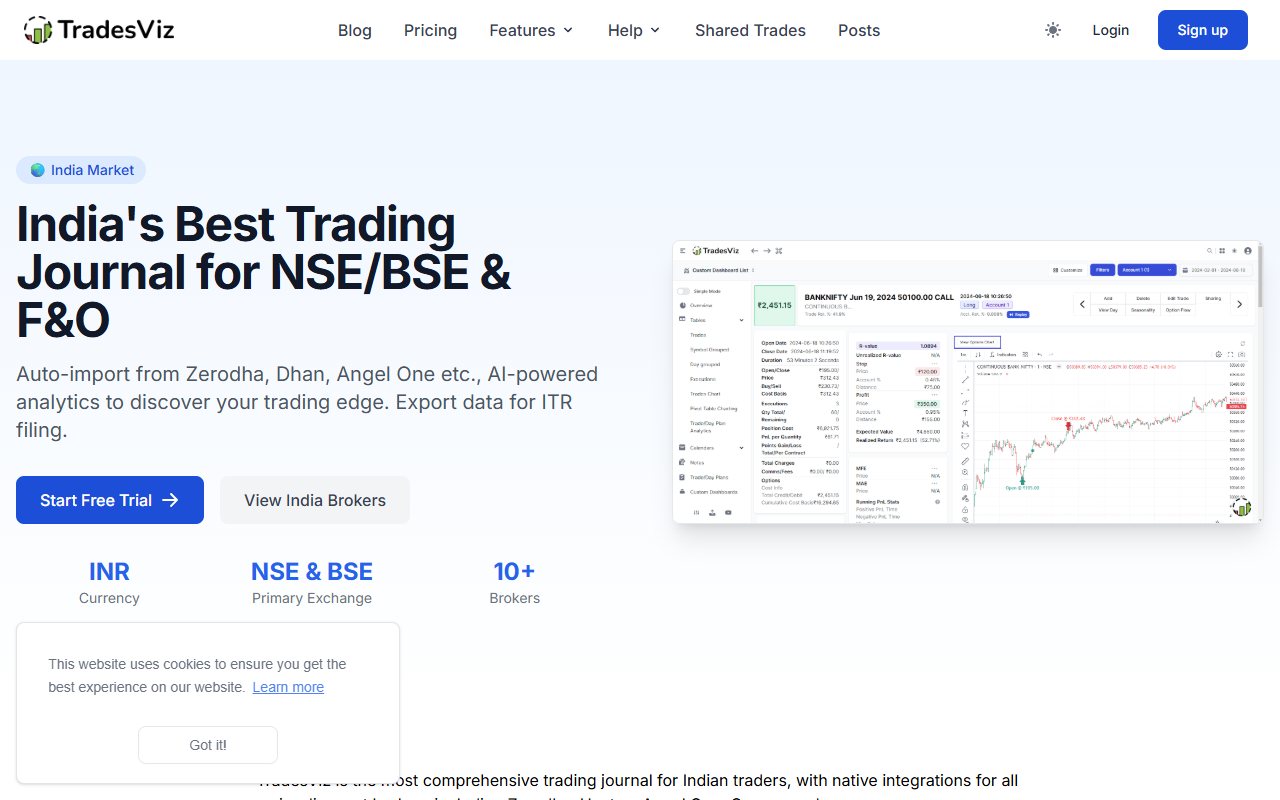
The TradesViz India page names Zerodha, Dhan, Angel One and FYERS among its broker routes. Several have auto-sync labels. Other listed brokers use different routes. A name on a page does not prove that every segment, file version or older contract is supported. OTJ has Indian stock and F&O fields, an expiry picker, lot-size hints and estimated charges. A lot-size hint helps with entry. It does not prove the correct quantity for an old contract. Exchange rules can change, so use the actual broker record when entering past trades. For a Bank Nifty review, start with one contract that you really traded. Check its expiry and strike, which is the contract's agreed price level. Confirm whether quantity means units, lots or something else in each step. Do not carry the wrong unit into a risk calculation. Charges deserve a separate check. A small profit before fees may become a loss after costs. OTJ estimates brokerage and other charges. TradesViz's broker guide describes fee handling, but the result can depend on what the file supplies and how the account is set up. Your broker's contract notes remain the financial record. Use the journal to study choices and costs. Do not treat an estimate or an imported chart as a certified tax filing. This comparison does not give tax or investment advice. ## Review your behaviour before judging the chart
Ask a clear question before comparing the number of reports. “Why did I leave early?” and “How far did price move before I left?” need different evidence. The first needs your reason. The second needs prices from the time you held the position. OTJ has a profit and loss calendar, a line showing recorded results over time, win rate, profit factor and drawdown. Profit factor compares total gains with total losses. Drawdown shows a fall from an earlier high. Strategy and time-of-day views help you compare similar recorded trades. A risk multiple compares the result with the risk from a valid planned stop. OTJ's exit review compares your logged exit with your logged target. It does not rebuild the market's price path while the trade was open. TradesViz's Zerodha page advertises replay and MAE/MFE measures. MAE means the largest move against a position during a trade. MFE means the largest move in its favor. Check the exact contract, date coverage and plan before choosing a product for this job. If you need historical replay or price-path measures, OTJ cannot supply them. If you need to know why you moved a stop, a chart alone will not supply the reason. Write the question first, then choose the record that can answer it. ## AI still needs a complete record
Both products offer AI-related review. TradesViz's AI Coach description says its core findings come from checks on journal data. Optional AI-written wording explains those findings. That is more specific than saying a chat tool somehow knows your whole trading life. OTJ's paid tools include Ask Your Journal, Trading Mentor with chart image review, and pattern feedback. They use the information you supply. AI can make mistakes, and missing trades can change the picture it sees. A useful request is, “Which reasons repeat in trades I marked as a plan change?” Then read the entries behind the answer. A request for tomorrow's profitable trade asks for something your journal cannot know. If a review points to size increases after a loss, check the order of events. A different contract, a planned risk change or a missed entry could explain the result. Do not turn one AI answer into a firm rule without looking at the records. Keep the amount of data in mind too. A few trades can produce a striking chart without showing a stable habit. A review is more useful when you compare the same setup using the same definitions over time. ## Free limits and billing need separate checks
The current TradesViz pricing page lists free Basic with 3,000 executions a month, one account and stocks. Options and other asset types appear in paid tiers. A free stock allowance is not the same as free options access. The page showed Pro at US$14.99 and Platinum at US$22.49 per month when billed yearly during this check. Earlier requests showed other local currencies. Confirm the currency, annual bill and included tools at checkout. A monthly equivalent does not mean you can pay that amount for just one month. OTJ's India plans cost ₹499 monthly, ₹1,299 quarterly or ₹3,499 yearly. No lifetime plan is currently sold. Its continuing free plan allows one trade a day per market. Paid plans allow extra entries. Neither plan controls orders at your broker. The products use different currencies in the reviewed view, so this page does not claim a current price saving from a guessed exchange rate. More useful is whether the plan includes the task you need. A low price is poor value if you still cannot bring in your required history. If you take several trades a day, do not leave trades out just to fit OTJ's free cap. Either budget for paid entry or choose a workflow that can hold the complete sample. Review also takes time, so include that cost in your choice. ## Try one normal week before committing
Choose an ordinary week with a planned winner, a planned loser, a trade with several fills and a trade you would rather avoid discussing. Keep the broker record beside you. This is a suggested test, not a claim that we ran it. In TradesViz, check the documented broker route, the trade grouping and the one chart question that matters to you. Add the missing reasons to the imported numbers. Record anything that still needs support to resolve. In OTJ, enter the same decisions by hand. Check expiry, quantity, stop and target. Write what changed during each trade. Then ask whether that entry process fits your daily routine and makes the next review clearer. If your next review needs imported fills and price history, TradesViz deserves a close look. If your main problem is chasing another entry after a loss, OTJ gives you a smaller daily practice: write the trade, name the urge and return to the note before repeating it. Choose OTJ for that focused Indian F&O writing habit. Choose TradesViz when its supported imports and market reports better fit your wider trading history. Keep the broker record and truthful personal notes whichever you choose. A journal supports your review; it does not promise profit.
Sources and limits
We checked these public product pages and OneTradeJournal’s current product on 12 October 2026. We did not test a private TradesViz account, broker import, payment or AI answer. Check current plans and limits before paying.
- TradesViz Indian markets and brokers · Checked 12 October 2026
- TradesViz prices and plan limits · Checked 12 October 2026
- TradesViz Zerodha entry guide · Checked 12 October 2026
- TradesViz AI Coach explanation · Checked 12 October 2026
A journal cannot promise trading profits. AI answers and fee estimates can be wrong. Check trades and charges against broker records. This page does not give trading, investment or tax advice. Competitor names and website pictures do not imply a partnership or endorsement. Any example is an explanation, not a private account screenshot or a real customer result.