The detailed comparison
A closer look at the daily routine, the tools and the limits of each product.
Choose a section
The rise after your exit can tempt you to chase
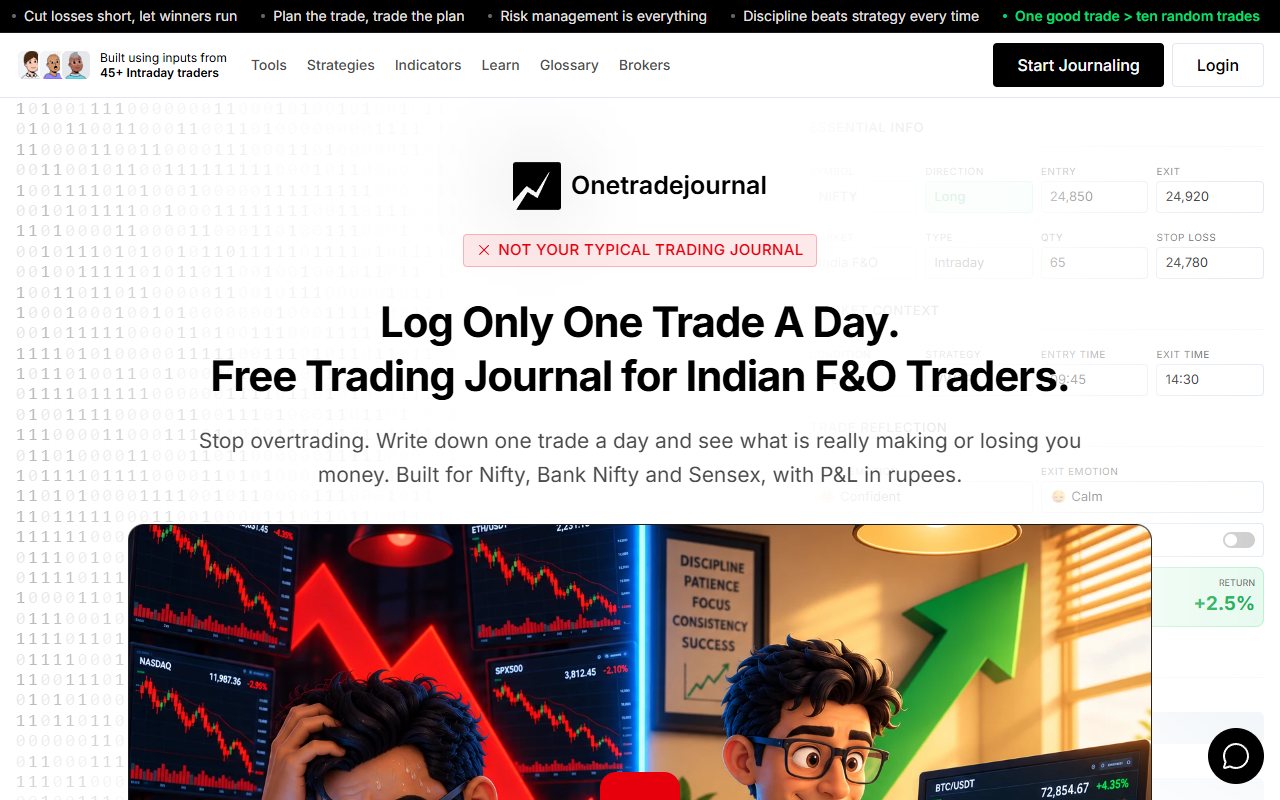
You close a stock position, then watch it rise further. It is easy to decide that the exit was wrong and rush back in. The daily reflection should first ask what rule you had and what you knew when you acted. OTJ puts one planned trade at the centre of a manual writing habit. Record why you entered, how you felt and why the exit changed. Writing the trade yourself is part of the pause. The aim is to help you recognise chasing, overtrading and repeated costly mistakes without treating later prices as proof of a bad decision. Free allows one trade per day per market and includes Behaviour analytics. Paid plans permit more entries. The daily focus does not force an order or control your broker. A planned exit may still be followed by a further rise, and a planned trade can still lose. Arthveda's homepage offers a wider journey from Indian stock discovery to watchlists, journal and public profile. Its journal page also has a notebook and review of prices after an exit. Those are meaningful strengths. OTJ begins with the daily explanation of your own action. ## Both journals can hold the reason
The app's Journal page describes trade notebooks, screenshots, tags and reports. It is not fair to portray it as an automatic account dashboard with no room for thinking. The journal module is designed to contain reasoning. OTJ provides set questions in its entry form. This can help a person who struggles with an empty notes box. Instead of writing a general summary, they can answer what they felt at entry, why they acted and whether they changed the plan. Consider a made-up Bank Nifty trader who feels confident at entry but closes early because the position becomes uncomfortable. A useful note separates those moments. One anxious label for the whole trade may hide when the worry began. In either product, write enough context for your future self to understand the change. Was the exit condition part of the plan? Did the market invalidate the setup? Did a previous loss affect your patience? Avoid reconstructing a neat reason after the result. The product that helps you save that distinction is the better review tool for your habit. Notebook flexibility and structured questions are different approaches to the same need, and either can work well. Make the daily note small enough to finish. Preserve the original entry and exit rule, then write the point where worry or impatience changed it. Free Behaviour analytics helps you review saved feelings and habits. Paid AI behaviour review is separate, and neither proves why every future result will happen. Arthveda's notebook and behaviour tags can support the same care. A broker record alone does not establish a private motive. An external assistant can interpret the facts and any notes you choose to share, but an interpretation is still something to check. OTJ starts with your own writing so that the repeated moment is easier to revisit. ## Read later prices without rewriting the daily plan
The app's homepage FAQ describes analysing closed trades against the price that followed the exit. That can be relevant if you want to study early exits, subject to coverage and the way the metric is calculated for the instrument. OTJ's exit efficiency compares your recorded exit with your own logged target. Its risk multiple needs a valid planned stop. It does not reconstruct historical maximum movement or provide market replay. In a made-up stock swing trade, you might exit before a later rise. Post-exit price context can show what happened next. A target-based review can show whether the exit matched the plan you originally set. They are different questions. Do not let later price movement make every early exit look wrong. You used the details available at the time. A later rise shows what happened next. It does not prove that you could have predicted it. If this analysis is essential, verify the app's data and method for your own instrument. If your aim is understanding why anxiety changed the intended exit, OTJ's direct notes may address the more immediate need. ## Keep the original idea separate from the urge to act
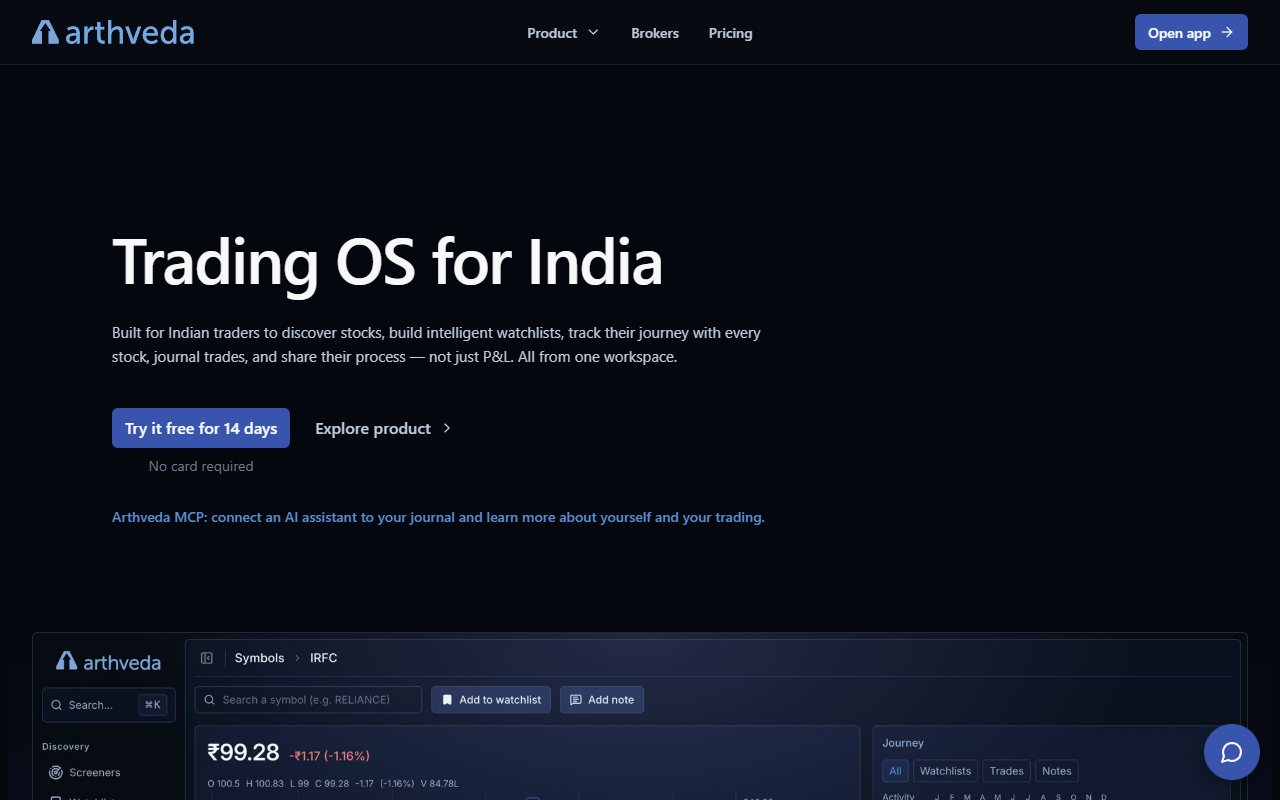
Before a trade, you might want to screen shares, compare ideas and save a watchlist. After a trade, you want to know why you entered, what risk you intended and how the exit happened. Combining those stages can save context, but it can also create more things to keep. The app's official homepage describes NSE/BSE stock screening and end-of-day discovery. That is relevant to someone who reviews stocks over days or weeks. It should not be assumed to solve every fast intraday choice. OTJ's manual record can save the plan for an Indian stock or F&O trade, including strategy, stop, target and notes. You then add entry and exit feeling, stress, confidence, impulse reason, plan changes and satisfaction. The form gives you clear questions about the action you took. For a made-up Nifty trader who enters immediately after missing a move, a larger idea-discovery workspace may not address the immediate gap. The useful record is why the trader believed they needed that entry and which planned condition they skipped. For a made-up equity swing trader, the earlier watchlist may be valuable evidence. They may want to see how the original idea evolved before entry, rather than only the completed trade. That is a reason to check the app's wider workflow. ## Check the broker and the market segment
The app's homepage FAQ says broker sync supports Zerodha and Dhan today. Its broker directory distinguishes files, sync, manual entry and requested support. Check your broker's row. A listed name does not always mean a live connection. The FAQ also says a synced setup needs a daily broker login. OTJ has no broker sync or CSV import. It requires manual entry. Paid voice fill can help populate the form, but it does not collect every execution from the account automatically. If you have many fills or years of history, imports may save work. A fill is a completed part of an order. You can use the time saved to add reasons. Correctness still needs to be checked with a normal broker sample. OTJ makes the manual entry a deliberate part of reflection. It asks you to name the action and feeling instead of starting with a broker connection. That focus can fit a daily habit, but it also means a large archive takes manual work. An Indian F&O check should include a partial exit, two similar contracts and a position across dates. Compare quantities, prices and timing with the broker statement. Then add the choice context and check whether the grouped record still tells the story you intended. ## Choose where you want to ask AI questions
The app's AI page describes connecting an external assistant to journal facts through its read-only integration. Read-only means the assistant can read but cannot change the journal. Written notes have a separate sharing switch. That is a real AI-related tool, although it is a different interaction from an in-app journal assistant. OTJ offers paid Ask Your Journal, Trading Mentor, chart screenshot analysis and pattern feedback inside its application. This may fit if you want to ask in the app where you write the entries. The app may suit someone who already works in a compatible external assistant and wants that environment to inspect the journal. Check the setup and the assistant access you need. Do not assume the app also pays for your outside assistant. Check that assistant's own access and costs. For both workflows, test the same narrow question: which recorded entries changed the original exit plan, and what reason did I give? Check whether the answer points to the right records and whether it clearly separates your notes from its reading of the facts. AI can be wrong even when the numbers are correct. An assistant may confidently describe a motive that the trader never recorded. A useful answer points to trades you can check. Smooth writing alone does not make it correct. ## Price the ongoing access, not only the trial
The official price page, rechecked on 12 October 2026, lists ₹2,999 yearly or ₹6,999 once. GST is included. It offers a fourteen-day trial with no card. After that, existing records stay readable and exportable, but adding new records needs payment. Running screeners stays free. OTJ's ongoing Free limit is one trade per day per market. Paid India plans are ₹499 monthly, ₹1,299 quarterly and ₹3,499 yearly. Behaviour analytics is free. Paid plans permit extra trades and include AI or voice tools with usage limits; the paid plan page gives the current options. These models answer different needs. A trial gives a short period to check a broader workspace. A continuing capped plan lets a suitable low-volume trader test whether they keep writing over time. If you take multiple trades a day in the same market, the OTJ free cap may be too small for a complete sample. Do not omit most of the session and read the chosen entry as the account. Pay for appropriate access or clearly label a selected learning record. Before considering the app's one-time option, read the actual access terms at checkout. Judge current usable features and your likely routine rather than assuming future years of use. OTJ has no lifetime plan currently for sale. ## Keep the private notes before choosing what to share
The app's homepage includes public profiles and sharing of process. That may appeal to someone who wants to show their work. It can also make the distinction between private learning and public presentation important. A personal journal should include losses, uncertainty and changes to the plan. If you write only what looks good to others, the record becomes less useful for understanding your choices. That is a habit concern rather than a criticism of any sharing feature. For a made-up learner, a weekly private note might be that they entered twice without the planned confirmation. The useful next step is checking whether that happens again. A public results summary need not contain the same level of personal detail. OTJ's core use in this comparison is personal review. Its CSV, JSON and TXT exports help retain your entries. It has no bulk import route for migrating a large existing archive. Whichever product you choose, save the meaning of your strategy and mistake labels. If you change a label's meaning when you change journals, comparisons across periods become harder to read. The meaning of a label is part of the record. ## Choose the daily reflection or the wider idea journey
OTJ fits a trader whose repeat is rushing back into a move or changing an exit from discomfort. Its Indian stock and F&O form gives the daily reason a clear place. Free Behaviour review helps return to saved emotions and habits, without a paid AI plan. Arthveda deserves a look when stock ideas, watchlists, broker collection and post-exit analysis need to stay connected. Its notebook and behaviour tags also support psychology review. The outside AI route is useful for someone who wants a compatible assistant to read the journal, with note permissions and provider access checked. For your first daily reflection, use a trade you already took. Write why the exit made sense at the time, then compare it with what happened. Do not place another order just because the journal has a daily focus or the stock later rose. Waiting for a new planned setup can be part of discipline. Keep the full broker history beside the learning note. If other trades are absent, the journal's summary is incomplete. The purpose of this habit is to recognise a repeated urge and review it honestly, rather than to diagnose yourself or promise that every avoided entry would have lost.
Sources and limits
We checked these public product pages and OneTradeJournal’s current product on 12 October 2026. We did not test a private Arthveda account, broker import, payment or AI answer. Check current plans and limits before paying.
- Arthveda Indian workspace and sync FAQ · Checked 12 October 2026
- Arthveda journal page · Checked 12 October 2026
- Arthveda broker directory · Checked 12 October 2026
- Arthveda outside AI connection · Checked 12 October 2026
- Arthveda pricing and trial access · Checked 12 October 2026
A journal cannot promise trading profits. AI answers and fee estimates can be wrong. Check trades and charges against broker records. This page does not give trading, investment or tax advice. Competitor names and website pictures do not imply a partnership or endorsement. Any example is an explanation, not a private account screenshot or a real customer result.