The detailed comparison
A closer look at the daily routine, the tools and the limits of each product.
Choose a section
Write why you made the exception
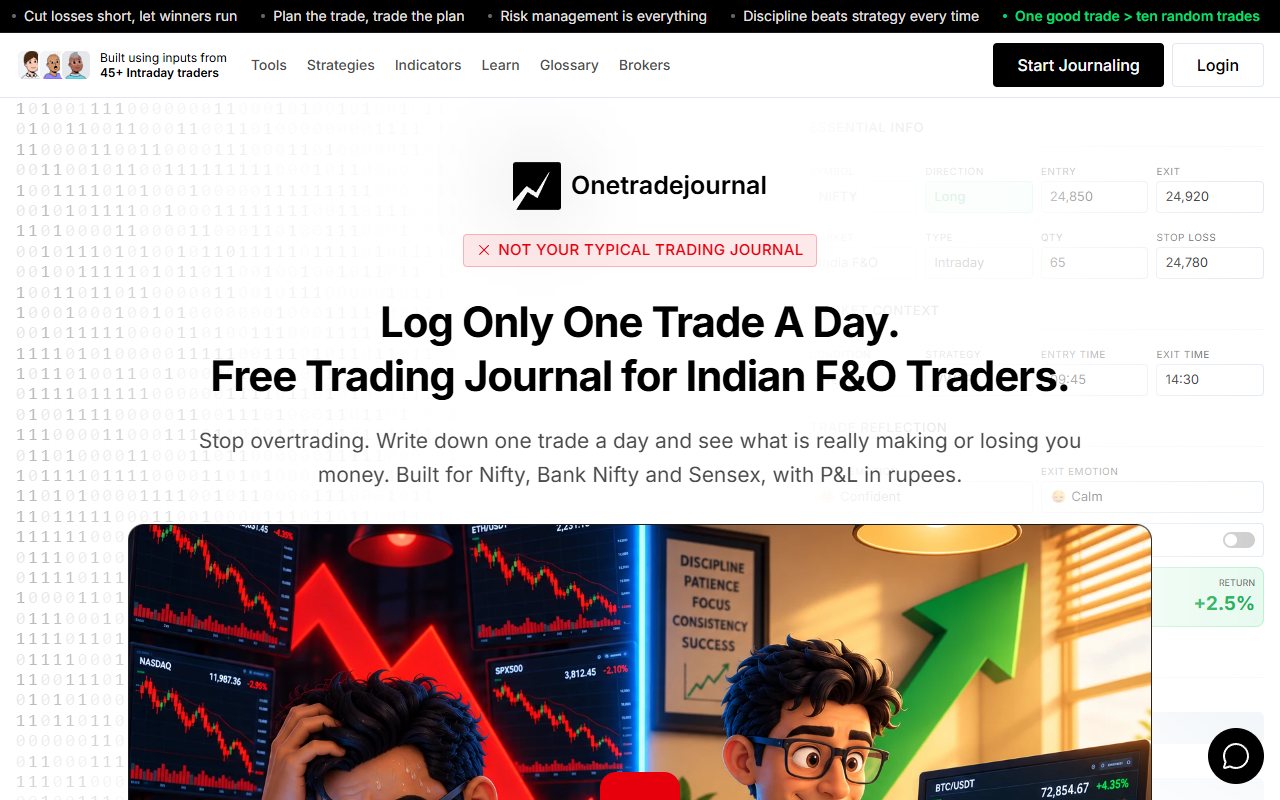
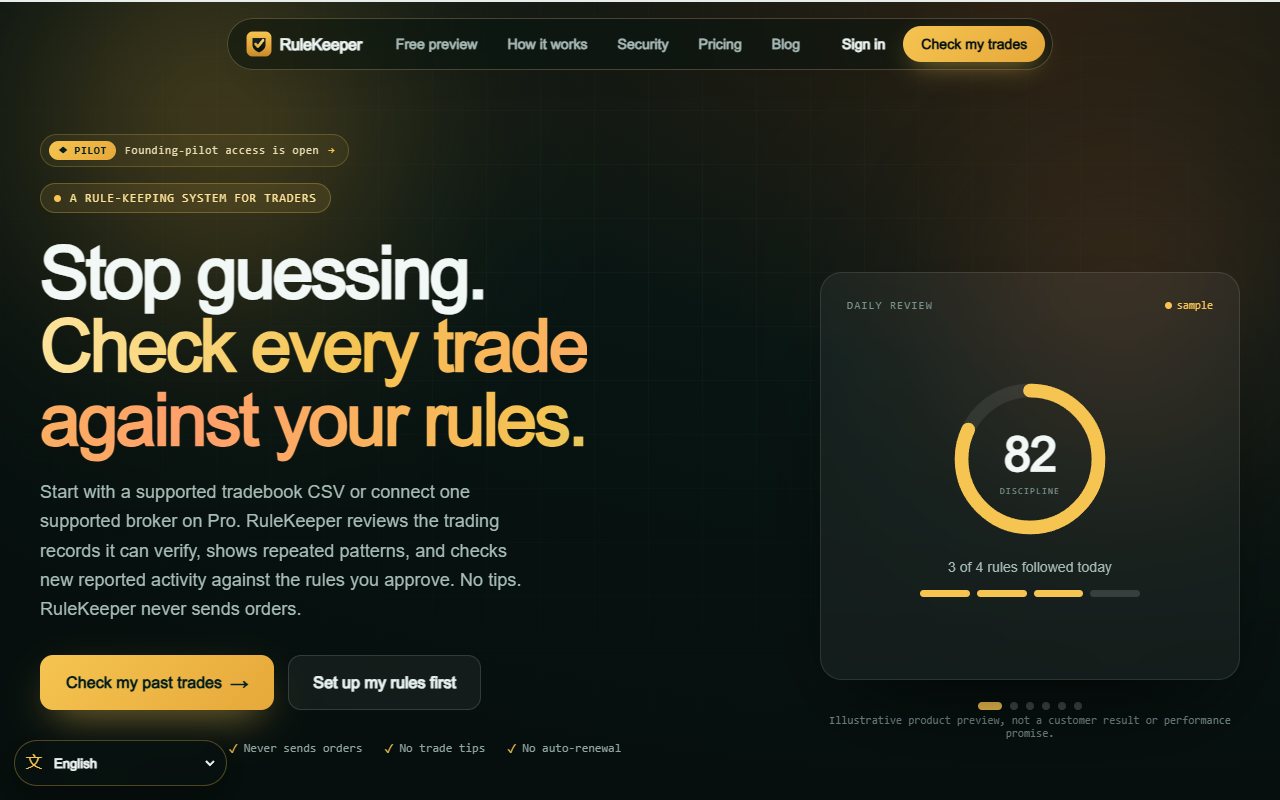
You knew the rule, but you made an exception after a loss. Later, the tradebook can show that another trade happened. The reason for the exception may be harder to remember. Writing it down while the memory is fresh gives your review something specific to read. OneTradeJournal builds its daily habit around that reflection. Focus on one planned trade, enter the details yourself and explain the feelings around it. Record whether you changed the plan. The aim is to help you recognise repeated urges and mistakes before you treat each one as an isolated event. RuleKeeper also discusses discipline and personal context. It checks supported trade records against rules you choose, and it publishes daily plans, mindset notes and after-session reviews. It should receive credit for those routines. OTJ's free plan allows one trade per day per market. Paid plans allow more entries. One trade a day is the intended writing habit, not a broker order limit or a compulsory cap on every paid subscriber. The daily note still needs honest context and the actual trade numbers. RuleKeeper may begin with supported broker activity and the rules you approved. OTJ begins with the entry you write. Neither method can establish a private reason that was never recorded. Compare the routine you will complete and return to, alongside the trade coverage each tool can actually support. ## A rule check and a private reason are different
Imagine a made-up example. A trader writes a rule to stop after a chosen daily trade count. Later, the trader takes another trade. A supported trade history can help show that another reported trade occurred. It cannot prove the private reason behind that choice. The extra trade might have followed a new plan, a forgotten rule or a wish to recover a loss. Those are different stories. The actual trade count is one piece of evidence. A note about the reason is another. RuleKeeper publishes journal and mindset notes, so it should not be described as a numbers-only tool. Its current pricing table also lists a day plan and an after-session review. Those may help preserve the reason as well as the activity. OTJ gives you named fields for the impulse reason, stress, confidence and a change from the plan. It also separates entry and exit feelings. These prompts may help if your usual rule-break note is too vague. We did not confirm a field-by-field match with RuleKeeper, so we do not claim those details are impossible there. ## Neither product can block your broker orders
RuleKeeper's public pages draw a clear line. The app does not place, change, cancel or block an order. It checks the activity it can read against the rules you chose. A message about a limit is not a broker lock. OTJ also does not send or block orders. Its behaviour flags can prompt a review of possible repeated mistakes. They are simple checks of saved data, not a diagnosis of a person or a guarantee that a trade was driven by revenge. This matters when a product uses words such as control, rule or guard. Do not assume it prevents a trade just because it shows a warning. The trader still chooses what to do. A journal or review screen is not a replacement for the actual order system. In the made-up extra-trade case, either product may make the event easier to discuss. Neither can promise that the trader will follow the rule next time. The comparison is about recording and reviewing the process, not preventing loss. ## Keep complete records beside the daily reflection
RuleKeeper supports tradebook CSV review. A CSV is a file of rows that a spreadsheet can open. This can help a trader who has a long history and wants to check it against a rule without typing every trade again. The current pricing page separates those uploads from the broker connection. Starter lists supported file uploads. Pro adds one supported broker and checks during the session while the current-session screen is open. The exact broker, history and access conditions matter. The provider says coverage, history, renewed permission, beta status and broker-side fees can vary. We did not connect a broker or test an imported file. Do not treat a general broker label as proof that every account, date or trade type works. OTJ deliberately uses manual entry for the daily reflection. A paid plan allows more manual entries, but it does not turn a broker file into an OTJ history. If importing many old trades is essential, this is a clear reason to check RuleKeeper or another supported import tool. ## A daily free entry and a monthly preview are not equal
OTJ's continuing free plan allows one new trade a day per market workspace. Several trades in the Indian market do not each get a separate free slot. If you need to save more of those trades on the same day, you need paid access. RuleKeeper's free plan lists one supported CSV import, one preview and two Ask the Audit AI runs each month. The limits reset monthly. A preview is not the complete paid report. The pricing page keeps complete reviews, PDF downloads and broker access on paid plans. This means free does not describe the same job in both products. OTJ gives a small daily manual record. RuleKeeper gives a limited monthly preview of supported trade data, along with the free routine tools it lists. Check the actual limit you will hit. If you want to type one trade and its reason each day, OTJ's free plan may be enough. If you want to inspect an old tradebook, RuleKeeper's free preview may be a useful first check. Neither should be advertised here as unlimited free access to all review functions. ## Check the current payment and renewal terms
The fresh RuleKeeper India pricing view lists Starter at ₹1,500 for one month and Pro at ₹3,900 for one month. It says applicable taxes are included. The paid access is prepaid and ends without automatic renewal. The same page offers a twelve-month option and says usage limits still reset monthly. Do not read longer access as an unlimited pool of imports, reports or AI use. This article does not calculate an assumed annual total or test a purchase. Current OTJ India plans are ₹499 for one month, ₹1,299 for three months and ₹3,499 for a year. Those posted amounts are lower than RuleKeeper's reviewed one-month offers. The jobs and limits differ, so price alone does not make OTJ the better product. Confirm the plan, tax display, account access and payment terms before paying. We did not test checkout or refunds for either product. A refund headline is not a guarantee that every payment meets its conditions. Read the provider's current terms for your purchase. ## Make the emotion and the exception clear
Suppose the trader writes broke rule after every difficult day. That note may hide several different events. One day the trader increased size. Another day the trader entered early. A third day the original rule was unclear. OTJ's form offers separate places for the mistake, change from the plan, impulse, stress and confidence. The trader can record which event happened and why. This is a practical reason to consider OTJ if brief notes keep losing detail. For the extra-trade example, the note might say that the trader noticed the limit but made an exception after a loss. That is a made-up note. It is not evidence that a real customer improved after using OTJ. RuleKeeper also lists text notes and paid dictated journal notes. It may support the same explanation in a different form. Compare how easily you can save and retrieve the actual reason. More prompts help only if you use them. They do not make an incomplete record complete. Ordinary OTJ behaviour analytics are free. They compare your saved emotions, stress and confidence with the recorded results. These views can help you find notes worth reading. Paid AI is separate. The pattern is a review question, not a diagnosis or proof that an emotion caused a loss. ## The data may not support every rule check
A broker file can show reported trades, but it may not hold the plan you had before entry. A rule about trade count can use different evidence from a rule about an original stop. A private intention may need a note written by the trader. RuleKeeper says it checks what the records can support. We should keep that limit visible. Do not treat every pattern or score as a verified explanation of why a person traded. Missing history or an unsupported format can narrow the review. OTJ has the opposite input problem. Its set fields can hold the plan and reason, but only if the trader enters them. It cannot detect an omitted broker trade through a connection. Its reports cover the saved sample, not automatically the entire account. For either tool, compare the included dates and trades with your broker history. Write down what was left out. A clear smaller sample is more honest than a complete-looking dashboard built from missing records. ## AI questions still need the source evidence
RuleKeeper lists Ask the Audit AI runs, with different monthly limits by plan. The feature is not absent just because OTJ also offers AI. The useful question is what source record the answer is based on. OTJ's paid Ask Your Journal and Trading Mentor review entered context or a supplied chart picture. They have use limits and can be wrong. An answer cannot know a private plan or a missing trade for certain. For the extra-trade case, ask a question narrow enough to check. Which saved record came after the chosen limit? What reason did the note give? Do not ask a model to certify that a trader is disciplined from a short history. We have not tested either product's AI accuracy. Public descriptions show the claimed feature, not a reliable result for every user. Read answers against the records and correct bad input before using the output in a review. ## An early pilot needs a practical account check
RuleKeeper's about page describes an early pilot. That does not prove it is unstable or unsuitable. It does mean the provider itself is presenting the product in an early stage, with clear plan boundaries. Ask which broker formats and connection features are available for your account now. Ask what happens if a broker changes its file or connection. Do not assume a planned improvement is included in a current payment. We are not claiming that OTJ has better uptime or security. OTJ's manual method needs no broker connection, but that alone does not prove it is safer. A comparison of product roles is not a security audit. Keep an export or broker archive you can read. OTJ offers CSV, JSON and TXT exports of saved records. That is useful for keeping notes, but not a way to import a full broker history. A new tool should not become the only place where your old evidence exists. ## Choose a daily writing habit or supported rule checks
Choose OneTradeJournal when you want one focused entry that makes your reason, feelings and plan changes easy to revisit. Write the trade you already took and name the urge you want to notice next time. If you made an exception after a loss, record it plainly. At your weekly review, read the winners as well as the losses. A rule break can make money. A planned trade can lose. Keep the question about behaviour clear so the final result does not erase the way you reached it. Choose RuleKeeper when you need supported reported activity checked against approved rules, along with its day plans, notes and review routines. Start with a file and dates you can verify. Ask about exact broker coverage and plan limits before relying on the read-only connection. Both products can help you preserve a reason. OneTradeJournal's smaller daily habit is a practical choice for a trader who wants a regular act of manual reflection. It is not evidence that RuleKeeper users cannot build discipline or that imports remove the need for notes. Keep your complete broker history whichever tool you choose. A journal cannot enforce your personal limit or make a trade safe. The purpose is to review the process honestly and work on repeated mistakes. Your next order remains your decision.
Sources and limits
We checked these public product pages and OneTradeJournal’s current product on 12 October 2026. We did not test a private RuleKeeper account, broker import, payment or AI answer. Check current plans and limits before paying.
- RuleKeeper trade review and no-order boundary · Checked 12 October 2026
- RuleKeeper pilot and product limits · Checked 12 October 2026
- RuleKeeper prices, monthly limits and broker conditions · Checked 12 October 2026
- OneTradeJournal homepage and daily habit · Checked 12 October 2026
- OneTradeJournal current plans, checked against product code · Checked 12 October 2026
A journal cannot promise trading profits. AI answers and fee estimates can be wrong. Check trades and charges against broker records. This page does not give trading, investment or tax advice. Competitor names and website pictures do not imply a partnership or endorsement. Any example is an explanation, not a private account screenshot or a real customer result.