The detailed comparison
A closer look at the daily routine, the tools and the limits of each product.
Choose a section
Write the moment when a win makes extra size feel harmless
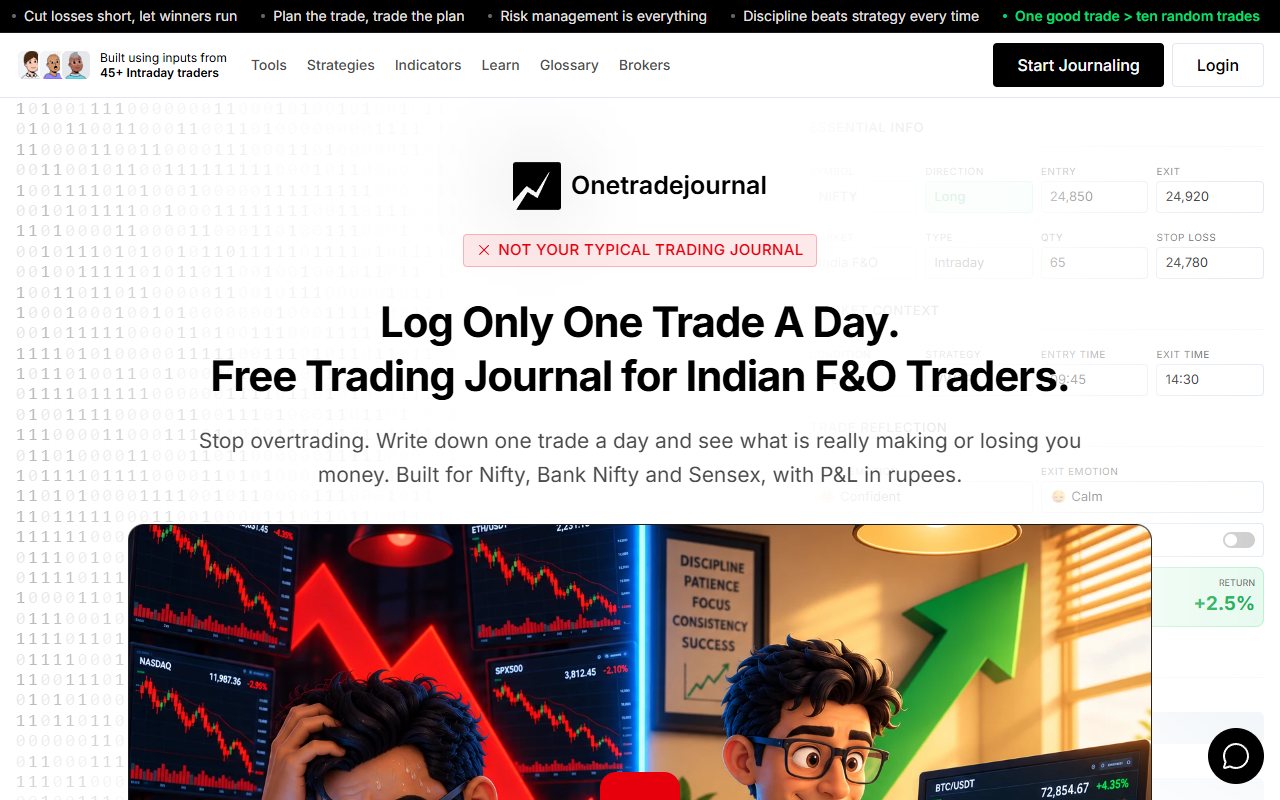
Two planned wins can make the next larger position feel easier to justify. The result may even reward that change. OneTradeJournal's daily habit asks you to write the trade yourself and keep the reason beside the original plan. A win should not quietly erase the rule you changed. OTJ gives entry and exit feelings, confidence, stress, impulses and mistakes their own places. Free behaviour analytics let you return to the saved habit. The aim is to recognise repeated choices that put more capital at risk, not to promise that one trade a day removes the risk. TradeMarkk deserves credit for discipline tools too. Its current homepage advertises rules, mistake review and signs of tilt, as well as a whole free journal for Indian markets. Tilt describes a possible change in behaviour after strong feelings or results. It is a review prompt, not a diagnosis. Notes and checks there can support a thoughtful routine. Choose OTJ when deliberate daily writing and its named questions help you keep the reason honest. Do not choose it because you assume TradeMarkk has no psychology tools, or because a free service must be less useful. Its imports, combined option records and study tools are real published strengths. The daily focus is not a hard one-entry ceiling for every subscriber. Free OTJ allows one trade per day per market, and paid plans add entries. Keep other actual trades in the financial record and do not force an order merely to complete a journal day. ## A winning trade can still break a plan
Consider this made-up case. A Bank Nifty trader has two planned winning trades. A third setup appears. The trader uses more contracts than planned because the earlier gains make the risk feel smaller. The third trade also wins. A review based only on the result may call the day good. A decision review would also note the change in quantity. A win does not tell us whether that change was allowed. TradeMarkk's rules and mistake review can preserve the broken size rule. Its published analysis can then help study the recorded pattern. We have not tested its rule calculations or how it treats this exact example. In OTJ, record the actual quantity in the trade. Put the planned quantity and reason for the change in the note. Confidence and impulse fields can give the event more context. There is no separate planned-quantity form field being promised here. Review both wins and losses using the same question. Was the quantity chosen before the trade, or changed because of the day's result? Either journal needs that evidence. Neither can recover your intention from a green profit number alone. ## Put the urge beside the rule you changed
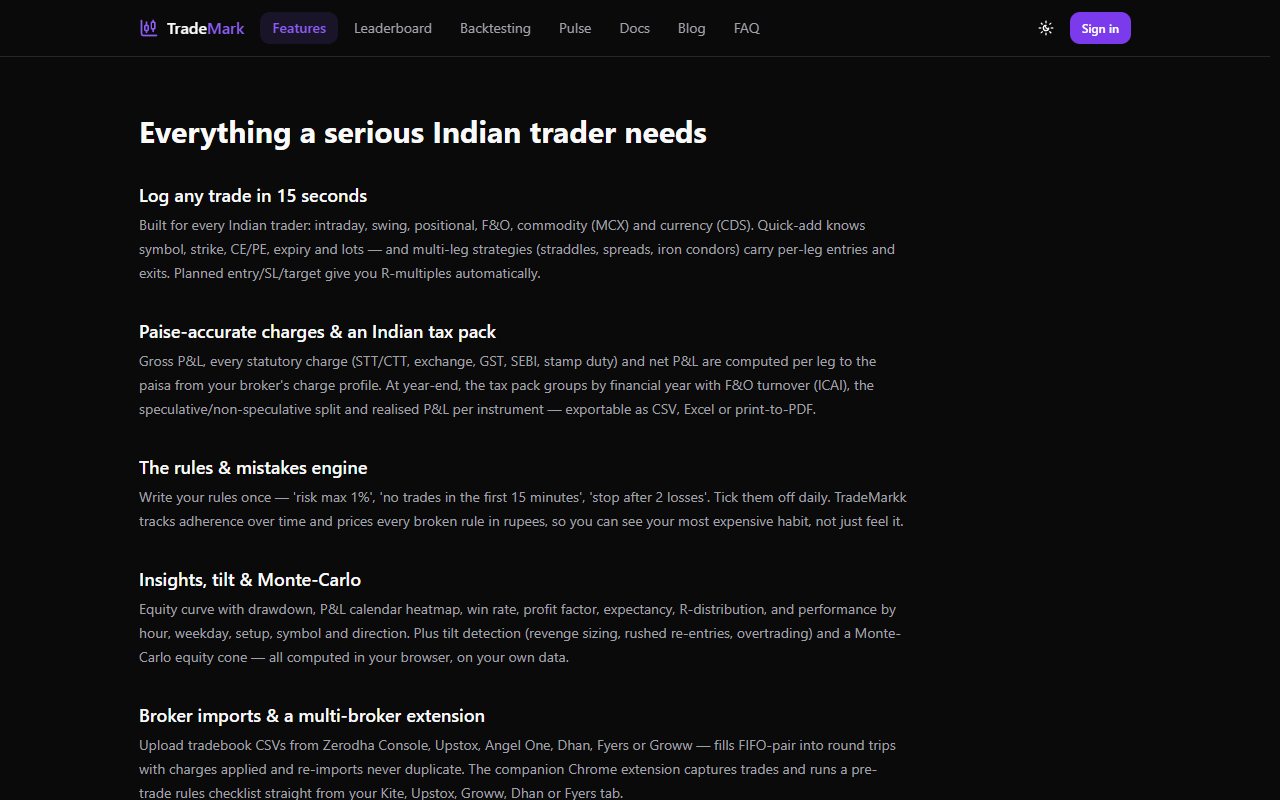
TradeMarkk's features page describes daily rules, checks over time and results linked to mistakes. It also advertises tilt detection. Here, tilt means a possible change in behavior after strong feelings or recent results. It is a prompt to look closer, not a medical finding. A rule check can show that quantity exceeded the plan. It may not, by itself, explain why. One trader may feel rushed. Another may misunderstand the allowed size. Those cases call for different next steps. OTJ has named fields for the reason behind an impulse, changes to the plan, mistakes, stress and satisfaction. It keeps entry and exit feelings separate. This gives a reason to consider it if your current notes say only “bad trade” or “broke rule.”
TradeMarkk may already give you enough notes and labels. The public pages do not settle whether every OTJ-style field has an exact match. We do not claim that you cannot record feelings there. Whichever form you use, write the action and the reason separately. “Used a larger quantity” describes the action. “Wanted to make the morning result bigger” explains the choice. That distinction can make a weekly review more useful. ## Keep several option legs in context
A trade with several option contracts needs careful review. A spread, for example, can have a gain on one contract and a loss on another. The whole position may still follow the plan. Treating each part as a separate idea can confuse the review. TradeMarkk now says its journal can keep strikes, call or put type, and separate entry and exit details in one trade. This is a useful published feature for Indian options traders. It goes beyond merely listing unrelated contracts. That does not prove every adjustment will group correctly. Before using a large history, check a simple position and a changed position. Compare the contract count, quantity and close dates with your broker file. This is a suggested check, not a test we performed. OTJ has manual contract, strike, expiry, price, quantity, stop and target fields. It does not offer an automatic combined-options import tool. If you need the full position grouped for analysis, TradeMarkk's advertised design deserves weight. A separate decision note can still help. If you added an extra contract without a plan, record why. Calling it part of the original position should not hide that new choice. ## Imports save work, but still need a check
TradeMarkk names CSV files from Zerodha, Upstox, Angel One, Dhan, FYERS and Groww. CSV is a table saved as a text file. Its documentation describes matching columns, joining buys and sells, and checking for repeated imports. It also names a browser extension for Kite, Upstox, Groww, Dhan and FYERS. An extension is a small tool added to the browser. That five-name list differs from the six CSV sources. The site does not list Angel One in the extension list we checked. Capturing details from a broker page is also different from a constant broker connection. Do not assume that a closed browser or an unsupported screen will keep sending trades. Check the current instructions for the method you use. OTJ has no CSV import or broker sync. Paying for it does not add those features. Voice fill can help enter a trade, but it does not turn a broker statement into a complete journal. OTJ keeps manual writing intentional. You supply the plan and fresh reason instead of assuming the executions contain the whole story. TradeMarkk's import can save work and still be followed by honest notes. The helpful routine is the one you write and revisit, not a universal claim that manual work is always better. ## Historical studies and trade notes serve different needs
TradeMarkk advertises backtesting on one-minute Nifty, Bank Nifty and Sensex options data. Backtesting means checking an idea against old prices. It also offers a Monte Carlo view. That view studies possible patterns by rearranging or sampling recorded results. These are study tools. The published feature list does not prove that every date, contract or trading rule you need is covered. Check the data range and assumptions before relying on a result. OTJ does not offer historical replay or backtesting. Its charts describe the trades you logged. They include results by strategy and time, losses from a peak, and an account-result curve. OTJ can show results relative to a planned stop when the stop and prices are valid. That is a measure of the recorded plan. It is not a replay of every price the market reached during the trade. A historical study cannot explain an unrecorded feeling. A note about stress cannot prove that a strategy works over many years. Choose the tool that answers the actual question, and keep the two kinds of evidence separate. ## Decide where the record will live
TradeMarkk documents three storage choices: hosted storage, your own database, or local browser storage. A database is the place where the records are kept. These choices give users different ways to keep their journal. Hosted storage may suit someone who wants the service to manage that part. Using your own database requires extra setup. Local browser storage puts more importance on the browser and device used. The docs explain the choices. The useful question is also how you will keep a backup. Before adding years of trades, find the export option and save a small copy. Check that it contains the fields you care about. A file that opens is not always a complete record. OTJ exports logged trades as CSV, JSON and TXT. JSON keeps structured data; TXT is plain text. OTJ does not offer TradeMarkk's three storage modes or a supported bulk-import route. These facts do not prove either service is more secure. Storage choice, broker connection and security are separate questions. We did not inspect either service's private systems. Pick a setup you understand and can maintain. ## Charges are useful estimates, not the final account
TradeMarkk advertises charge calculations and a yearly tax pack. Its terms tell users to check figures against broker contract notes. That warning matters more than a claim about very precise decimals. OTJ also estimates Indian brokerage and other charges. Estimates can help compare gross and net results. Gross means before costs. Net means after the costs included in the calculation. Imagine several small option trades in a day. A small gross gain can look different after charges. But the two journals must include the same trades and cost types before their totals can be compared fairly. Keep the broker contract notes and account records. If a total differs, check dates, quantity, prices and charges. An account fee outside the trade sample may also need a separate explanation. We have not certified either calculation or tax output. Neither journal should replace the broker's financial record. Use the journal to ask better questions, then use the original documents to settle the money figures. ## Start the daily reflection before paying for extra help
Ordinary OTJ behaviour analytics are free. They compare the feelings, stress, confidence and habits you saved. Paid AI review is separate from those views. OTJ's paid tools include voice fill, Ask Your Journal and Trading Mentor. The latter can review a supplied chart image. Use limits apply. AI can misunderstand a question or a trade, and it cannot include trades you left out. The TradeMarkk pages reviewed do not settle every AI feature or future offer. This comparison does not claim that the product has no AI. Its free rules, imports and study tools are already meaningful reasons to consider it. OTJ free access permits one trade per day per market. Its Indian paid plans are ₹499 for a month, ₹1,299 for three months and ₹3,499 for a year. Paid access allows more entries. It still requires manual logging. That means the reason to pay should be clear. Perhaps the separate prompts help you finish a useful note each evening. Perhaps voice fill makes the routine easier. Those benefits depend on your habits, not a promise of better returns. Begin with a trade already taken. Write the intended quantity in the note, the actual quantity in its field and why they differed. Keep the feeling at the time. Return to that note next week, reading rushed wins and planned losses with equal care. TradeMarkk can support the same reflection through its published rules, mistakes and notes, while its free imports and combined option design may be more practical for a large history. OTJ fits when its daily form and free behaviour review help you keep returning to the personal reason. Neither journal controls your broker order, certifies tax totals or promises a profitable next trade.
Sources and limits
We checked these public product pages and OneTradeJournal’s current product on 12 October 2026. We did not test a private TradeMarkk account, broker import, payment or AI answer. Check current plans and limits before paying.
- TradeMarkk free journal · Checked 12 October 2026
- TradeMarkk features · Checked 12 October 2026
- TradeMarkk storage and imports · Checked 12 October 2026
- TradeMarkk terms · Checked 12 October 2026
- OTJ journal features · Checked 12 October 2026
- OTJ paid plans · Checked 12 October 2026
A journal cannot promise trading profits. AI answers and fee estimates can be wrong. Check trades and charges against broker records. This page does not give trading, investment or tax advice. Competitor names and website pictures do not imply a partnership or endorsement. Any example is an explanation, not a private account screenshot or a real customer result.