The detailed comparison
A closer look at the daily routine, the tools and the limits of each product.
Choose a section
Give the repeated mistake a daily explanation
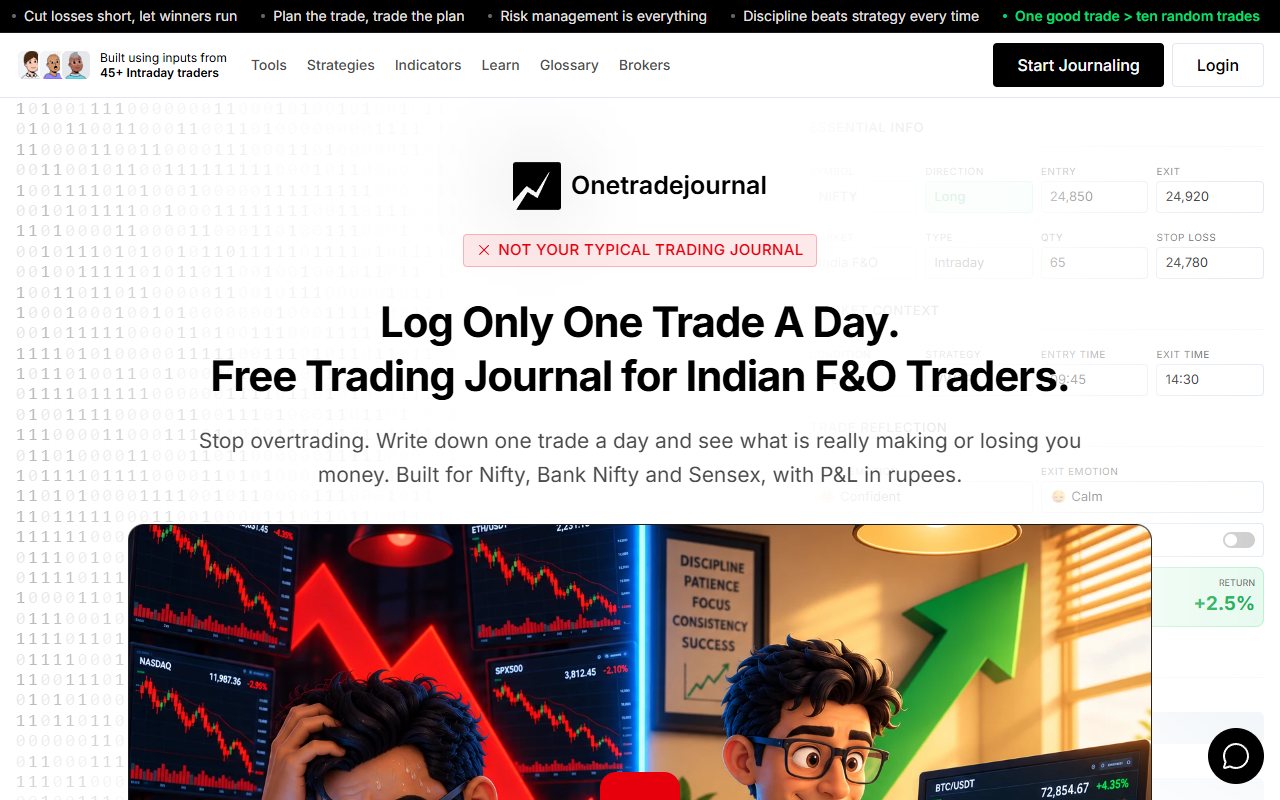
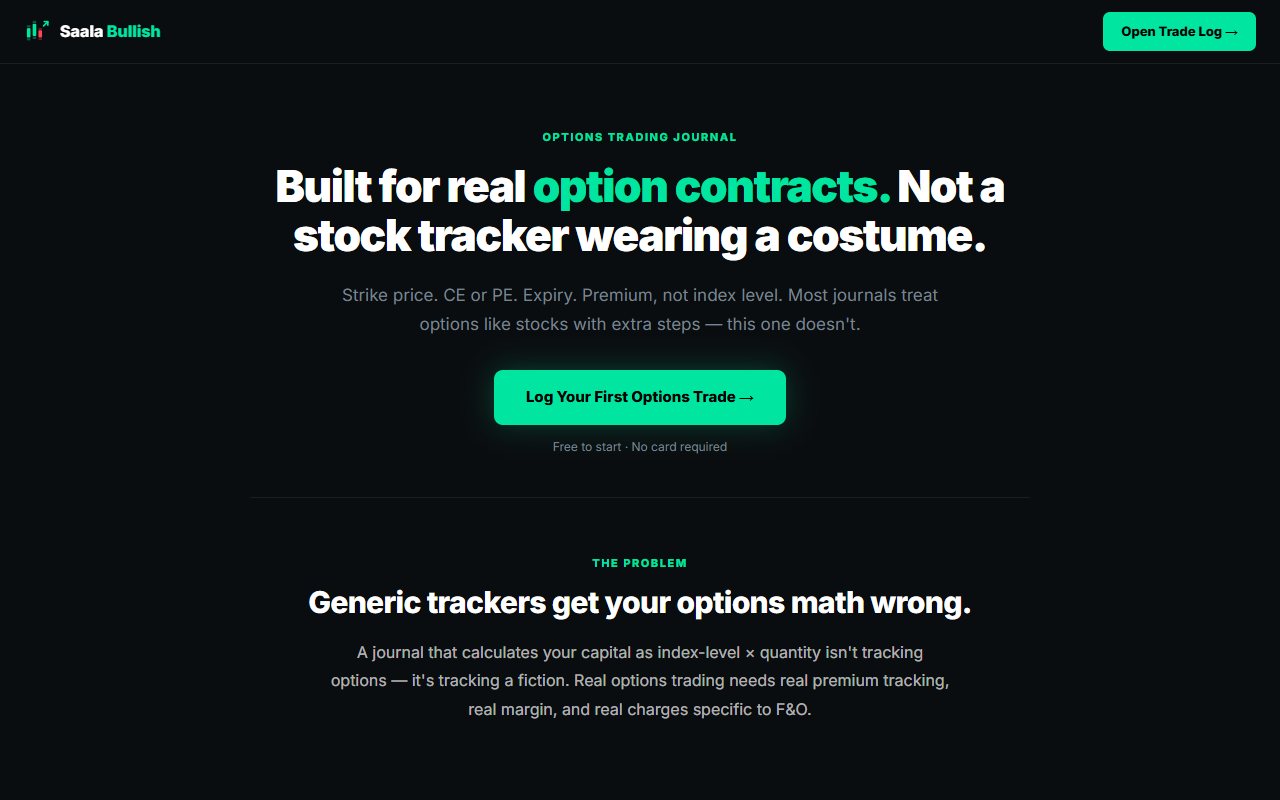
You enter before the Nifty setup is ready, then close quickly because the position feels too large. A fear-of-missing-out tag is a useful label. The daily note needs to explain how the first rushed decision led to the next uncomfortable moment. OTJ builds a manual reflection around one planned trade. Write the entry rule, your reason and the feelings at each stage. The aim is to help you recognise overtrading and repeated mistakes that can put more capital at risk. It does not claim a tagged loss is money you can recover. Free allows one trade per day per market and includes Behaviour analytics. Paid plans allow extra entries. The daily habit is voluntary, not a broker order cap or a reason to trade when no setup appears. Saala Bullish is a close Indian-options alternative. Its options page names strike, option type, expiry and premium. Its Free plan has unlimited manual entries with mood, notes and tags. That broader free capacity and its lower listed annual price deserve credit. OTJ's purpose here is the deliberate daily reflection and separate prompts. ## Mood at entry and feeling at exit can differ
OTJ asks separately about how you felt at entry and at exit. This is useful when the choice changes during the trade. One mood label may miss a trade that began with confidence and ended with impatience. The app's mistake tracker gives you another way to organise habit review. Tags can be effective if their meaning remains stable. You can use notes to explain what happened behind the chosen category. For a made-up Bank Nifty trader, the plan might require waiting for a closing condition. They enter early because they fear missing the move, then exit quickly because the position feels too large. The two choices have different triggers. A useful OTJ record can save confidence, stress, impulse reason and plan change alongside the stop and target. The useful Saala Bullish record would save the corresponding reason through its fields and notes. Neither workflow can know the reason if the trader never writes it. At review time, ask whether the same trigger appeared in winners as well as losses. If you tag only losing trades as impulsive, the analysis may simply repeat the outcome instead of revealing the habits. Manual entry in OTJ is part of that pause. You write the contract and plan yourself, then preserve the uncomfortable reason instead of only the final outcome. At review time, free Behaviour analytics helps find saved emotions and habits to read again. Saala Bullish's mood fields and notes can support careful reflection too. Raw prices alone do not establish why you felt rushed. The useful question is whether the daily writing gives you a repeat you can recognise next time. A few similar notes do not prove one feeling caused every loss, and the journal cannot stop your next broker order. ## A mistake tag does not prove money you could recover
The mistake tracker lists early exits, too many trades, recovery trades and ignored stops. It also lists FOMO, which means fear of missing out. You can review results linked to those tags. Putting a number next to a label can make the review concrete. Read the number carefully. A tagged trade's loss does not prove how much you would have made by changing the action. A trade may include several choices, market conditions and costs. The journal can show which labels go with which results. It cannot prove the result of a trade you never took. OTJ also records mistakes and habit context. Behaviour analytics is free, while paid AI behaviour review is separate. Its flags may point to recovery trades or size increases. They use simple rules on saved trades and can be wrong. Read the entry behind a flag. Consider a made-up Nifty trade tagged early exit. The trader may have followed a rule that ended the setup. Or they may have closed from fear without such a rule. The same short label can hide two different choices. Write the reason and save the original plan. That gives either journal a more meaningful basis for review than a category chosen because the result felt disappointing. ## The free allowance changes a busy day's record
Imagine a made-up trader who takes four Indian index-option positions in one session. They want to examine whether the later entries came from frustration after the first loss. Reviewing only one position would miss the sequence. The app's published unlimited free logging is relevant to that requirement. The trader can check the manual record without a stated free trade-count cap. Still check paid features and older history. The Free FAQ links full multi-month history to Pro. A billing answer also says history stays accessible on Free after Pro ends. Ask which history view applies. OTJ's free daily limit would not cover the whole same-market session. The paid plans permit extra trades and power mode. Its daily focus supports a small reflection habit, while a selected one-trade review must be labeled clearly if more trades occurred. Do not use a capped record as though it were a complete account sample. A selected learning entry can be useful, but it answers a different question. The money account may include activity that the journal never received. For either product, the review should contain the losing trades you would rather omit. A complete ordinary session gives you more useful evidence than a tidy calendar constructed from selected winners. ## Write a Playbook rule you can check
The app's paid feature list includes a Playbook with setup rules and rule-following checks. That may suit a trader who already works from explicit entry conditions. It is a real reason to consider the product. Before checking a rule-based workflow, make the rule clear. Wait for confirmation is difficult to review unless confirmation has a precise meaning. Write the condition you expected, then record whether it appeared before entry. OTJ lets you save strategy, planned stop, target and plan changes in the trade record. Its discipline-oriented reports are useful only when the underlying detail is consistent and complete. OTJ's Behaviour analytics is free; its AI review, voice input and extra daily entries are paid. In a made-up week, a trader follows the rule on a losing trade and breaks it on a winner. Both records matter. The review asks if you acted as planned. It does not prove the setup will make money. A journal's score should help you inspect those examples. Avoid changing the rule after the week to make the score look better. Save the old meaning if you genuinely refine the rule, so later comparison remains possible. ## Check which review tools need Pro
The official homepage, checked on 12 October 2026, lists Pro at ₹749 for ninety days or ₹1,999 for a year. It lists fuller reports, calendar, Playbook and a capital ledger on Pro. A capital ledger records money added to or taken from the account. Those details matter when comparing unlimited free entry with a complete review environment. OTJ's India plans are ₹499 monthly, ₹1,299 quarterly and ₹3,499 yearly. Paid tools include in-app AI and voice fill, while free journaling remains capped at one trade per day per market. See the paid plan page for the current options. The published Saala Bullish yearly price is lower than OTJ's yearly India price in this check. That does not decide every workflow question, but it should be stated fairly rather than suggesting OTJ is always cheaper. Before buying, identify the particular features you need and confirm the current checkout and allowances. A calendar, richer habits questions or a Playbook can matter differently to different users. An unused feature is not worth extra money merely because it looks impressive. The app also publishes a founder lifetime offer, but availability and terms should be checked directly. OTJ does not currently sell a lifetime plan. Compare the commitment you actually want, not a made-up cost saved by avoiding one losing trade. ## Both offer AI that needs checking
The app's AI page describes weekly, monthly, broad and single-trade reviews using the user's recorded data. Its homepage links AI to credits. The Free card lists five credits without saying they reset monthly. Pro adds more credits. OTJ is therefore not the only AI option here. OTJ offers paid Ask Your Journal, Trading Mentor, chart screenshot analysis and pattern feedback. Compare a small task you can check. Neither name proves which AI gives the better answer. Ask which logged trades departed from the planned stop and what reasons you recorded. Inspect the actual entries. A useful review needs the real reason. Check that it keeps the target and stop separate. If the day is incomplete, say which trades are missing. Confirm the allowance for the chosen plan and the cost of the review format you want. Credits are not necessarily the same as chat messages or reports. This comparison does not assume unlimited AI usage in either product. AI can help you pick records to read. It can also sound sure when the evidence is weak. Keep its reading of the facts separate from your written facts and use it to generate questions you can check again. ## Verify the option record before reading the dashboard
The app's options page names the option price, strike, call (CE), put (PE) and expiry. The option price is also called its premium. That is meaningful Indian F&O positioning. Match its charge figures to broker records. We did not test its tax calculations and do not publish a current fee rate here. OTJ provides expiry selection, lot-size hints and estimated brokerage and other required charges. These are manual entry aids. Broker statements are the reference for fills and money totals. Use a made-up contract with a partial exit in your check. Check entry premium, exit premium, quantity and expiry. Then see whether the record saves the plan and reasons without letting the final result change them. If you need broker sync or CSV migration, confirm the current Saala Bullish workflow directly. The reviewed pages did not confirm a broker sync or file-import route. The Free card does advertise downloading the full trade log, though the format was not tested. OTJ has no broker sync or CSV importer. Its CSV, JSON and TXT exports let you retain the entries you write yourself. A neat total can still use a wrong quantity. Fix the trade record first. Only then compare strategy outcomes, costs or mistake categories. ## A target comparison answers a limited exit question
OTJ's exit efficiency compares the exit with your entered target. Risk multiple needs a valid planned stop. These tools help review the planned trade, but they do not reconstruct historical maximum price movement. For a made-up Sensex option exit, the useful question might be whether stress led you to close before the planned condition. A target comparison can contribute to that review. It cannot prove what you could have earned at a perfect past price. When checking the app's exit categories and reports, ask how the measure is calculated and what inputs it needs. An early-exit tag does not prove that waiting was the better choice. Review what you knew at the time. Write what changed and why you acted at exit. If you altered the target, save the original intention in the reason. That gives the future review an honest comparison rather than a rewritten plan. ## Choose the habit with the full day still visible
OTJ fits an Indian options trader who wants to slow down, write one planned trade and identify the urge behind a rushed entry or exit. Its direct questions and free Behaviour analytics support that daily routine. Paid extra entries let a busier record include more trades. Saala Bullish offers meaningful strengths: unlimited Free manual logging, notes, mood and mistake tags, Indian option fields and a lower listed annual Pro price. Its Playbook and AI may also fit your review. Check the older-history wording and credit allowance instead of assuming every review view stays free. Begin with a trade you already took. Write whether the condition appeared and why you acted before it. Read a winning rule break as carefully as a loss. There is no need to place a trade just to complete the journal, and one planned trade can still lose. Use the next review to name one habit you want to watch, such as an early entry that leaves you anxious about size. Keep the broker record complete if the daily note is only a selected example. A tagged money total can guide questions, but it does not promise what changing the habit would have earned.
Sources and limits
We checked these public product pages and OneTradeJournal’s current product on 12 October 2026. We did not test a private Saala Bullish account, broker import, payment or AI answer. Check current plans and limits before paying.
- Saala Bullish free and Pro plans · Checked 12 October 2026
- Saala Bullish options journal · Checked 12 October 2026
- Saala Bullish mistake tracker · Checked 12 October 2026
- Saala Bullish AI review formats · Checked 12 October 2026
A journal cannot promise trading profits. AI answers and fee estimates can be wrong. Check trades and charges against broker records. This page does not give trading, investment or tax advice. Competitor names and website pictures do not imply a partnership or endorsement. Any example is an explanation, not a private account screenshot or a real customer result.