The detailed comparison
A closer look at the daily routine, the tools and the limits of each product.
Choose a section
Give your daily trade a review before the next order
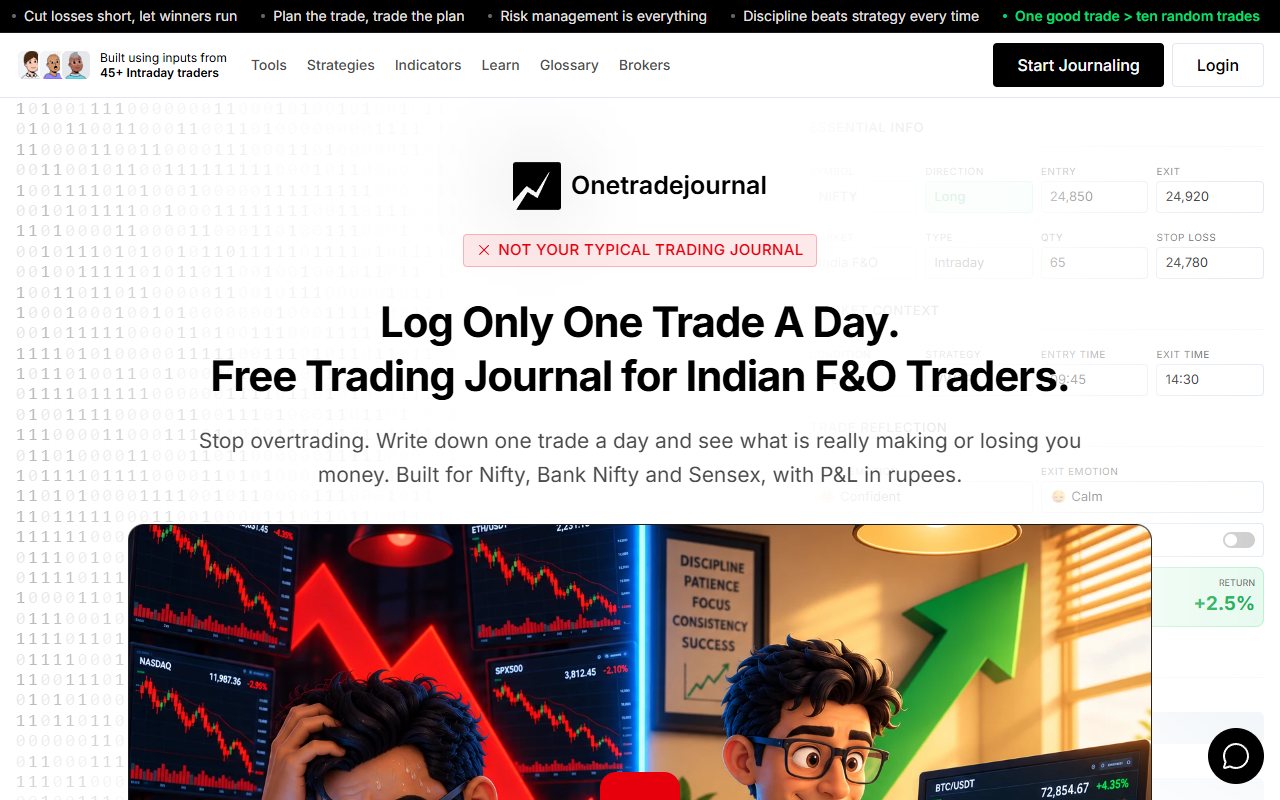
An options platform can make another order easy to place. After a loss, that convenience is not the same as having a new planned setup. You may need a moment to recognise the urge to recover the money before choosing what to do next. OneTradeJournal is built around one trade a day and the review you write about it. Record why you entered, how you felt and whether you followed your plan. The daily routine is meant to build patience and help you notice the habits behind repeated mistakes. Stolo is a broader platform. Its current website describes options charts, market tools, strategy building, broker-linked orders and a built-in journal. Those tools do things OTJ does not offer. Its published journal also supports notes about decisions. The free OTJ plan allows one trade per day per market; paid plans allow extra entries. The intended one-trade routine is different from an absolute limit for every subscriber. OTJ does not send orders or control the number of trades at your broker. You can therefore use the two products together. Keep the platform that supplies the trading tools you need. Use the daily note to describe the reason and emotion behind a trade. This comparison is about that review habit and the published tools, not a private-account test of Stolo. ## Stolo already has a journal
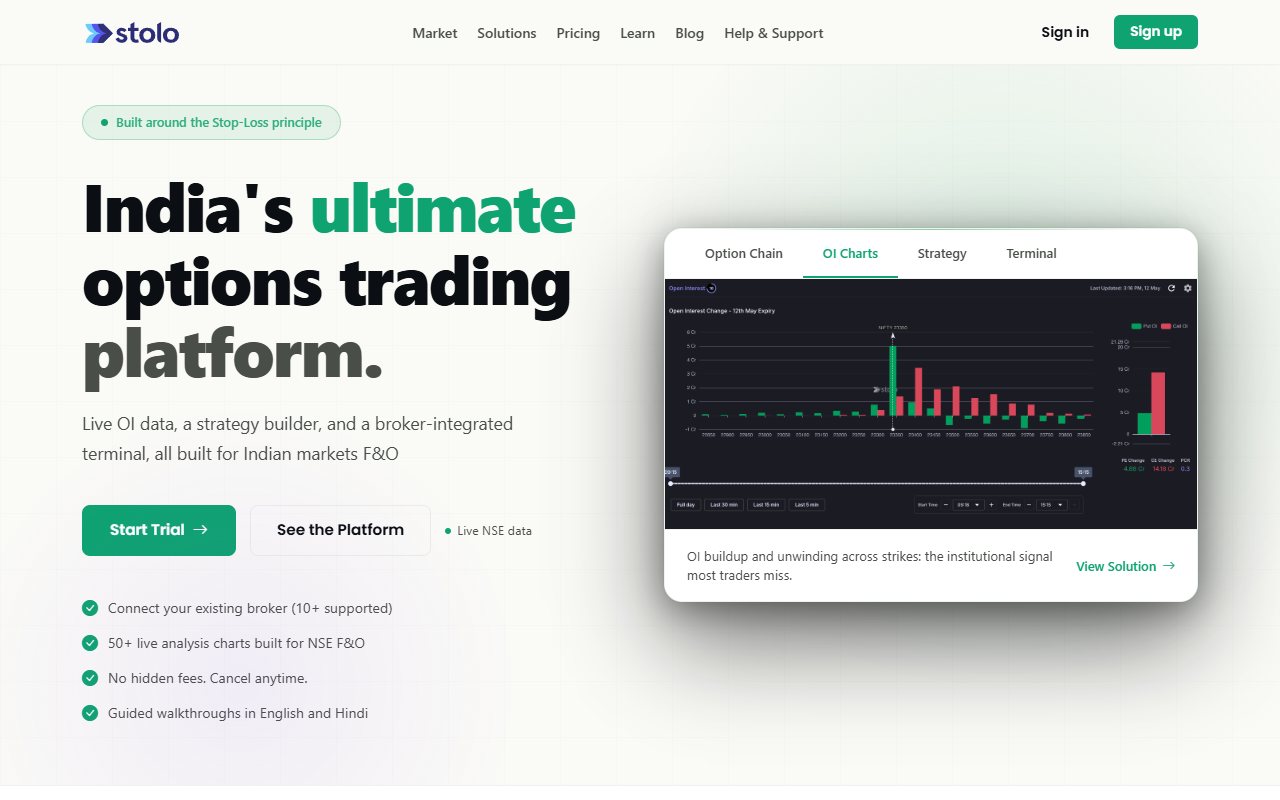
The current Stolo homepage describes post-trade order analysis and a journal. It says you can add notes to decisions and review entry timing, exits and whether you followed rules. That is a real published feature, not something we should leave out to favour OTJ. The options terminal page also describes reviewing trades after a session. A terminal is the part of a platform where you enter and manage orders. Stolo lists keyboard shortcuts, saved order settings and trailing stops in that terminal. A saved order setting might help with routine fields, but we have not tested how it behaves in each broker account. We do not promise that it prevents all errors. The provider's speed or performance claims are not proof of a better financial result. The old Stolo guide address now opens a page marked Page Not Found. Older indexed text described automatic journal logging. We are not using that broken page to certify the current import method or full trade coverage. Ask Stolo how your actual broker trades reach the journal. ## A terminal setting does not tell the whole story
Consider a made-up Bank Nifty example. A trader has a planned quantity and stop. After a loss, the trader takes another trade sooner than planned. The new trade uses the same order settings, but the reason for taking it has changed. Order settings can record numbers. They cannot prove what the trader privately intended. The useful review needs both the actual trade and the reason for choosing it. Otherwise the record may make an unplanned trade look like a normal one. In OTJ, the trader can write the impulse reason, entry feeling, stress and change from the plan. The exit feeling is a separate field. These prompts give that story a clear place, even if the trader used a different broker or chart tool to send the order. Stolo says its journal supports notes about decisions. Those notes may capture the same story. We have not checked its exact feeling fields or every custom option. OTJ's case is that its named prompts are clear and known, not that Stolo has no way to record a reason. ## The chart tools are a Stolo strength
Stolo's chart page lists TradingView charts, chart pictures and historical chart replay. Replay means showing past price moves step by step. It can be useful for looking at a setup again. OTJ does not offer historical market replay or backtesting. Backtesting means trying rules on old market data. OTJ reports describe the trades you enter. They are not a test of all the trades a strategy could have produced. You can keep chart context with an OTJ record. Its paid Trading Mentor can review a chart picture. That is a different task from replay. An AI description of a picture cannot show every unseen price move or recover a plan you did not record. If replay is the main feature you want, OTJ is not a substitute for it. Check Stolo's current plan and instrument access instead. The chart page advertises these tools, but we have not tested the data history, playback controls or account limits. ## Indian F&O forms and market tools are not the same thing
F&O means futures and options. OTJ supports manual Indian stock and F&O records. The form can hold option type, strike, expiry, quantity, entry and exit details. It also gives lot hints and estimates for brokerage and other trade charges. Those form aids do not provide live market analysis. They help describe the trade you chose. Check the actual contract and quantity against your broker record. A hint is not a guarantee of the correct lot size for every date and contract. Stolo's broader product includes options-market data and strategy tools. Those can help with a different part of the process. For example, a strategy builder may display possible profit and loss for a set of option legs. That is not the same as a journal of decisions you already made. Do not compare these products as if both offer a complete options trading system. OTJ is the record and review part. Stolo covers more jobs. The right choice depends on whether those wider jobs are needed in your day. ## Why OneTradeJournal asks you to write by hand
Writing the trade yourself is a deliberate part of OTJ. You revisit the contract details and explain why you took it while the memory is fresh. There is no broker sync or CSV import, including on paid plans. The aim is to make that short reflection a daily habit. Paid voice fill can help with the manual form. You still need to check the details before saving. Voice input does not remove the need for your own honest reason or turn a guessed emotion into a fact. Stolo puts broker-linked trading and a journal in the same platform. That can suit a trader who already reviews orders there. Its notes may also hold thoughtful reflection. We did not establish whether every partial close, older trade or order placed outside Stolo reaches the journal automatically. If you start a daily OTJ record, keep the earlier history and the full broker statement. A selected note is not a complete audit of a busy trading session. Record extra actual trades honestly through an allowance that fits your needs or keep them in your financial records. Manual writing is OTJ's chosen routine, not proof that imports prevent all reflection. The practical question is whether the journal makes you return to your own reason before the same urge appears again. ## Put your feelings into the daily review
Some traders prefer to review in a separate journal. This can keep the last decision visible without opening more charts or a new order window. OTJ suits that preference because sending an order is not part of its job. Its set fields ask about entry and exit feelings, confidence, stress, mistakes and changes from the plan. You can also save the strategy, planned stop, target and notes. The form may help if your usual notes are too brief to explain the decision later. For the second Bank Nifty trade, write what was different before the entry. Was the setup new? Had the plan changed? Was the reason simply to recover the earlier loss? A journal can preserve the answer, but it cannot judge an unwritten intention for certain. Stolo may still be the easier place for someone who already trades and writes notes there. Opening a separate product adds work. Try the same trade in both places and check which record you will actually complete. More fields are useful only when you use them. OTJ's ordinary behaviour analytics are available free. They use your saved feelings, stress, confidence and results to help you find entries worth reviewing. Paid AI tools have separate limits. The aim is awareness of a repeated habit; these views do not diagnose you or block a broker order. ## The reports only know the records they use
OTJ shows profit and loss, a trade calendar and a chart of logged results. It also supports reviews by strategy and time. Its risk-based measures need valid planned-stop details. A missing or later-invented stop can make a risk comparison misleading. OTJ also compares an exit with the target you logged. That does not mean it knows the highest or lowest market price during the trade. It is not a measure of every chance you could have taken. We should not describe it as a historical price-path test. Stolo describes entry, exit and rule review from its order data. Check the data basis before comparing totals. The two products may include different trades, charges or dates. A difference between reports does not prove that one of them is wrong. Keep broker statements as the reference for actual trades and charges. OTJ fee estimates are not a tax filing service or an official contract note. This page does not verify Stolo's calculations either. If a total matters, match the individual records first. ## Check the trial cost and the full plan
Stolo's current pricing page lists paid Flexi trials: three days for ₹199, seven for ₹299 and fifteen for ₹399. It says the trial is a one-time charge without automatic renewal. The homepage's no-card wording does not mean the trial is free. The pricing FAQ lists Pro at ₹999 monthly, ₹2,499 quarterly and ₹9,999 yearly. The page presents the monthly and yearly amounts as temporary offers. We read normal public browser text and a separate public page response. We did not activate a trial or test checkout. Check the final offer and the features available to your account. OTJ's India plans are ₹499 for one month, ₹1,299 for three months and ₹3,499 for a year. Its continuing free plan allows one new trade a day per market. More entries and AI use require paid access. AI still has usage limits. OTJ's listed subscriptions cost less than these published Stolo Pro amounts. That does not make the features equal. Stolo's price covers a broader options platform, including tools OTJ does not offer. Choose the service you need, then compare the actual bill. Continuing free Stolo journal access was not established. ## AI is a review aid, not an answer key
OTJ's paid Ask Your Journal and Trading Mentor can help you ask questions about saved trades or a chart picture. Their answers depend on the input. They can be wrong, miss context or make an idea sound more certain than it is. We did not confirm the complete Stolo journal AI offer from the public pages reviewed. That does not prove that Stolo has no AI features. Ask about the exact feature and plan if AI review is important to your choice. For the made-up second trade, begin with a clear note about what changed. Ask a narrow question about that note. Do not expect either product to know the real reason from entry and exit prices alone. Read an AI answer against the chart, plan and broker record. ## Build the reflection habit alongside the tools you use
Start with a Bank Nifty trade you already took. Write the original reason and the plan you followed. Add the feelings at entry and exit. If you wanted another order after a loss, explain that urge before it becomes a forgotten detail. Return to the note later in the week. Read winners as well as losses. A rushed decision can happen to make money; a planned trade can lose. Reviewing your behaviour beside the result helps you avoid calling every profit disciplined trading. Choose OTJ when you want this focused daily writing habit in a separate journal. The prompts make your own reason, emotions and plan changes part of the record. The intended benefit is noticing and working on repeated mistakes, rather than a guarantee of lower losses. Choose Stolo for its options tools, order platform or supported replay, and inspect its built-in journal if you already trade there. Its decision notes may give you a useful review too. Check the current plan, broker and data coverage for the features you need. Keep complete broker records whichever routine you use. A journal cannot make an order safe or ensure a profit. OTJ gives the daily reflection its own place; the decision to take the next trade stays with you.
Sources and limits
We checked these public product pages and OneTradeJournal’s current product on 12 October 2026. We did not test a private Stolo account, broker import, payment or AI answer. Check current plans and limits before paying.
- Stolo features and trial offer · Checked 12 October 2026
- Stolo guide address, now a missing page · Checked 12 October 2026
- Stolo orders and built-in journal · Checked 12 October 2026
- Stolo charts, pictures and replay · Checked 12 October 2026
- Stolo current Flexi trial costs and Pro prices · Checked 12 October 2026
- OneTradeJournal homepage and daily habit · Checked 12 October 2026
- OneTradeJournal current plans, checked against product code · Checked 12 October 2026
A journal cannot promise trading profits. AI answers and fee estimates can be wrong. Check trades and charges against broker records. This page does not give trading, investment or tax advice. Competitor names and website pictures do not imply a partnership or endorsement. Any example is an explanation, not a private account screenshot or a real customer result.