
The detailed comparison
A closer look at the daily routine, the tools and the limits of each product.
Choose a section
Make the daily note about the urge to trade again
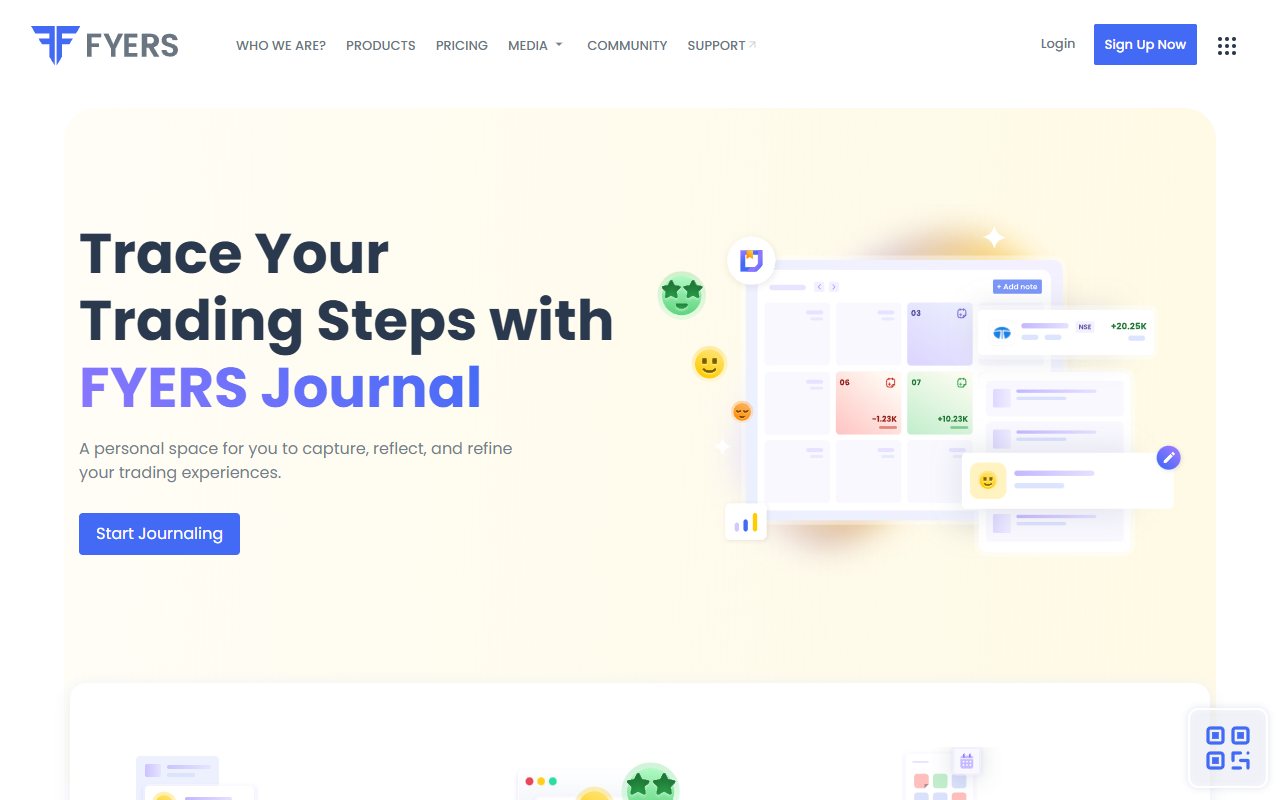
After a planned Nifty trade loses, the next entry can feel urgent. You may want the money back before the next setup is ready. A daily journal gives you a place to name that urge while you still remember it. OneTradeJournal centres this habit: choose a planned trade, write it yourself and return to the reason and feelings behind it. The purpose is to notice repeated mistakes before they become the story of another week. OTJ asks about entry and exit feelings, stress, confidence and changes to the plan. Its ordinary behaviour analytics are free. They help you read the logged sample; they do not stop a broker order or promise that fewer trades will make money. FYERS already supports reflection. Its journal page describes a personal diary, notes, tags and calendar views. If you write a clear reason beside your orders, that routine can serve you well. The comparison is between ways to keep the habit, not between a thoughtful journal and a broker with no notes. FYERS remains your brokerage account. OTJ complements its journal and reports. Keep FYERS for execution, contract notes and money records. Use OTJ when a separate daily form helps you write the explanation you tend to skip. ## A planned loss and a rushed win
Consider this made-up Nifty options session. Options are contracts whose price is separate from the Nifty index level. A trader buys a call after the entry condition in their plan appears. The trader has already written a stop. The trade loses and closes at that stop. Later, the trader enters again without waiting for the same condition. The quantity is larger. This second trade happens to make money. The example describes possible decisions. It is not a customer result or a trading suggestion. In FYERS, one note can link to the relevant orders. A chart and tags can help explain the planned first entry and rushed second entry. This keeps the story close to the broker records. In OTJ, the trader can answer the same questions for both trades. The first may show a calm entry and no change from the plan. The second may show frustration, a larger quantity and a missing entry condition. A profit does not make those details disappear. Ask which part of this story you usually fail to record. If you already capture it in FYERS, another form may add little. If you write only about losses, fixed questions may help you review winning trades with equal care. The free OTJ plan has room for one trade a day in each market. It would not hold both Indian-market trades as separate entries on that day. More entries require paid access. That limit matters in this example, so do not overlook it. ## Write the feeling beside the plan
FYERS lets you write the note in your own way. The note guide lists an 80-character title, a 6,000-character body and eight tags. It allows three images or documents per note. You can link notes to orders or positions. That can suit a trader who prefers one story about a whole session. A chart, a short explanation and two tags may say more than several badly completed forms. You do not need another product just because it offers more named fields. OTJ has separate fields for entry feelings, exit feelings, confidence, stress and the reason for an unplanned trade. It also asks about changes from the plan, satisfaction and mistakes. The planned stop, target and strategy are part of the record. The difference is the reminder. A blank question about exit feelings may prompt you to explain a detail you would leave out of an open note. It cannot make the answer true. If you enter a polite answer to protect your ego, the later review still starts with a poor record. ## Use questions that separate feelings from evidence
Suppose you often close trades sooner than planned after an earlier loss. A useful review question is: what changed between the written plan and the actual exit? The answer might be new market information. It might also be worry about another loss. Write the reason and the feeling separately. “The setup failed” and “I felt anxious” are different parts of the story. Both can be true. Neither should be invented after seeing the result. FYERS notes and tags can hold this explanation if you write it clearly. OTJ gives feelings and plan changes their own places in the form. That may make repeated entries easier to compare. It does not prove that everyone needs a fixed form. Use the same words for the same issue. If one early exit is tagged “fear” and another is tagged “nerves,” decide whether you mean the same thing. Otherwise a later count may split one habit into two small groups. ## Return to the note before the memory changes
The FYERS access guide lists its web platform, MyAccount and mobile app. An existing customer can start from tools they already use. This may remove a step between seeing an order and writing the reason for it. A short note written soon after a trade can be useful. A detailed note written much later may reflect how the outcome now feels. For example, you may describe a nervous entry as confident after it wins. Try to record what you knew and felt at the time. OTJ can be used as an installable web app. Paid voice entry can help fill the form. You still need to check the words and numbers. Voice entry is help with typing, not a way to download your trade history. If you use both journals, choose where the full story will live. Two different notes about one decision can confuse the next review. You might keep the broker's order record and one main explanation, then use the second tool only for a clear extra purpose. ## Review the urge as well as the result
OTJ shows a profit and loss calendar, a running result chart and reports by strategy or time. Profit and loss is often shortened to P&L. The reports cover the trades you recorded. Missing entries can change the picture. If afternoon results look weak, inspect the entries before choosing a rule. Were there more rushed trades? Were the contracts or quantities different? Was the group only a few trades? Those questions are more useful than treating one chart as proof that afternoons are always bad. OTJ's free behaviour analytics let you compare saved feelings, stress, confidence and planned or impulsive entries. They cover your recorded sample, so a missing entry still matters. OTJ can flag possible revenge trading, large size changes or too many trades. Revenge trading means taking a trade mainly to recover a loss. These flags are simple checks of the record. They do not read your mind, diagnose a problem or stop an order in FYERS. Paid Ask Your Journal and Trading Mentor can help with review questions or a supplied chart image. Check the response against your own notes. An AI response cannot explain an unrecorded trade. The sources here do not establish every AI feature across FYERS, so no wider absence is claimed. ## Check note limits and prices separately
FYERS says it does not limit the number of journal notes. The same guide permits notes up to 30 days in the future. These are note limits, not a promise that every other FYERS service has no limits. OTJ's free daily allowance continues without a trial clock. It is still a daily allowance. If you make many trades, selected entries will not give a full account history. Name that gap when you review totals. Current OTJ prices in India are ₹499 a month, ₹1,299 for three months or ₹3,499 a year. Paid access allows more entries and includes AI tools with usage limits. AI means software that produces a response from the information it receives. Its answers can be wrong. The FYERS journal sources checked here do not give a separate journal subscription price. This page does not guess one. Check your account's current access before paying for a second service. If FYERS already meets your needs, keeping one journal may save both money and time. ## Find out which notes you can take with you
A trader may later change brokers. Think about the explanations you will want to keep, rather than assuming every note can be moved. The FYERS note-download guide says journal notes cannot currently be downloaded or shared outside the journal. This is a limit on the notes. It does not say that broker contract notes or other financial reports cannot be downloaded. OTJ offers CSV, JSON and TXT downloads of journal information. JSON stores data in a structured text format. TXT is plain text. A file gives you a copy to keep. It does not prove that another journal will accept every field. Before building a large archive, decide which details must travel with you. An order identifier may help you match a note to the broker report. A clear date, instrument and explanation may help you understand it later. Keep the financial report as well as the explanation. ## Give a second journal a clear daily purpose
Start with a trade you have already taken. Write the planned condition, what you actually did and what changed in your feelings. If the trade lost, record the urge to recover it. If it won after you skipped a rule, record the skipped rule too. Neither result should decide how honest the note is. Return to that explanation at the next review. Ask whether the same urge appears beside other rushed entries. A few examples do not prove that one feeling caused a loss. Read the setup and size as well as the note. The aim is a clearer habit to watch, not a diagnosis. FYERS notes may already give you this routine close to the orders. OTJ is a useful addition when named questions and free behaviour analysis help you keep a daily record across brokers. Manual writing is deliberate, and there is no CSV import or broker sync. Paid voice help can shorten typing, but you still check the saved facts. Free OTJ allows one trade per day per market. Paid plans allow more. A selected daily note is not the whole account if you took other trades. Keep every broker financial record and label the journal sample honestly. For Indian futures and options, include option type, strike, expiry and quantity. Check charges against the contract note because OTJ estimates them. Your journal explains the decision. Your FYERS account still executes the trade and keeps the official money records.
Sources and limits
We checked these public product pages and OneTradeJournal’s current product on 12 October 2026. We did not test a private FYERS Journal account, broker import, payment or AI answer. Check current plans and limits before paying.
- FYERS journal page · Checked 12 October 2026
- How to open FYERS Journal · Checked 12 October 2026
- FYERS note and attachment limits · Checked 12 October 2026
- FYERS note-count limits · Checked 12 October 2026
- Downloading FYERS notes · Checked 12 October 2026
- OTJ journal features · Checked 12 October 2026
- OTJ paid plans · Checked 12 October 2026
A journal cannot promise trading profits. AI answers and fee estimates can be wrong. Check trades and charges against broker records. This page does not give trading, investment or tax advice. Competitor names and website pictures do not imply a partnership or endorsement. Any example is an explanation, not a private account screenshot or a real customer result.