The detailed comparison
A closer look at the daily routine, the tools and the limits of each product.
Choose a section
The first recovery urge matters before the final loss
A Bank Nifty trader takes a planned loss, enters again at a larger size and makes a small profit. A third rushed entry then loses. The last result is easy to blame. The daily reflection needs to preserve the earlier moment when the risk rule changed. OTJ puts one planned trade at the centre of a manual writing habit. Enter the contract and intended risk yourself, then name the urge to recover or take another entry. The pause is deliberate. It is meant to help you recognise overtrading and avoid repeating costly mistakes, without promising that fewer trades will earn more. Free allows one trade per day per market and includes Behaviour analytics. Paid subscriptions allow extra entries. The daily focus is voluntary, not a broker order control or a requirement to trade when the setup is absent. TradeMind has psychology tools too. Its features page describes emotion tracking, playbooks, voice notes and AI, alongside imports and practice tools. Guardian adds advertised interruptions and controls. These deserve credit, with its plan and Dhan-route conflicts kept clear. OTJ begins with the daily explanation you write yourself. ## Write the first point where the risk rule changed
Imagine a trader who loses on a valid Bank Nifty setup, then enters again too quickly with a larger quantity. The second trade makes a small profit, followed by a third impulsive entry that loses. This is a made-up choice sequence, not a customer story or a claim about how any control performed. A record based only on net P&L can miss the process. The first loss may have followed the plan. The second profit may have rewarded a plan change. The last loss may have been the visible outcome of a habit that began earlier. In OTJ, the planned stop, target and strategy save the original intention. Entry stress, confidence and feeling add context. The impulse reason and plan change can describe the recovery attempt, while exit feeling and satisfaction describe how the trade ended. These fields encourage a concrete review: when did size change, why did it change and was the next setup actually present? The answer should remain grounded in the records, rather than reducing the session to a label such as “bad discipline.”
A connected control might respond to a limit during that sequence. Its usefulness depends on the actual route and conditions. A detailed journal then helps examine why the trader reached that point and what routine to change next time. Keep the daily note short and honest. You may have increased size because the first loss felt unfair, even if the second entry won. Free OTJ Behaviour analytics helps you find saved emotions and habits to read again. Paid AI behaviour review is separate. A few notes do not prove that one feeling caused every outcome. TradeMind's voice notes and psychology tools can hold context too. An imported execution alone does not establish the urge you felt. OTJ makes your own manual reflection the daily starting point, so a later review has more than a money sequence. Neither its habit nor its flags block another order. ## Dhan control claims require particular care
The app's Guardian page describes daily and weekly loss limits, tilt detection, escalating interruptions and a broker-level Hard Lock. It says the Hard Lock is Goated-tier and available on Dhan today. That conflicts with Dhan's coming-soon label in the broker directory. There is more detail on the Dhan page. It gives file-upload steps and also advertises Hard Lock. A Dhan file route and a live broker lock are different features. The general coming-soon label still leaves the exact current route unclear. Do not choose a paid plan on the assumption that a live Dhan connection and a working broker lock are shown by consistent documentation. Confirm the exact account route, availability and what the control does before depending on it. The Guardian page separates an app interruption from its advertised broker lock. It also describes a browser overlay for Kite and FYERS. An app interruption, a browser order-panel restriction and a broker-level restriction operate at different places. OTJ offers habit flags for entered patterns such as revenge trading, size spikes and overtrading. Those help review the record. They cannot stop a new order at Dhan, Zerodha or another broker. They do not replace a broker control. If you require an enforced limit during the session, OTJ does not provide it. For someone who wants to understand what led to repeated breaches, its trade-level context can support the later review. These are distinct needs even when they concern the same mistake. The Guardian page calls its app loss limits, meter, tilt alerts, interruptions and morning review free. It separately places broker Hard Lock on Goated. This is a public feature description, not a control test. The wider plan conflicts are a reason to check the exact access you will receive. ## The September promotion cannot settle an October choice
The app's pricing page still displays a promotion saying every plan is free until September 30. This comparison was checked on October 12, 2026. The date has passed. The banner does not prove that paid plans are still free. The same page separately lists a free “Let him cook” plan with manual journaling, one account and a basic dashboard. That continuing free offer should be distinguished from the expired all-plan promotion. No current free trade-volume allowance is shown by the reviewed text. The rupee cards list Cooked at ₹799 monthly, Goated at ₹1,999 monthly and God Tier at ₹4,999 monthly on the pricing page. Treat those as published card prices and confirm the current checkout. The cards also show dollar prices that do not appear to match the rupee labels. Do not use them to work out a final rupee bill. There is another reason to check the exact package. Some Cooked card items appear only in higher plans in the same page's table. This article does not resolve that conflict by promising the more generous version. OTJ's current Indian plans are ₹499 monthly, ₹1,299 quarterly and ₹3,499 yearly. Its ongoing Free limit is one trade per day per market. Behaviour analytics is free. Paid AI and voice tools have usage limits. A busy F&O day may need more entry access, and the Free allowance is not a trial of every paid tool. ## Broker names need an actual route
The broker list labels Zerodha and Upstox as auto-sync. It labels Angel One and FYERS as file import, and Dhan as coming soon. Auto-sync means a broker connection brings trades in; a file import needs you to upload a report. A large broker count does not mean every broker connects in the same way. For a trader choosing software around an existing account, that distinction is more important than the total number of logos. A CSV route requires obtaining and uploading a report. A sync route has its own authorization and account requirements. A coming-soon label does not show that the workflow is ready. OTJ takes the same manual approach regardless of which Indian broker executed the trade. It requires no broker connection, but the trader must enter the values. You can start without setting up a broker connection. That does not prove better security. You still need to check the record. In this made-up trial, an Angel One user compares two tasks. They upload a report to a listed importer. They also enter one OTJ trade with its reason and feelings. Check the full imported history and the daily explanation separately. A faster collection route does not establish the private reason; manual writing is part of OTJ's reflection routine. We did not test an import or broker sync. The public labels describe the route. Check a normal record from your own account to see whether its market, contract and file work. ## AI is present on both sides
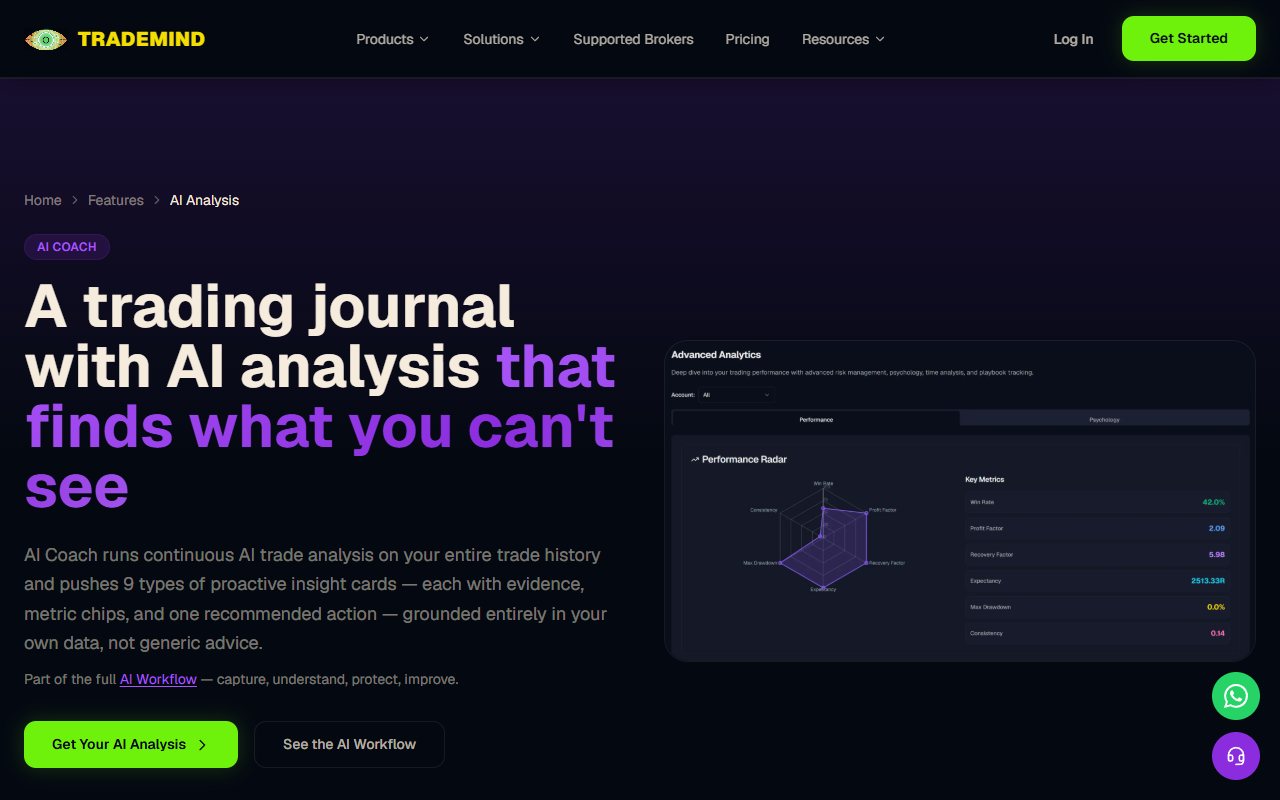
The AI page describes review cards based on saved trades, feelings and playbooks. A playbook is a written set of setup rules. The page says the cards link to the trades used. That is a meaningful competitor strength. OTJ cannot claim to be the only product using AI for habit review. The pricing and feature pages do not fully agree on which plan includes each AI tool. The tools are listed and deserve credit. That does not prove they are free or included in the cheapest paid plan. OTJ's paid tools include Ask Your Journal, Trading Mentor with chart screenshot analysis and pattern feedback. Their usefulness depends on what the trader enters. A prompt about stress-related exits cannot account for trades that were never logged or feelings recorded inaccurately. Ask a small AI question: “Which entered trades show a size increase after a loss, and what reasons did I record?” Open the actual trades and decide whether the pattern needs a closer review. A confident summary should not replace that inspection. We did not compare the accuracy of the two AI tools. The app makes strong claims about correct numbers and better results. We did not test those claims. Do not treat the marketing as a proved outcome. Treat AI as another way to organize a review and check its claims. ## Practice tools do not replace live context
The app advertises backtesting and bar-by-bar replay on its feature page. Backtesting means trying rules against past prices. Replay means moving through a past chart to review an entry or exit. These can be relevant to someone trying to define or rehearse a setup. The backtesting page lists broad markets. It does not prove support for each Indian option contract or past-price feed. Exact plan access also needs checking. OTJ has no historical market replay or backtesting. A chart screenshot reviewed by its paid mentor does not provide the same practice environment. Someone choosing primarily for replay should assess the competitor's actual data and session tools. For an Indian F&O trader, distinguish the underlying index from a particular option premium. A product showing a Nifty chart does not automatically show access to every expiry and strike needed for a strategy test. In a made-up routine, a trader tests a setup on suitable past prices, then writes the live trade in OTJ. The journal could show whether the trader entered before confirmation or exited because of stress. This helps check whether the rule was followed. A backtest does not predict the next session. OTJ's risk multiple requires a valid planned stop. Its exit-efficiency measure compares the entered exit with the logged target. MAE and MFE track the worst and best price moves during a trade. OTJ does not calculate those from a past-price feed. Keep those measurement boundaries clear when comparing dashboards. ## Keep the contract and daily reason accurate
OTJ's Indian instrument choices, expiry picker and lot hints help record the contract. It also estimates brokerage and other required charges. They help keep the contract and planned risk beside the review. Manual entry also requires a sensible routine. Entering a whole week from memory can lead to wrong prices and reasons. Record the choice close to the event when practical, then check trade values against the broker's records. Charge estimates do not replace the actual contract note or tax record. TradeMind lists reports too. We have not checked either product as a tax-filing tool. Broker statements remain the main record of the trades. OTJ's calendar, equity curve, drawdown, strategy and time-of-day reports describe the entered sample. If only selected trades are logged, a polished chart still cannot represent the whole account. Complete recording matters more than the number of metrics offered. ## Choose the daily reflection before adding more tools
OTJ fits an Indian F&O trader who wants to pause around the planned trade and notice when a recovery urge changes size, timing or the rule. Its direct questions and free Behaviour review help return to that moment. Paid extra entries and limited AI can add to the routine, without turning it into a broker control. TradeMind is worth considering for supported imports, emotion tracking, voice notes, AI cards and advertised practice tools. Guardian's app layer and broker lock serve a different purpose from reflection. Resolve the expired promotion, paid-plan differences and Dhan conflict before relying on any particular package. Use a trade you already took for the first daily note. Preserve the original rule and why you left it. A lucky win can still break a rule; a planned loss can still show patience. There is no need to place an order to keep the diary, and one planned trade does not guarantee safety or profit. Keep the full financial history when the daily reflection selects one trade. OTJ Free is one trade per day per market, with paid access for more entries. At the next review, name a repeated urge you want to recognise. The journal supports that learning, while capital decisions and the next broker action remain yours.
Sources and limits
We checked these public product pages and OneTradeJournal’s current product on 12 October 2026. We did not test a private TradeMind account, broker import, payment or AI answer. Check current plans and limits before paying.
- TradeMind prices and expired offer · Checked 12 October 2026
- Indian broker routes · Checked 12 October 2026
- Guardian control claims · Checked 12 October 2026
- AI review cards · Checked 12 October 2026
- TradeMind's listed features · Checked 12 October 2026
- Dhan file route and Hard Lock claims · Checked 12 October 2026
- Listed backtesting markets · Checked 12 October 2026
A journal cannot promise trading profits. AI answers and fee estimates can be wrong. Check trades and charges against broker records. This page does not give trading, investment or tax advice. Competitor names and website pictures do not imply a partnership or endorsement. Any example is an explanation, not a private account screenshot or a real customer result.