The detailed comparison
A closer look at the daily routine, the tools and the limits of each product.
Choose a section
Reflect on the urge before calling the day disciplined
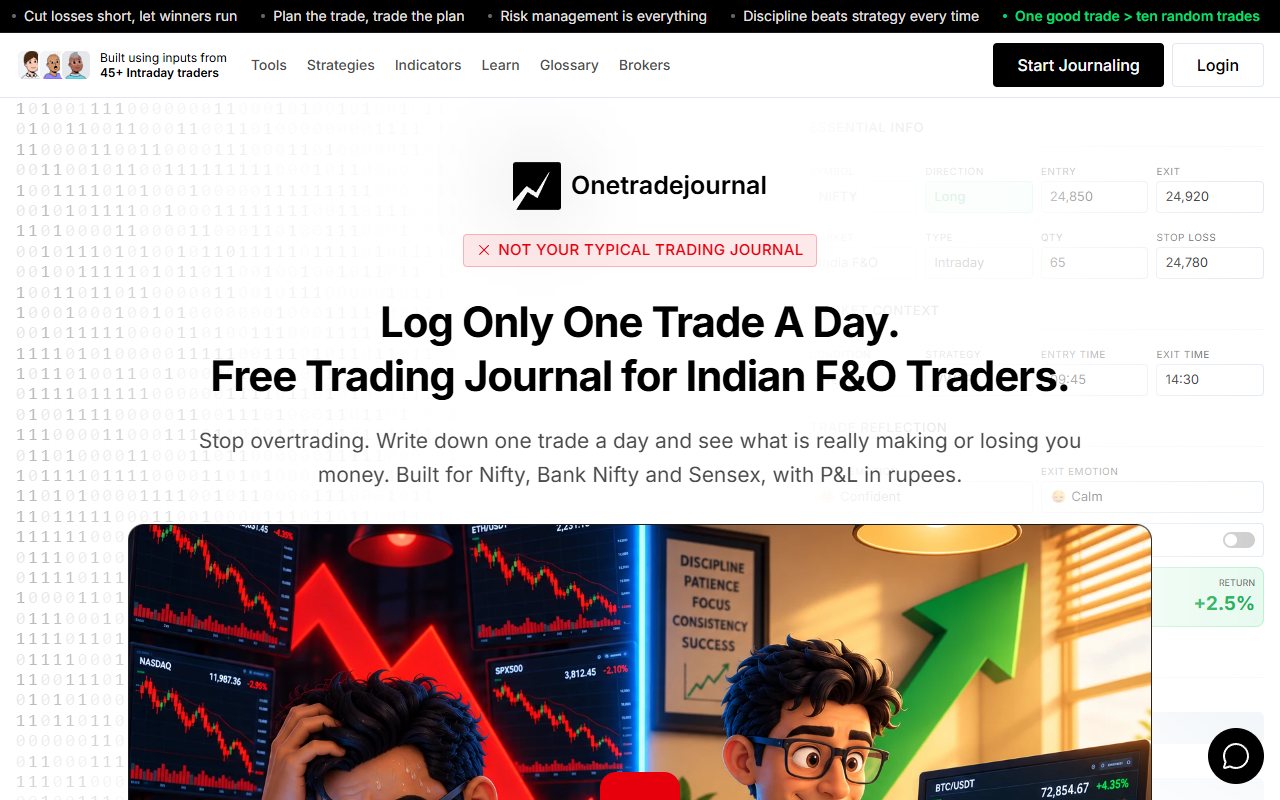
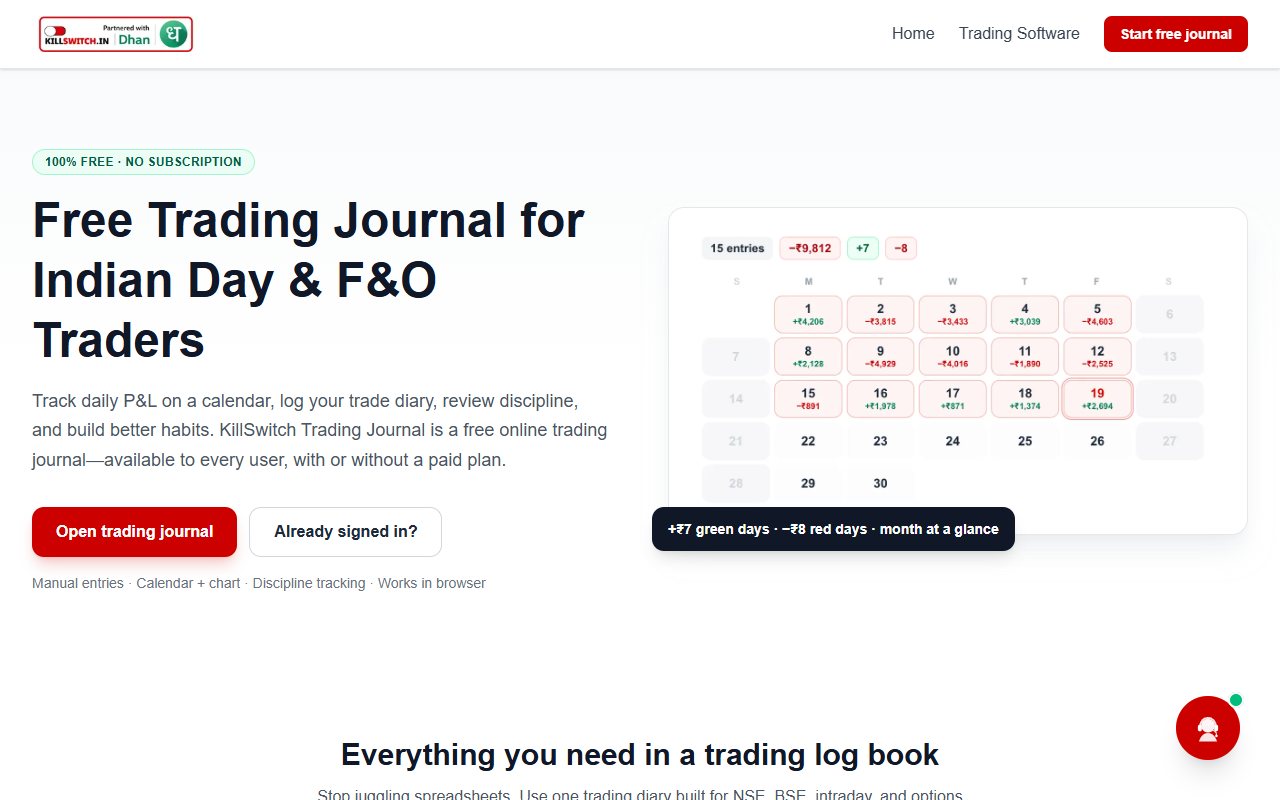
The session ends flat. You followed the first stop, rushed the second entry to recover and took a later planned trade. The total alone cannot tell you which moment you want to change. OTJ builds a daily manual reflection around one planned trade. Save its contract and risk rule, then write the emotion and urge to enter again. Manual writing is deliberate. It is meant to help you recognise overtrading and repeated costly mistakes rather than turn a flat or green day into proof of discipline. Free allows one trade per day per market and includes Behaviour analytics. Paid plans permit more entries. The one-trade focus is a voluntary habit, not a broker order limit. If the day contained other trades, keep that full financial record as well. KillSwitch's free journal also puts daily psychology first. You manually enter net P&L, trade count, discipline ratings, emotions and lessons. It deserves credit as a simple reflection routine. The useful difference is whether you need the whole-session note or contract-level context around the planned trade. Its separate paid controls should not be mistaken for free journal features. ## A short daily diary can preserve the essential lesson
The app's journal explicitly includes plan adherence, FOMO, revenge trading, stress, overtrading urge and respect for risk limits. It also lets users record whether the app was used during the session. These are clear questions about habits and feelings, according to the journal feature description. Both products ask about following rules. The free KillSwitch journal may be enough for a simple end-of-day review. Pause after the closing bell, sum up the result and write one lesson. Consider an equity swing trader who rarely changes a position. On a day with no transaction, the relevant review might concern patience or the urge to interfere with the plan. A daily note may be easier to keep when there was no new trade. The right routine depends on what the trader wants to remember. OTJ earns its place when the person needs finer distinctions. Entry confidence and exit satisfaction can differ. A trader might begin calmly, become stressed while holding, and exit from relief. Recording those points separately helps prevent the entire experience being reduced to one feeling assigned after the outcome is known. Neither method removes the need for honesty. A trader can mark a rushed choice as planned in either product. Record one clear action while it is fresh in your mind. Use that note to change a small part of the routine. OTJ's free Behaviour analytics lets you return to saved emotions and habits. It can help find entries to read, but a flag does not prove a motive or diagnose a problem. Paid AI behaviour review is separate. Read the actual reason before naming a repeated habit. Both products make room for your own writing. Neither a broker execution nor a daily money total establishes an unwritten recovery urge. The KillSwitch diary can save that reason in a session note, while OTJ attaches it to a trade. Manual reflection is not unique to OTJ, and it is not the only possible way to review honestly. ## A made-up Nifty session that ends flat
Imagine a trader who takes three Nifty option trades. The first follows the written setup and loses ₹800. The second is an impatient attempt to recover that loss and makes ₹500. The third follows another valid setup and makes ₹300. These are made-up figures for record keeping. They are not customer results or expected returns. The three price results add up to zero before costs. A daily total alone cannot tell the reader that the second entry broke the plan. Adding a clear review can: “I rushed the second trade after the loss.” A short daily journal can therefore capture the essential lesson without reconstructing every fill. Separate records let the trader go further. In OTJ, the first loss can remain a disciplined trade. The second profit can carry the impulse reason, elevated stress and recorded plan change. The third can have its own setup and exit feeling. Later, the trader can compare planned trades with recovery attempts in more records that were entered the same way. That difference matters when reviewing a profitable week. If rule-breaking wins are mixed with valid wins, the account result may encourage a habit the trader would not deliberately choose. Separating the records does not prove which strategy will work next. It simply saves enough details to judge the process more carefully. OTJ is useful here because the fields keep the questions attached to the relevant trade. A clear daily note may still do the job. The reader needs to find the links between trades in that note each time. ## The free diary and paid controls serve different purposes
The app also sells a separate risk-control service. Its trading software page describes monitoring account limits, cancelling pending orders and flattening positions when set limits are reached. It identifies Dhan as live and Zerodha as coming soon. These tools should not be assigned to the free diary. The distinction changes the buying choice. A person wanting an external limit on further trading should check the connected service, the supported broker and the settings. Someone wanting a free place to review the day can check the journal without purchasing that service. OTJ does not send orders, close positions or block the next entry at the broker. Its habit flags can draw attention to recorded revenge patterns, size changes and overtrading. They are review aids based on entered details. They cannot enforce a loss limit while the trader is placing orders elsewhere. The current terms, dated 10 October 2026, say the controls depend on broker connections. Actions can be delayed or fail. The service does not promise to prevent every loss or rushed trade. A journal and a control can serve the same person. The control concerns what is allowed during the session. A detailed record concerns why a choice occurred and what to review afterward. Those purposes can overlap without one replacing the other. ## What contract detail changes for Indian F&O
A daily rupee result is easy to enter from any Indian broker's statement. The manual journal says NSE and BSE traders can use it across brokers. This is a diary claim. It does not prove each broker connects to the paid control service. OTJ's Indian F&O form includes Nifty, Bank Nifty and Sensex. It also has expiry selection, lot hints and charge estimates. This is helpful when the question concerns a particular contract rather than the whole session. For example, imagine two Bank Nifty option trades on the same day. One follows the intended expiry and position size. The other is entered with a different expiry than planned and is closed quickly after the mistake is noticed. A daily review should mention the error. Separate records also save which trade carried it, the quantity entered and its result. That detail makes later review less dependent on memory. It can show whether the trader repeatedly changes the plan when several similar contracts are visible. It does not show that any expiry or instrument is better to trade. OTJ's estimated brokerage and other required charges help put an entered result in context. They are not contract notes. Match the actual money and fees with broker records. The journal helps review choices. It does not replace the broker statement. ## Count winning days and winning trades separately
A monthly calendar answers a clear question: how did the trading days add up? It should not automatically be read as a trade win rate. A winning day can include losing trades, and a losing day can include several wins. OTJ shows the share of saved trades that won. Profit factor compares total wins with total losses. Drawdown shows a fall from an earlier high. You can also compare strategies and times of day, or use daily results and account-result charts. Those can be useful when all relevant trades are entered in the same way. If the trader logs only the most memorable positions, the measures describe that selected sample. The planned stop deserves particular care. A meaningful risk multiple needs a valid stop recorded with the trade. Adding an arbitrary stop after the event can make the calculation look precise while weakening the lesson. Decide what detail is required before checking the number. OTJ's exit check compares your exit with the target you saved. It does not rebuild the full past price path or its largest moves in either direction. If the question is how far a contract moved after the exit, the trader needs appropriate historical evidence in addition to the journal. For the daily-journal user, one practical alternative is to choose a single review question for the month. “Did I respect my session limit?” is easier to answer from consistent daily reviews than an elaborate claim about trade-level edge made from incomplete data. ## AI is an extra review channel, not the choice itself
OTJ's paid features include Ask Your Journal, Trading Mentor, chart screenshot analysis and pattern feedback. A trader with separate records can use those tools to organize questions about recurring choices and the context saved with them. A made-up prompt might ask why trades entered after an early loss show more changes to the original plan. A useful response would point toward records to inspect and a habit to test, such as writing the next setup before acting. The response can be wrong, and it cannot see trades that were never recorded. The reviewed free-journal page did not confirm a similar AI chat feature or its limits. It remains unknown. The practical distinction supported here is OTJ's verified paid in-app review tools. Do not buy AI simply to obtain a confident reason for every red day. Often the clearest finding is a plain note: “I increased size because I wanted the day to turn green.” A structured record gives a human reader and an AI tool better material to work with. ## Keep the daily routine within the record it can hold
OTJ fits an Indian F&O trader who wants to pause around the planned trade and name the urge to recover, change size or abandon the rule. Its contract fields and separate entry and exit emotions support that daily reflection. Behaviour analytics is free; paid AI is an optional, limited review channel. Free holds one trade per day per market. Paid India plans are ₹499 monthly, ₹1,299 quarterly and ₹3,499 yearly. More entries need the paid allowance. The current plans explain access. A selected daily reflection must not be described as the full return of a busy account. KillSwitch's daily diary costs nothing for registered users and includes psychology ratings and notes. It may be enough if you want one session result and one clear lesson. OTJ cannot claim to be the cheaper journal. Its reason to consider is the detail you want beside the specific trade, rather than a promise to prevent the next mistake. Start with a day you have already traded. Write the moment you acted differently from the plan and the reason. There is no need to force an order for the diary. Review a lucky rule break and a disciplined loss with the same care. If broker enforcement is a separate need, investigate KillSwitch's paid service and its current Dhan route. Connected actions can be delayed or fail. OTJ never sends or stops broker orders. The daily habit supports reflection; your risk decisions and the next action remain yours.
Sources and limits
We checked these public product pages and OneTradeJournal’s current product on 12 October 2026. We did not test a private KillSwitch Trading Journal account, broker import, payment or AI answer. Check current plans and limits before paying.
- KillSwitch free daily trading journal · Checked 12 October 2026
- KillSwitch broker risk-control software · Checked 12 October 2026
- KillSwitch terms and broker availability · Checked 12 October 2026
A journal cannot promise trading profits. AI answers and fee estimates can be wrong. Check trades and charges against broker records. This page does not give trading, investment or tax advice. Competitor names and website pictures do not imply a partnership or endorsement. Any example is an explanation, not a private account screenshot or a real customer result.