The detailed comparison
A closer look at the daily routine, the tools and the limits of each product.
Choose a section
A chart picture needs your own reason beside it
You can look back at a chart and recognise the entry. The harder detail to recover may be what made you press buy at that moment. Were you following the setup, afraid of missing the move or trying to recover a loss? A picture cannot prove a private reason. OneTradeJournal makes that reflection part of its daily routine. Focus on one planned trade, enter it yourself and write how you felt. At exit, record whether you followed the plan. The goal is a habit that helps you notice rushed decisions and repeated mistakes before they become an unread pile of trades. Tradepixa has a different starting point. It reads visible fields from chart pictures into editable drafts and also offers manual entry. Its form includes emotion labels, rule-following choices, notes and lessons. It is not a journal without psychology. OTJ's free plan allows one trade per day per market; paid plans allow extra entries. One trade a day is the intended review habit, not a broker order limit or a compulsory cap on every subscriber. The trade you write about still needs accurate prices and an honest reason. Tradepixa can save typing when its picture draft is useful after correction. OTJ keeps your own writing at the centre. This page compares those published approaches and their limits. We did not upload a private chart, test AI extraction or complete a payment. ## A picture draft is not a broker record
A screenshot is a picture of what was on a screen. It can show a chart, price labels and drawings. It helps keep the setup visible. It does not always show the exact trade that reached your broker account. Tradepixa says it reads visible trade fields from a chart picture. Its output is an editable draft. Check each field before treating it as a saved trade. A neat-looking form does not prove that the entry, exit or quantity is right. For example, a chart might show a planned entry line. The actual trade may have filled at a different price. A target line may be part of a plan rather than a completed exit. A picture may leave out a partial close or the trade charges. OTJ does not read a picture into a new trade record automatically. Its manual form also needs checking. Typing a price yourself does not make it correct. For both products, keep the broker record beside the draft when accuracy matters. ## An index chart and an option price are different
Tradepixa has an official Nifty and Bank Nifty page. It describes chart-led review, setup notes, mistakes and lessons for Indian index traders. That shows an Indian use case. It does not prove that every option detail can be read from any picture. Imagine a made-up Nifty option trade. The trader watches the Nifty index chart to decide when to act. The actual trade is an option contract. The chart level and the option price are not the same number. The option also has a strike, type and expiry. Keep the chart to show the setup. Keep the broker record for the actual contract and prices. Do not use a visible index level as the option entry price. This is a record-keeping example, not advice to trade a particular contract. OTJ provides manual Indian option fields for strike, type, expiry and quantity. You still have to choose and check them. We did not test Tradepixa's exact option-field reading or account limits. Ask about your particular contract if that decides your choice. ## Make the feeling part of your daily review
A chart can show where price moved. It cannot prove why you entered. Two people could trade the same price and quantity for different reasons. One may follow a written plan. The other may try to recover an earlier loss. OTJ has separate prompts for entry and exit feelings. It also records stress, confidence, the impulse reason and a change from the plan. These help when your current note says only good trade or bad trade. They give each part of the decision a place. Tradepixa already discusses feelings and mistakes. Its official guide covers fear of missing out, chasing moves and trading after a loss. Its public form also lists emotional states and trade lessons, so both products can preserve this context. We did not confirm a field-by-field match between the products. OTJ's case is its clear set of separate prompts. Tradepixa may suit someone who prefers a picture first, then adds the reason. Try the form you will actually finish. OTJ's ordinary behaviour analytics are free. They compare saved emotions, stress and confidence with your recorded results. Use the views to find entries worth reading. Paid AI reviews are separate; neither a chart draft nor a score proves what caused a loss. ## A winning late entry can still break a rule
Consider another made-up case. A Bank Nifty trader misses the first move. The trader enters late because the price seems likely to run away. The trade wins. The profit does not tell us whether the written entry rule was followed. In Tradepixa, a chart picture may preserve the planned entry area and the later move. Its published mistake-review tools are relevant to this lesson. Add the real trade details and the reason. Do not expect the picture to explain a feeling by itself. In OTJ, the trader can record fear of missing out, the late entry and the change from the plan. Separate entry and exit feelings can show whether the worry lasted. A process problem can be recorded even when the trade made money. Ask one narrow question about the saved record. Did the written condition exist before entry? Was it met? Neither journal should turn one win into proof about a whole strategy. This example is made up. It does not claim either product improved a customer's results. ## Tradepixa has more published free entries
The current public billing view lists unlimited manual journal entries on Tradepixa's free plan. It also lists twenty-five chart-picture reads per month. These are different limits. One covers manual records. The other covers monthly AI picture use. OTJ free access is one new trade a day per market workspace. Several Indian-market trades in one day do not each get a free slot. More entries need paid access. OTJ has no broker sync or CSV import, even on a paid plan. This is a clear reason to consider Tradepixa if you need many manual entries at no charge. OTJ's smaller allowance follows its daily habit. Its case is focused reflection and clear psychology prompts, rather than the number of entries you can save free. Tradepixa's free picture allowance is monthly, not twenty-five reads every day. The treatment of failed or repeated reads needs checking in your account. We did not test how its usage counter changes after an upload. ## Both products offer AI review
Tradepixa's published Pro plan includes Pixa AI. It describes review of saved trades, pictures, mistakes and setups. Its official India page also describes Pro review and exports. Both products describe AI review, with different input and plan limits. OTJ's paid Ask Your Journal and Trading Mentor can help you ask about entered records or a supplied chart picture. Use has limits. An answer can be wrong or miss an unwritten reason. It should start a check, not replace your record. Tradepixa's picture-reading AI can also make errors. Its description calls the fields drafts. That limit matters. A mistake flag or a discipline score is not proof of a trader's private intention. It is not a diagnosis of a person. Before choosing mainly for AI, check the actual feature and plan. Read one output against the source details in your own trial. We have not run that test. Marketing does not give this page a basis to promise safer trades or future profits. ## Read the monthly price in the right currency
The fresh Tradepixa guest billing view shows India Pro at ₹499 per month. Its billing copy says INR for India and USD for other users. A different currency display should not be treated as a different Indian offer without checking it. Current OTJ India plans are ₹499 for a month, ₹1,299 for three months and ₹3,499 for a year. The posted OTJ monthly amount matches the Tradepixa monthly amount reviewed here. That narrow price comparison does not prove better features or free access. We are not comparing an assumed Tradepixa yearly total. We did not test checkout, taxes, activation or refunds. The billing page mentions switching when billing is active. Confirm the live offer shown to your account before paying. Start with the feature you need. A lower monthly price matters only if the product solves that need. If free manual entries cover your use, compare that option before assuming you must buy either paid plan. ## Check the record you can take away
Tradepixa's India page says Pro users can export PDF and CSV records. A PDF may be useful to read with someone else. A CSV is a file of rows that a spreadsheet can open. We did not test the exact file fields or limits. OTJ exports saved entries as CSV, JSON or TXT. Those are ways to keep your records. They do not mean OTJ can import an old broker history or rebuild every trade from another app. Before moving a long history, check a small export. Look for prices and quantities, but also the reason, mistake and feeling you want to keep. A file may preserve totals while leaving out a lesson that matters to you. A guest workspace may differ from a saved account. Tradepixa tells guests that records use the current browser and asks them to sign in for saved sync. That is not broker sync. Check access and backup before relying on guest data as your only copy. ## Tie the totals to the actual trades
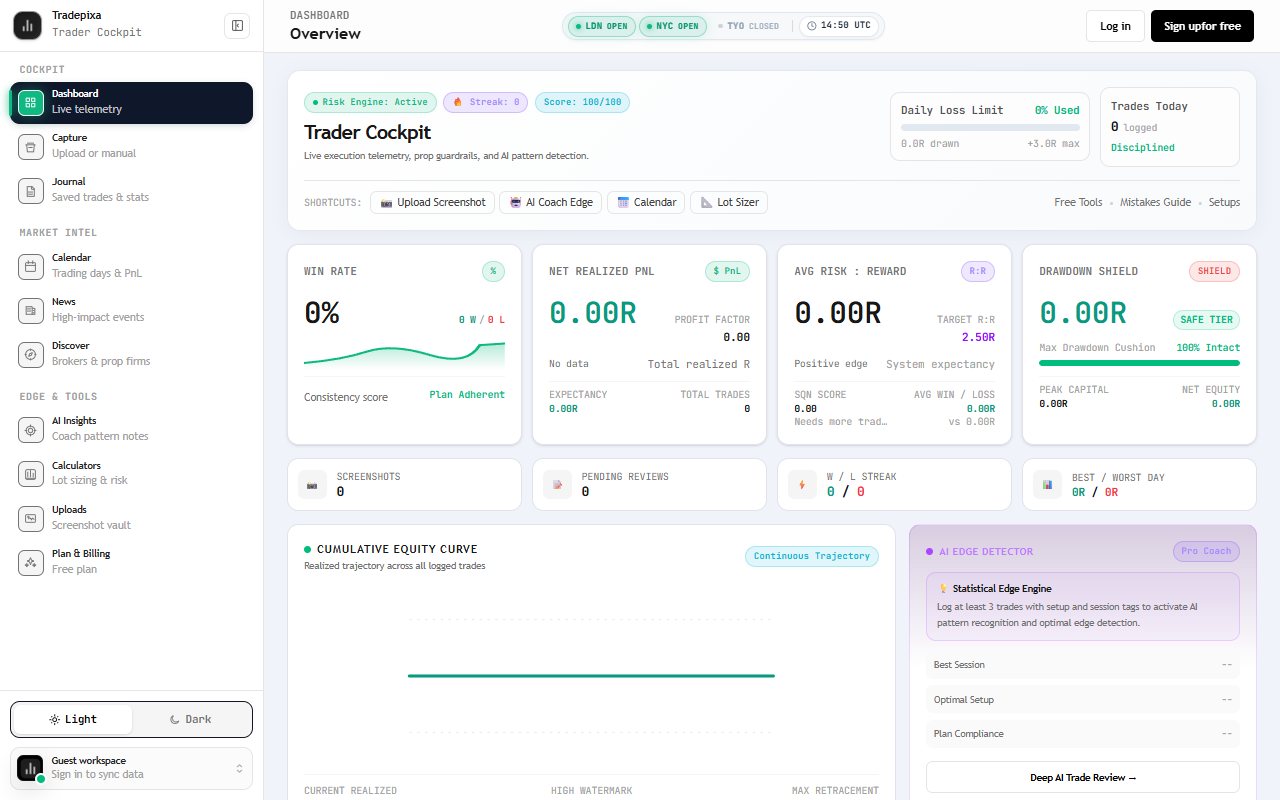
OTJ reports use the entries you save. They show a trade calendar, profit and loss and a chart of logged results. If some trades are missing, the report covers only that sample. It is not a complete account result. OTJ gives estimated trade charges. An estimate is not an official broker contract note or a certified tax report. Use broker evidence to check the net result. We have not tested Tradepixa's fee calculations either. Demo figures need the same care. A published dashboard can contain example data or an empty guest view. Do not treat its score or profit line as a customer's result. Our picture shows a public guest view, not a tested profitable account. ## Choose the daily habit or the picture-led routine
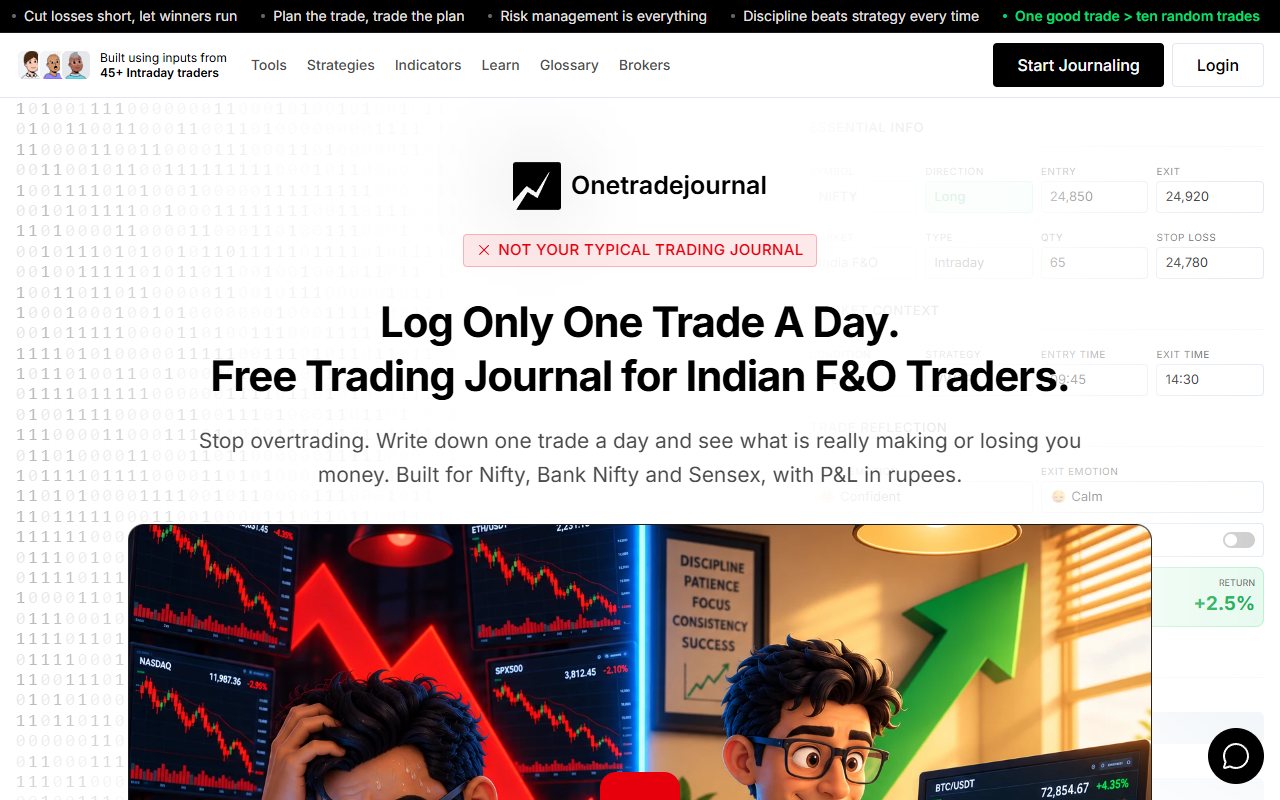
Choose OneTradeJournal if you want to stop at a focused daily review and write the reason in your own words. Its entry and exit feelings, stress, confidence and plan-change prompts give you a clear place to start. Return to the note when you next feel the urge to chase a move. Use a trade you already took. Keep the picture if it helps explain the setup. Add the actual option details from the broker record and say whether the written rule was met. A winning late entry can still need a careful review of the reason. Choose Tradepixa when its editable picture drafts or unlimited free manual entries fit your routine. Its emotional-state labels, mistake notes and paid AI should receive credit too. Check the draft fields and the live plan rather than assuming a picture is a verified execution record. The intended OTJ benefit is a daily writing habit that helps you recognise repeated costly mistakes. It is not a guarantee that you will lose less or that a picture-led journal cannot support reflection. Keep the whole broker history if you traded more than the daily note covers. Whichever routine you choose, use honest context. An AI answer cannot recover an unwritten private plan with certainty. A journal gives you a place to review the decision; the next order and its risk remain yours.
Sources and limits
We checked these public product pages and OneTradeJournal’s current product on 12 October 2026. We did not test a private Tradepixa account, broker import, payment or AI answer. Check current plans and limits before paying.
- Tradepixa manual entry, picture drafts and billing · Checked 12 October 2026
- Tradepixa India review and Pro exports · Checked 12 October 2026
- Tradepixa guide to feelings and mistakes · Checked 12 October 2026
- OneTradeJournal homepage and daily habit · Checked 12 October 2026
- OneTradeJournal current plans, checked against product code · Checked 12 October 2026
A journal cannot promise trading profits. AI answers and fee estimates can be wrong. Check trades and charges against broker records. This page does not give trading, investment or tax advice. Competitor names and website pictures do not imply a partnership or endorsement. Any example is an explanation, not a private account screenshot or a real customer result.