The detailed comparison
A closer look at the daily routine, the tools and the limits of each product.
Choose a section
Write the impatience before replaying another exit
You leave a real trade early, then practise holding it longer on a past chart. That later result cannot explain the impatience you felt at the time. OneTradeJournal, or OTJ, is built around writing one daily trade so the personal reason stays with the real action. Save the setup, planned risk and feelings at entry and exit. The aim is to build discipline, reduce overtrading and avoid repeat mistakes. It does not promise that a patient exit will always win. OTJ cannot block orders or enforce a loss limit at your broker. Free OTJ permits one saved trade per day per market. Paid plans allow extra entries. The one-trade focus is a daily habit, not a reason to hide other real trades or replace the account history with one selected note. Traderizz's features page also describes manual entries, tags, notes, mistakes and screenshots. Its replay and R Simulator add a practice route. Those tools can support a personal review too, when you keep the real reason and the later practice result separate. Its India page names Delta Exchange India and Shark for imports. Indian equity-broker trades are manual in the reviewed description. OTJ is manual on every plan, especially for Indian futures and options, or F&O, which are contracts linked to a share, index or other asset. We checked public pages on 12 October 2026, without testing an account, import or replay. Choose the daily reflection and wider tools you need. India branding or a free offer alone does not settle that choice. ## A good result can still hide a rushed entry
Imagine a made-up Nifty call trade. You enter late, after the trigger you planned. You use more quantity than you intended. The trade closes at a profit. That result does not tell you whether the decision followed your rules. If you only save the money made, the trade may look like one to repeat. The missing detail is how and why your plan changed. In OneTradeJournal, enter the actual contract and prices. Then write the original plan and the change. You can save the urge behind the entry, the feeling at exit and the mistake you want to review. These fields help separate the outcome from the process. They cannot judge the trade for you. You decide what the rule meant and whether it applied. Traderizz's notes and mistake context can also hold that story. OTJ suits you when its separate questions help you write that reason each day. Its ordinary behaviour analytics are free and compare saved feelings and habits with the results. ## There is more to Traderizz than imports
Traderizz's feature page lists manual entries, strategy tags, notes, mistake context and multiple screenshots. It also describes bar replay and an R Simulator. These are published features, not results from a private account test by us. A flexible note can hold a clear trading reason. A tag can mark a mistake or a setup. Traderizz therefore deserves credit for personal context too. Its note and mistake fields can hold the reason beside imported numbers. OneTradeJournal makes several parts of that context separate. You can record entry feelings, exit feelings, stress, confidence, satisfaction, impulse reasons and changes to a plan. It also has strategy, mistake and note fields. Ask which method helps you write a useful record. Some people prefer a blank note and a few tags. Others need a short prompt so they remember to explain an exit. Choose the daily questions you will keep answering honestly. ## Replay helps with practice, while notes explain the real choice
Traderizz advertises bar replay for practice on past charts. OneTradeJournal does not offer historical market replay or backtesting. If replay is a feature you need, keep that difference near the top of your choice. Practice can help you inspect what a setup looked like. It does not prove what you would have done with real money at risk. The next bar may look easy to wait for when you already know you are in a practice session. A real early exit may have had another cause. You may have felt worried after a previous loss. You may have needed to leave the screen. You may also have followed an exit rule that was not obvious from the picture. Save that reason before comparing the trade with a replay. In OneTradeJournal, your entry and exit feelings can sit beside the note. The useful question is why the real decision differed. A later chart path is not proof that holding longer would always have been the right choice. ## Keep simulated results apart from actual account results
The Traderizz feature page says its R Simulator gives a what-if money view without changing logged actual profit or loss. In this context, R means a result expressed relative to risk. A chosen value for one R turns that practice result into a sample money amount. That sample is not the money your broker account made. It does not prove the same fills, costs or position size were available in the real market. Keep the label visible when you read the chart. OneTradeJournal's reports use the trade records you enter. Its risk-based metrics need valid planned-risk inputs. Adding a stop later merely to make a number look better weakens the review. Save the plan you actually used, and explain any change. This page's small example and diagram are explanations only. They contain no real customer records. We have not validated Traderizz's simulator calculations or imported results, and we make no promise that practice outcomes will repeat in live trading. ## Indian options notes should describe the option itself
OneTradeJournal supports strike, expiry and call or put fields for relevant Indian options entries. It also gives lot guidance and charge estimates. These can help you write a clearer manual record. The price of an index is different from the premium of its option. Keep that distinction clear in entry, stop and target notes. If a chart uses the index level while the trade form uses the option price, explain both. Traderizz describes manual instruments for NSE, BSE and index trades. We have not confirmed that those custom instruments provide the same contract prompts or fee guidance. Unknown detail is not proof that a feature is missing. Before trusting a report, check the source trade. Compare quantity, prices and contract details with your broker records. A form that is convenient to use can still contain a typing error. An estimate is still an estimate, even when it appears beside a precise price. ## A useful question needs a useful record
OneTradeJournal's paid review tools include Ask Your Journal and Trading Mentor. You can ask about your saved records or request feedback on a chart picture. Usage has limits, and the answers can be wrong. Try a narrow question. For example: which saved trades show a change from my planned exit, and what reason did I write? Then open those records. Check whether the answer fits the note rather than treating the explanation as a fact about your personality. Traderizz's current launch pricing includes Edge. The current pages establish Edge access. We did not confirm its exact tasks or limits. We do not call Traderizz AI-free or assume that the two assistants do identical work. An assistant may infer a feeling, but it cannot establish an unwritten private motive as fact. It also cannot know a trade you omitted. Pay for a review tool only if the task fits your needs and the source entries let you check its answer. ## Free during launch does not settle the future price
Traderizz's current pricing page offers free access during launch. It lists unlimited live journal trades, backtesting trades and journals. This is the present published offer. It is not a guarantee that every future feature will stay free. OneTradeJournal has an ongoing free plan with one new trade a day per market. Paid plans allow extra manual entries. AI and voice are paid tools with usage limits. Its India plans are ₹499 monthly, ₹1,299 quarterly and ₹3,499 yearly. OneTradeJournal is not cheaper than Traderizz's current free offer. Its value must come from a feature or a writing habit you prefer. It would be misleading to hide the free launch offer behind a general claim about low prices. If you try Traderizz, check the current terms before you rely on a future budget. If you try OneTradeJournal, check whether the free daily limit fits your real record. Several Indian option trades in one market do not each get a new free allowance just because the contracts differ. ## Currency and calendar choices affect how you read a sample
Traderizz describes INR results, India Standard Time dates and USDT-to-INR conversion for Shark imports. We did not compare its converted amounts with an exchange account. Read them alongside the source record when accuracy matters. A calendar can make a weekly review easier, but it still needs a clear sample. A late crypto session and a daytime index session may belong to different routines. Mixing them can hide the behavior you wanted to inspect. OneTradeJournal has market workspaces. Use the relevant workspace consistently and keep the meaning of each note clear. A selected set of entries is not the whole account history. Its totals should not be read as a statement of everything you traded. For a first review, choose one market and one question. You might ask whether you changed the planned exit after a stressful entry. That is easier to inspect than a broad comparison of unlike cash totals. ## Screenshots help only when their meaning is clear
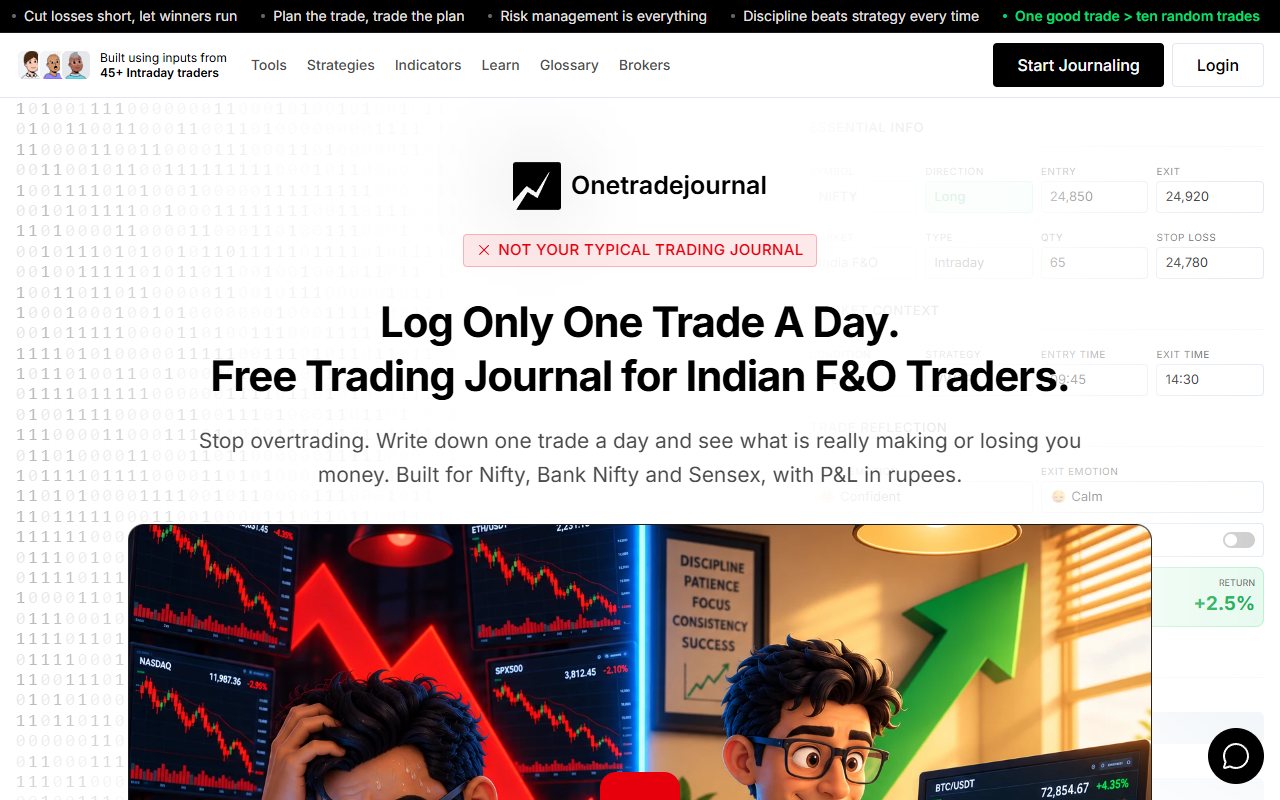
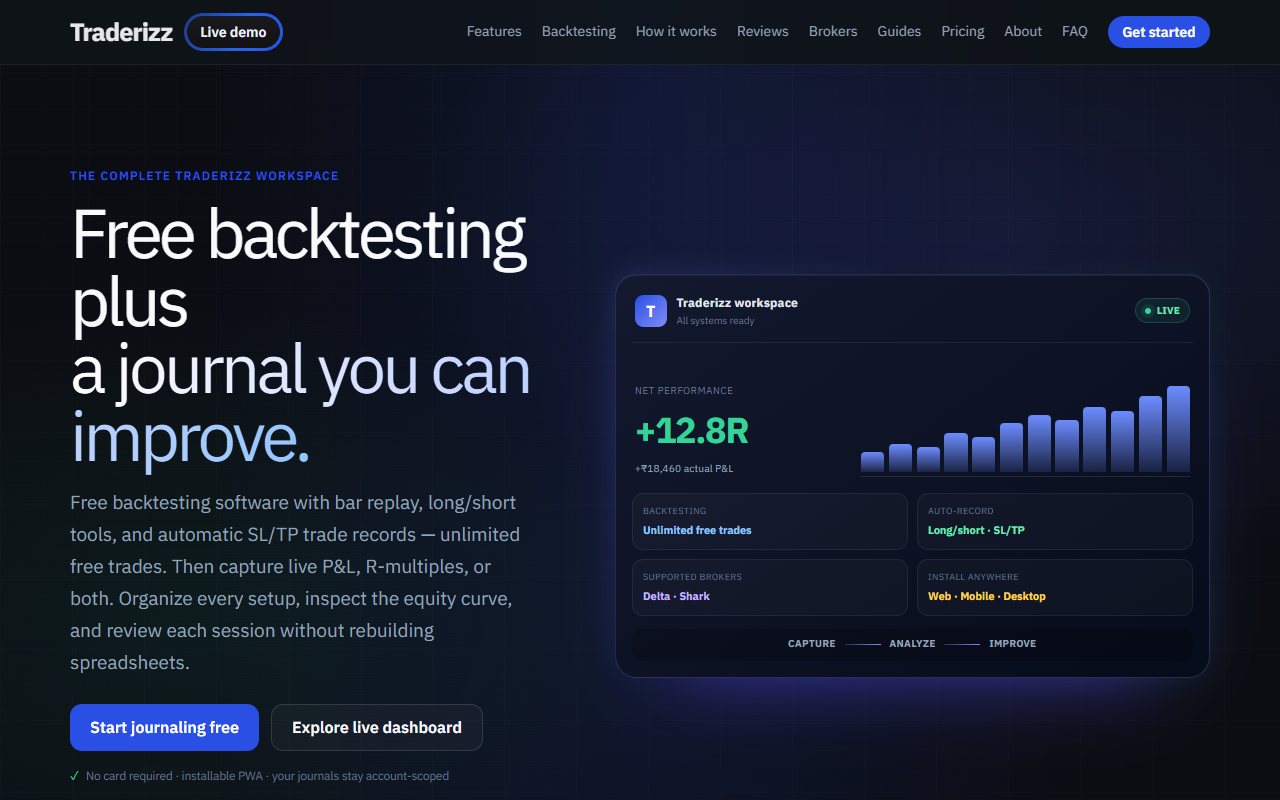
Traderizz publishes support for multiple chart pictures per trade. OTJ's paid Trading Mentor can discuss a chart picture. That is separate from the described multi-picture trade record. A picture can show the setup, but it does not prove the fill price or reveal the reason in your head. Write what the picture shows. Was it taken at entry, at exit or later in review? Is it the traded instrument or the underlying index? These small details make it easier to understand the note a week later. If you add a later chart, label it as a later view. Do not let it replace the plan you used at the time. Knowing the next move after the event can make an old decision seem much easier than it was. Check pictures for private account details before you share them. We have not audited either service's security. The public website images on this page show marketing pages, not private account tests or proof that the displayed sample returns are real. ## Try the decision you actually need to remember
Choose a past trade whose facts you can check. In Traderizz, first confirm whether the venue is supported for import. If it is not, use the manual route. Keep a practice record clearly apart from the live trade. In OneTradeJournal, save the contract, plan, entry feeling and exit feeling. Explain the one point where the decision changed. Read the record again after a few days and see whether you can still understand why you acted. Choose OTJ when you want to write one daily Indian trade and notice the impatience behind a changed exit or another unplanned entry. Read that note before judging the habit by a later practice profit. Consider Traderizz when its own notes, supported imports, replay or current free access suit your needs better. Neither journal promises profit, and neither should replace broker records or professional advice on tax filing. Keep the real broker record and your personal reason. A daily journal supports reflection; it does not make a practice result a promise about real money.
Sources and limits
We checked these public product pages and OneTradeJournal’s current product on 12 October 2026. We did not test a private Traderizz account, broker import, payment or AI answer. Check current plans and limits before paying.
- Traderizz Indian-market and broker boundaries · Checked 12 October 2026
- Traderizz manual journal, bar replay and R Simulator · Checked 12 October 2026
- Traderizz current free launch access · Checked 12 October 2026
A journal cannot promise trading profits. AI answers and fee estimates can be wrong. Check trades and charges against broker records. This page does not give trading, investment or tax advice. Competitor names and website pictures do not imply a partnership or endorsement. Any example is an explanation, not a private account screenshot or a real customer result.