The detailed comparison
A closer look at the daily routine, the tools and the limits of each product.
Choose a section
A winning recovery can hide a repeated mistake
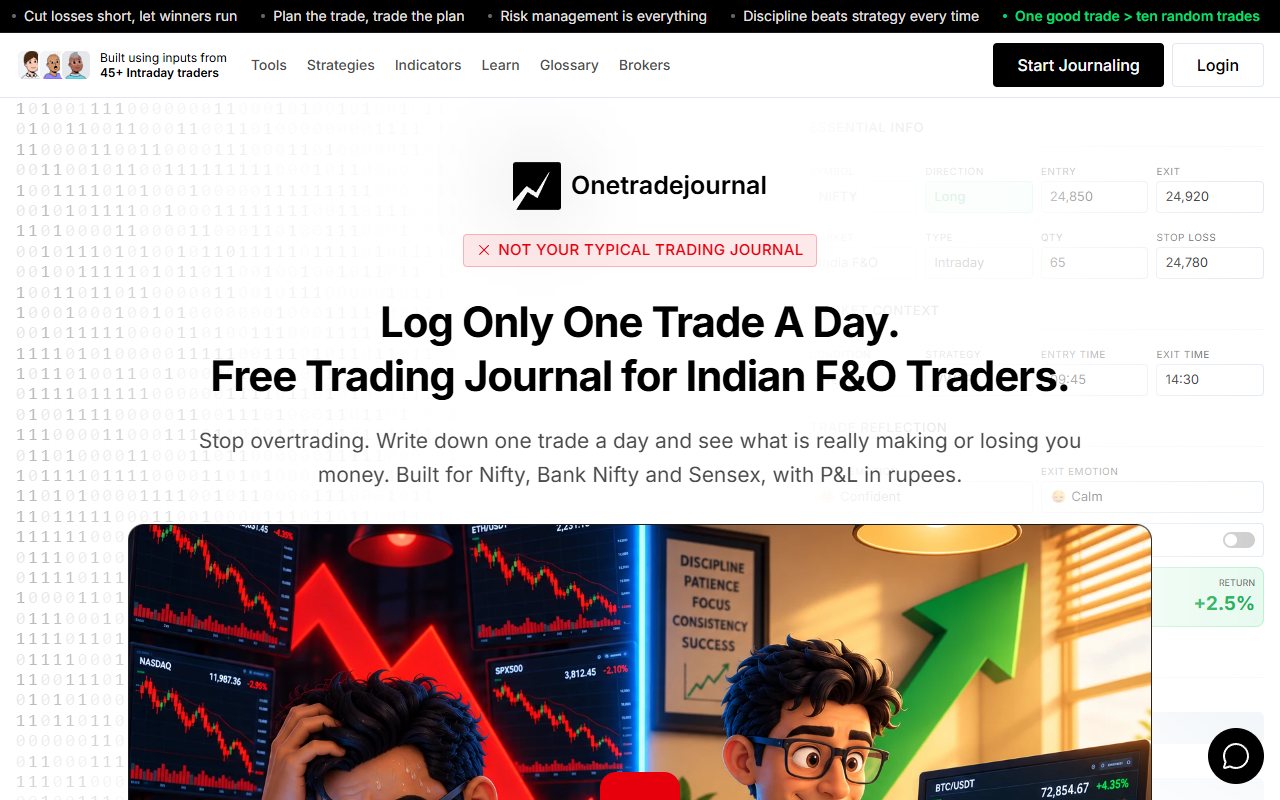
A Bank Nifty trader doubles size after a loss, then wins the second trade. The balance recovers. The trader may still have broken the rule for size. TraderSync's reports can help inspect the sequence, but the review also needs the reason behind it. OTJ puts that reason at the centre of a daily habit. Focus on one planned trade, write the entry yourself and record what you felt when you wanted another attempt. The aim is to help you notice overtrading and avoid repeating costly mistakes. A profitable recovery does not prove that the extra risk was sensible. Free allows one trade per day per market. Paid plans allow more entries. This is a voluntary routine for reflection, not a broker order restriction. It never requires you to place a trade when the setup is absent. TraderSync has a wider set of tools. Its journal page describes reports, notes, emotion and mistake tags, and price-movement analysis. Those notes can hold personal context too. Its supported imports, Cypher AI and replay may suit a larger history. This comparison keeps those strengths separate from the question of how to build a small daily writing habit. ## Save the recovery urge before the win changes the story
Imagine a trader who takes a planned morning loss, enters again after lunch and doubles size on the second attempt. The afternoon position wins. By Friday, the trader remembers the recovery and feels the week went well. This is an example for comparing review workflows, not a claim about a real customer. The money record alone can show the sequence and quantities. It cannot prove that both entries met the same rules. It cannot prove why size grew. That reason needs to be recorded while the trader remembers it. In OTJ, the trader can write stress, confidence, entry feelings and an impulse reason. They can also record a plan change beside the stop, target and strategy. The trader can record satisfaction after exit without letting the winning result rewrite the entry reason. Free Behaviour analytics helps review recorded emotions and habits beside results. Flags use simple rules to spot unusual activity or size changes. Paid AI behaviour reviews are separate. They can be wrong and cannot stop broker orders. The app also documents trade journaling and custom feeling or mistake tags. If supported imports make the complete sequence easier to collect, that is a strong advantage. The trader still needs to add the reason for the size change; automation does not make that private reasoning visible. At the weekly review, ask two separate questions. Did the account make money? Did the choices follow the recorded plan? Keeping them separate helps the trader notice a profitable violation as well as a disciplined loss. Either product can support that distinction when the data and context are present. ## Use one entry to practise an honest review
Manual entry is deliberate in OTJ. Start with the contract and the risk rule, then explain why the entry met that rule. At exit, describe any change. You may have held the stop as planned, moved it in fear or closed early after watching the price too closely. Write what happened in plain words. Return to those words after the session has settled. Free Behaviour analytics can point you towards recorded patterns, such as stress or changes in size. Read the underlying trades before naming a habit. A few examples do not prove a cause, and a flag is not a diagnosis. TraderSync's own notes and tags can support the same honest reflection. An import helps collect what was executed. It does not establish an unwritten urge to recover money. Cypher may offer an interpretation, which you should compare with the notes rather than treat as a fact about your mind. You do not need to write pages every day. A specific sentence about the size change is more useful than a vague label of good trade. The purpose is to make the next review easier to return to, so a repeated mistake becomes something you can recognise. Neither OTJ's habit nor its review flags stop you placing another broker order. ## A broker listing does not settle every import question
The app's sync instructions explain that automatic sync is offered only where the broker supports it. Other accounts can use File Upload or Add Manually. Uploading a file is different from keeping an account connected. The broker directory did not load in the fresh check on 12 October 2026. This review did not confirm a native Indian broker connection. That gap does not prove that Indian trades cannot be entered through another route. Ask the app about your exact broker, market segment and export. If you trade Nifty options, confirm how the symbol, expiry, option type and quantity should be represented. Also ask whether the past price data needed by charts or price-movement reports is available for that contract. An accepted CSV is only one part of the process. OTJ's daily habit begins with manual entry, without a broker connection. Nifty, Bank Nifty, Sensex and Indian stock/F&O fields are part of its workflow. The trade remains your responsibility: a wrong expiry or quantity can produce a wrong review regardless of the product. Imports may save work for a busy account. First check that the app supports your file or connection. For a trader working on a focused daily review, writing the contract and reason can be a useful pause. Keep your full broker record as well, especially if the daily note covers only one of several trades. ## Replay can test a setup, but it cannot supply your motive
A detail in official current pricing deserves attention. Pro includes a market replay environment, but its plan card marks Trade Replay unavailable. Premium and Elite include Trade Replay. A statement that every plan has the same replay tool would erase that distinction. Pro lists $29.95 a month. Its annual plan is shown as $22.46 a month, paid as $269.52 for the year. It also advertised a seven-day trial, five accounts and five Cypher messages per day. Treat the annual figure as an annual commitment rather than a month-to-month price. OTJ's paid India plans are ₹499 monthly, ₹1,299 quarterly and ₹3,499 yearly. Its ongoing Free limit is one trade per day per market. Paid plans allow more trades, in-app AI and voice fill. OTJ does not advertise a free trial of its paid plans. Review the paid plan options for the plan you want. Decide whether you need historical practice as well as a daily habit. A practice simulator can be useful if you need to rehearse a strategy on supported historical data. OTJ does not supply backtesting or historical replay, so it should not be selected for that requirement. OTJ centres on the planned trade you took and the habit you want to examine. It can help you record impatience or a changed rule, but it cannot recreate a price path for practice. ## Check what Cypher knows before trusting its answer
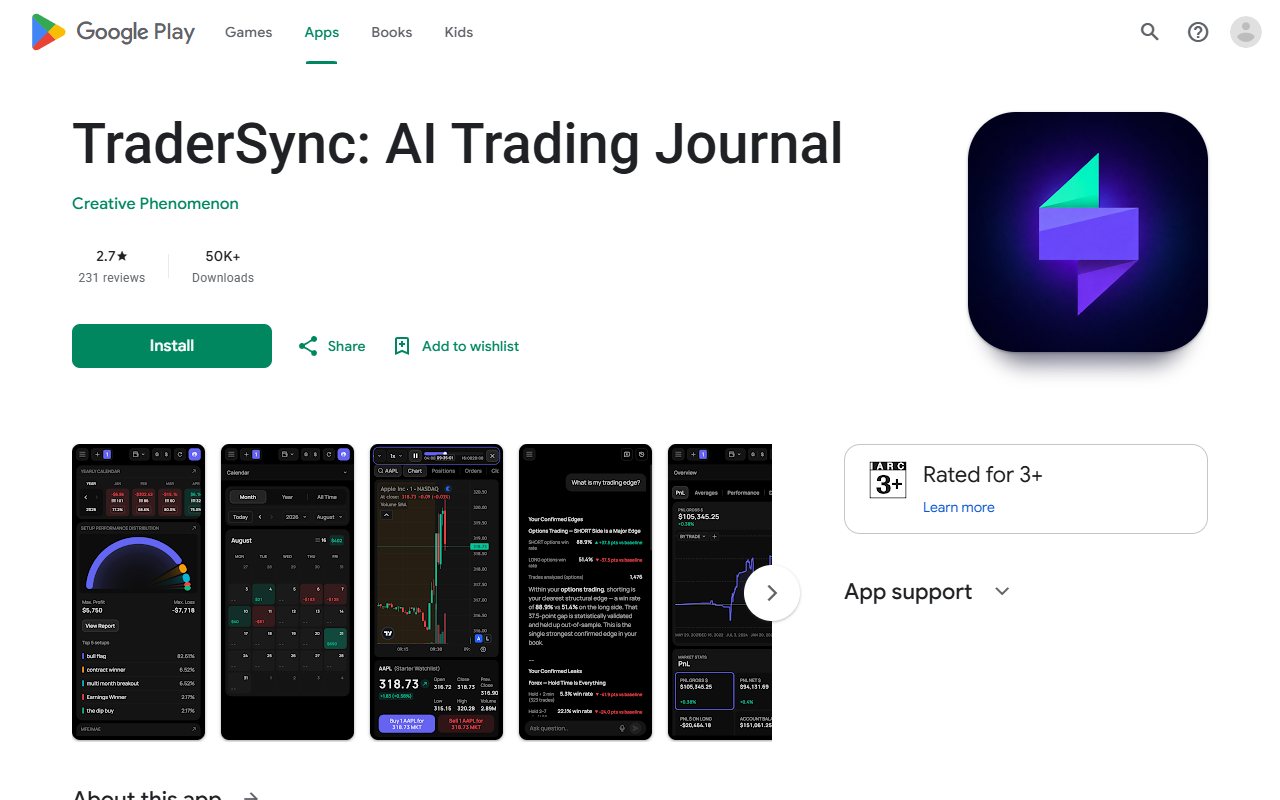
The app offers Cypher. Its official AI page describes results review, planning, pattern detection and feedback against a trader's plan. OTJ's paid Ask Your Journal and Trading Mentor are therefore not the only AI tools in this comparison. The app's pattern-analysis help warns that a few trades can produce false patterns. Another help page about asking questions beside reports says there is no strict minimum number of trades. These pages discuss different tasks. Do not assume a fixed account-wide threshold, or that a small set makes a broad pattern reliable. You can still read and reflect on each trade before you have a large history. For example, a record can show that you moved a stop because you feared taking another loss. That is a recorded choice, not a claim about many trades that all similar trades will fail. Ask either assistant to separate your notes from its guesses. An assistant may connect timing, size and outcome into a plausible story. Check whether the story is supported by your written context. A confident answer cannot repair missing trades or a feeling label applied after you saw the result. ### Make the question easy to verify
Try a made-up review request: show the trades where position size increased after a loss, identify their strategy labels and quote only my own reason for the change. Then open those records yourself. You should be able to see whether the assistant found the right examples and whether it invented any motives. OTJ's own AI can be wrong and only knows the data you provide. The app's AI allowances and tools depend on plan. Choose answers you can check and a limit that fits. More messages do not prove better trading habits. ## What the exit numbers can and cannot tell you
The app's reports description lists MFE/MAE and rolling exit reports. MFE is the biggest move in your favour while a position was open. MAE is the biggest move against it. These reports need the correct trade and supported price data. OTJ can compare a result with the planned amount at risk when the stop is valid. It can also compare an exit with the target you saved. Its exit efficiency is not a historical price excursion report. If you require the actual highest and lowest market prices during a trade, OTJ's target comparison does not replace that analysis. For example, suppose a made-up Nifty option trade exited before a planned target. A target-based review asks how the exit compared with the intended plan. A market excursion review asks how far the instrument travelled during the position. You may want both questions, but you should not label them as the same measurement. The planned stop and target need honest timing. A target added after the market move gives a different kind of evidence from a target recorded at entry. Save the original plan in your notes if it changed. Otherwise, a neat number may make a later idea look like the plan you had before trading. ## A full sample is more useful than a tidy sample
OTJ's free daily allowance can work well for a person taking one trade per market per day or testing a single-entry review habit. It is not an unlimited account journal. If you take several trades in the same market, paid access may be necessary to record that activity fully. Do not stay inside a free cap by choosing only the trade you feel proud of. That would turn the calendar and strategy results into an account of selected examples. Label a selected learning record as such, and keep your broker statement for the complete money history. Supported import tools can reduce the collection burden in the app. After import, still compare the day with the broker record. Look for missing fills, repeated uploads, partial exits and unexpected date grouping. Automatic collection is useful evidence of recorded activity only when the resulting record is understood. Use the same labels from one review to the next. Use the same meaning for your strategy and mistake labels over time. Do not rename a setup after every losing week just to keep its old win rate attractive. Stable meanings make the next comparison more informative. ## Check the record, then choose the routine
A practical check should have one specific task. For Indian futures and options, choose a day with a partial exit. Include a clear plan change. Try to build a record that another person could read and understand without asking you to retell the session. In OTJ, check how long manual entry takes and whether the habit questions prompt useful context. Paid voice fill helps populate the form but still needs checking. In the app, check the actual import route, expiry, quantity and available price data before judging reports. Then write one short review note with the evidence and a behaviour to watch next week. It might concern taking entries only after the planned condition appears. The journal should help you see whether you did that, not merely produce a longer summary of your profit and loss. OTJ fits an Indian F&O trader who wants a daily pause to reflect on patience, emotion and unplanned size changes. TraderSync fits when supported collection, deeper price reports or historical practice are central needs. Its reflection tools deserve credit too. Choose after checking the records for your actual market. Keep the focus on a habit you can inspect again, with no promise that fewer trades will make money.
Sources and limits
We checked these public product pages and OneTradeJournal’s current product on 12 October 2026. We did not test a private TraderSync account, broker import, payment or AI answer. Check current plans and limits before paying.
- TraderSync prices and replay plans · Checked 12 October 2026
- TraderSync broker list · Checked 11 October 2026
- TraderSync journal reports and tags · Checked 12 October 2026
- TraderSync Cypher performance assistant · Checked 12 October 2026
- TraderSync Cypher pattern-data guidance · Checked 12 October 2026
- TraderSync Google Play developer listing · Checked 12 October 2026
- TraderSync sync instructions · Checked 12 October 2026
- Cypher report questions and data guidance · Checked 12 October 2026
A journal cannot promise trading profits. AI answers and fee estimates can be wrong. Check trades and charges against broker records. This page does not give trading, investment or tax advice. Competitor names and website pictures do not imply a partnership or endorsement. Any example is an explanation, not a private account screenshot or a real customer result.