The detailed comparison
A closer look at the daily routine, the tools and the limits of each product.
Choose a section
Write why you added risk while the reason is fresh
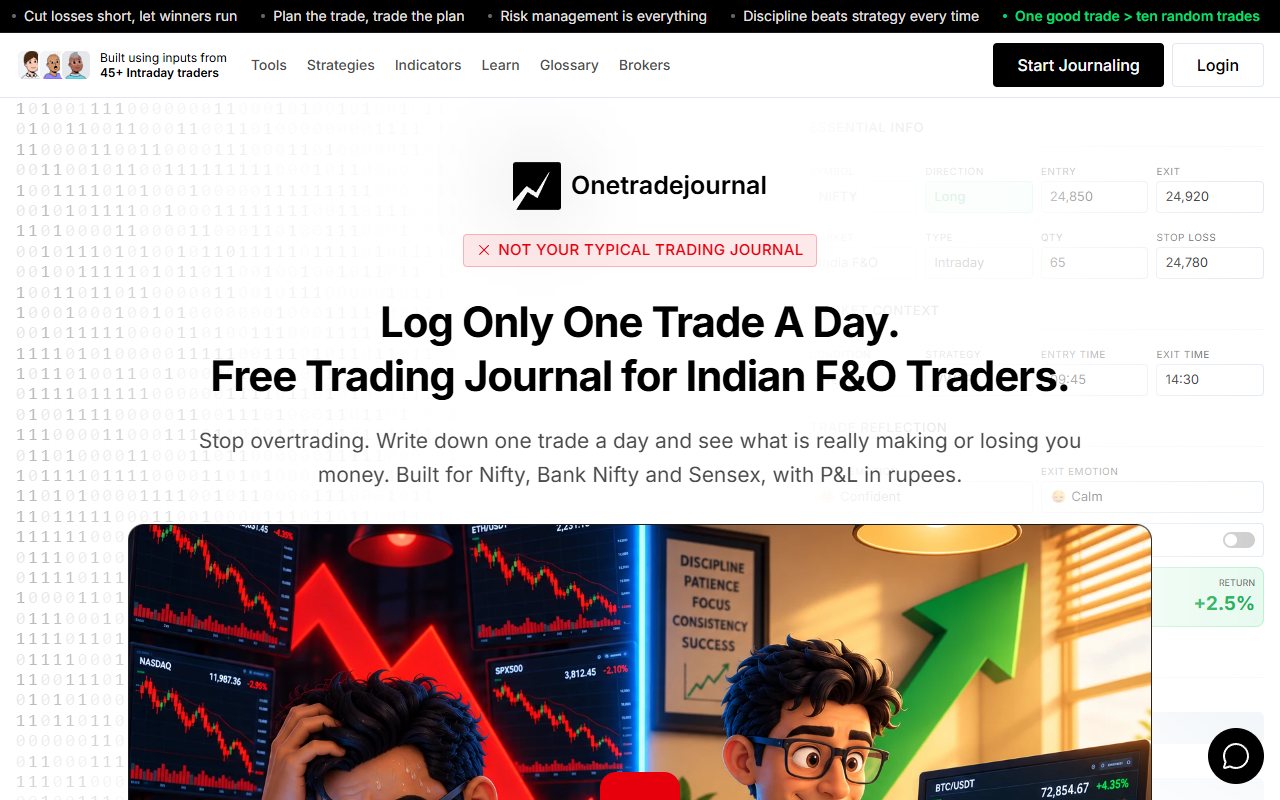
An open holding can show a larger quantity without showing why you bought more. Was it part of the plan, or an attempt to avoid accepting a loss? OneTradeJournal starts with one daily written trade so the reason and emotion stay beside the numbers. The aim is to build discipline, reduce overtrading and avoid repeat mistakes. Write the planned size and stop, then any change you made under pressure. A journal cannot stop orders at the broker or promise that a smaller number of trades will produce profit. Free OTJ allows one saved trade per day per market. Paid plans permit extra entries. One focused daily trade is the core habit, not a reason to hide additional real trades or present one selected note as the whole account. Tradrix's India guide adds Zerodha files, open positions, fund records, research and AI. Its Zerodha guide describes setup and emotion tags too. It can support personal reflection alongside the broader account view. OTJ starts with manual writing, especially for Indian futures and options. Futures and options, often called F&O, are contracts linked to a share, index or other asset. OTJ also records manual capital movements, but it has no broker import or live portfolio monitoring. We checked public pages and current OTJ code on 12 October 2026. We did not test Tradrix's signed-in app, account calculations or AI. The daily habit and the wider position tools need different checks, explained below. ## Notice the feeling behind a changed stop
Tradrix advertises open-position risk and stop-related views in its India guide. These can help you see a plan, but a displayed risk figure is not an order at the broker. In a made-up example, a Bank Nifty trader writes a stop. The trader cancels it after the price moves against the position. A journal or risk panel may still show what the original plan implied. The actual loss depends on what happened in the broker account. OTJ also does not execute trades, enforce stops or block new orders. Its free behaviour analytics compare saved feelings and habits with recorded results. Its behavioral flags are review aids for patterns such as revenge entries, size spikes and overtrading. They are rough checks on entered data, not diagnoses or order controls. In OTJ, save the first planned stop. Explain any change in the plan-change field or notes. Record feelings at entry and exit, stress, confidence, impulse reason and satisfaction. These fields can help you ask if a change was planned or made under pressure. You can then compare similar situations later. If several larger losses share an unplanned stop change, you have a specific behavior to examine. If a flag appears on a carefully planned trade, the notes can explain the exception. Keep risk information separate from the orders you actually send. A journal does not take responsibility for your broker order. ## Begin with the question your current records miss
In a made-up example, a trader holds several Indian stocks and also takes short Nifty option trades. The shares stay open for days. The trader also adds funds halfway through the month. Closed trades alone do not show the shares still held or the effect of those deposits. Tradrix's Zerodha guide describes open and closed lots. It lists current gains or losses on shares still held, open risk and fund records. Those are relevant capabilities for this trader. You can start with a broker file, then add setup and emotion tags. A setup is the conditions you wanted before entering. An OTJ record answers another part of the problem. Why did you enter the Nifty option? What was the original stop? Did confidence rise after an earlier winner? Did you hold beyond the intended exit because you wanted a particular rupee result? OTJ lets you record the plan and those decision details. It does not replace the live broker account view. If you need current risk across holdings, test Tradrix's position tools. If you already check open risk in your broker, you may need a place to explain your choices. OTJ may fit that task. The key is to avoid asking a single number to explain everything. Open risk, account return and trade choices are linked. Each still needs the right record. ## Importing history versus writing today's explanation
The Zerodha instructions specify a Console tradebook CSV. They say the oldest buy is matched with a sell first. This method is called FIFO. They also describe skipping repeats when you import again. CSV is a file of rows and columns. That may save work for a Zerodha user with old records or many fills. A fill is one completed part of an order. OTJ is manual. It has no CSV import, broker sync or bulk migration. Paid voice fill can help complete the trade form, but you still create the entry. Someone choosing OTJ should expect to spend time recording trades. For a made-up stock position bought in stages, a file can keep the fill order more clearly than memory. The trader still needs to explain each buy. Was it planned, or was it a way to avoid accepting a loss? The file cannot explain that reason by itself. In OTJ, you can write the reason while it is fresh, alongside strategy, planned stop, target, notes and emotion fields. This may work when the number of decisions is small enough to describe each one. It works poorly when manual work causes you to omit most of the day. A complete imported record with honest notes can be more useful than a careful description of only two selected trades. A large imported history may show results. Without notes, it may still miss the reason you wanted to study. Choose based on what you will actually complete. If you need past execution history inside the journal, Tradrix has the documented advantage. If you want to build a habit of writing each new options choice, OTJ's form supports that goal directly. ## Adding money is not a winning trade
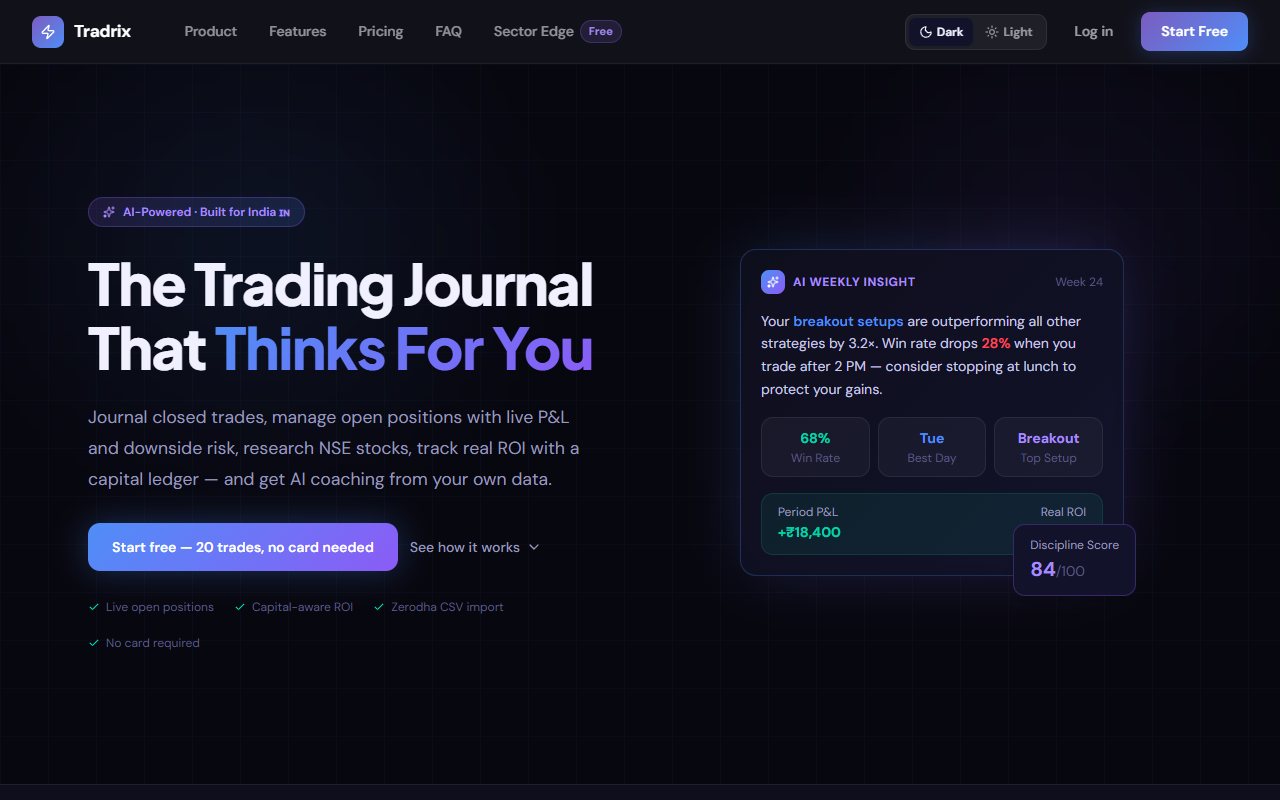
A deposit changes the money available in an account. It is not a winning trade. A withdrawal also does not automatically mean a trading loss. When these events occur during a review period, you need to know how returns are calculated. Tradrix's homepage says its fund record keeps the opening balance, deposits and withdrawals. It says returns use the average funds in use over the period, called average capital employed. That is a stated way to compare returns when funds change. OTJ also has manual deposit and withdrawal records, so capital tracking is not unique to Tradrix. Imagine an account with a large deposit halfway through the month. Dividing the month's profit by only the starting funds can give a poor comparison. Dividing by the final funds answers a different question. Check what each method measures before using the result. OTJ has a profit and loss calendar and views by strategy and time. Its results line shows saved trades over time. Profit factor compares gains with losses; drawdown is a fall from an earlier high. Its account-value views also use your entered capital movements. Those manual records are not a live broker-account audit. For OTJ's intended review, you can ask whether a setup had larger losses after higher-stress entries, or whether a particular session time had more deviations. You can ask those questions while keeping funds and trading results separate. A trader can care about both account returns and process quality. Tradrix's imports and open-position tools may save work for the first task. OTJ's separate reason fields may help with the second. Decide which gap is costing you useful review time. ## Research context needs its own boundary
Tradrix also has a public Sector Edge page for NSE sector reports and uploaded scan files. This is market research, a different job from reviewing a closed trade. For a made-up trader holding stocks for several days, a sector report may help build a watchlist. The journal should then preserve the actual reason for the selected entry. “Strong sector” is not enough to explain why one stock, price and risk level met the plan. OTJ does not offer a live market research service. You can record context in strategy and notes, and use its Indian stock or F&O fields for the trade itself. Keep outside research separate from the reason for your own action. Also check the freshness of any research page before using it. The public Sector Edge index we reviewed displayed dated reports. Daily-publication wording does not prove today's report is present or that a quote is current. This boundary is useful even if you prefer the broader Tradrix product. A research idea can be sensible while a particular trade is poorly executed. A loss does not by itself prove the idea was wrong. A win also does not prove you followed the plan. ## AI is shared; the input remains your responsibility
Tradrix's homepage advertises weekly insights, Ask Tradrix questions and a Pro position advisor. OTJ has paid Ask Your Journal and Trading Mentor tools. They include chart-image discussion and pattern feedback. Both products offer AI. OTJ's AI and voice tools are paid with usage limits. Check what the assistant can read. Imported numbers need accurate tags and explanations. Manually entered trades need correct prices, quantities and a complete sample. Neither entry method makes the record honest by itself. A practical OTJ question could compare stress and stop deviations in your logged Nifty trades. Read the answer beside the entries rather than accepting a summary because it sounds precise. A result from three trades is still a small sample. OTJ can compare a result with planned risk when the stop is valid. Its exit review compares the saved exit with the saved target. It does not measure the largest price move against or in favor of the trade. Chart discussion also does not reconstruct a complete past market path. If you want AI to discuss current risk across holdings, test Tradrix's listed advisor. If you want questions about a manual F&O record, paid OTJ offers that tool. Both require you to check generated answers. ## Tradrix's listed yearly price is lower
The official Tradrix guide lists Pro at ₹999 yearly and a no-card start with 20 trades. Its homepage calls that start a Free Trial. The public text does not say the 20-entry start resets each month. OTJ's India paid prices are ₹499 monthly, ₹1,299 quarterly and ₹3,499 yearly. Tradrix's listed yearly amount is lower. Checkout and any tax differences were not tested. OTJ should be chosen for its fit with your review process, not an unsupported claim that it is cheaper. OTJ's ongoing Free plan allows one trade per day per market. That differs from a 20-trade trial allowance. It can support a continuing low-volume habit. Several saved trades on the same day in one market need paid access. If you want imports, capital tracking and open-position review at the published Tradrix price, evaluate those features directly. If you want a manual F&O record, try one OTJ session. Save the feelings, planned risk and any changes. Check that you can keep doing the entry work. OTJ's reason to be on that trader's shortlist is the daily writing practice: one planned trade, the feeling behind an addition or stop change, and a note to return to. Tradrix deserves credit for its tags, wider tools and lower annual price. Keep the financial record and truthful reasons whichever you choose. Neither journal promises profit or controls your next order.
Sources and limits
We checked these public product pages and OneTradeJournal’s current product on 12 October 2026. We did not test a private Tradrix account, broker import, payment or AI answer. Check current plans and limits before paying.
- Tradrix current public homepage · Checked 12 October 2026
- Tradrix Indian journal and price guide · Checked 12 October 2026
- Tradrix Zerodha file guide · Checked 12 October 2026
- Tradrix Sector Edge dated reports · Checked 12 October 2026
A journal cannot promise trading profits. AI answers and fee estimates can be wrong. Check trades and charges against broker records. This page does not give trading, investment or tax advice. Competitor names and website pictures do not imply a partnership or endorsement. Any example is an explanation, not a private account screenshot or a real customer result.