The detailed comparison
A closer look at the daily routine, the tools and the limits of each product.
Choose a section
A costly mistake needs a reason, not a savings promise
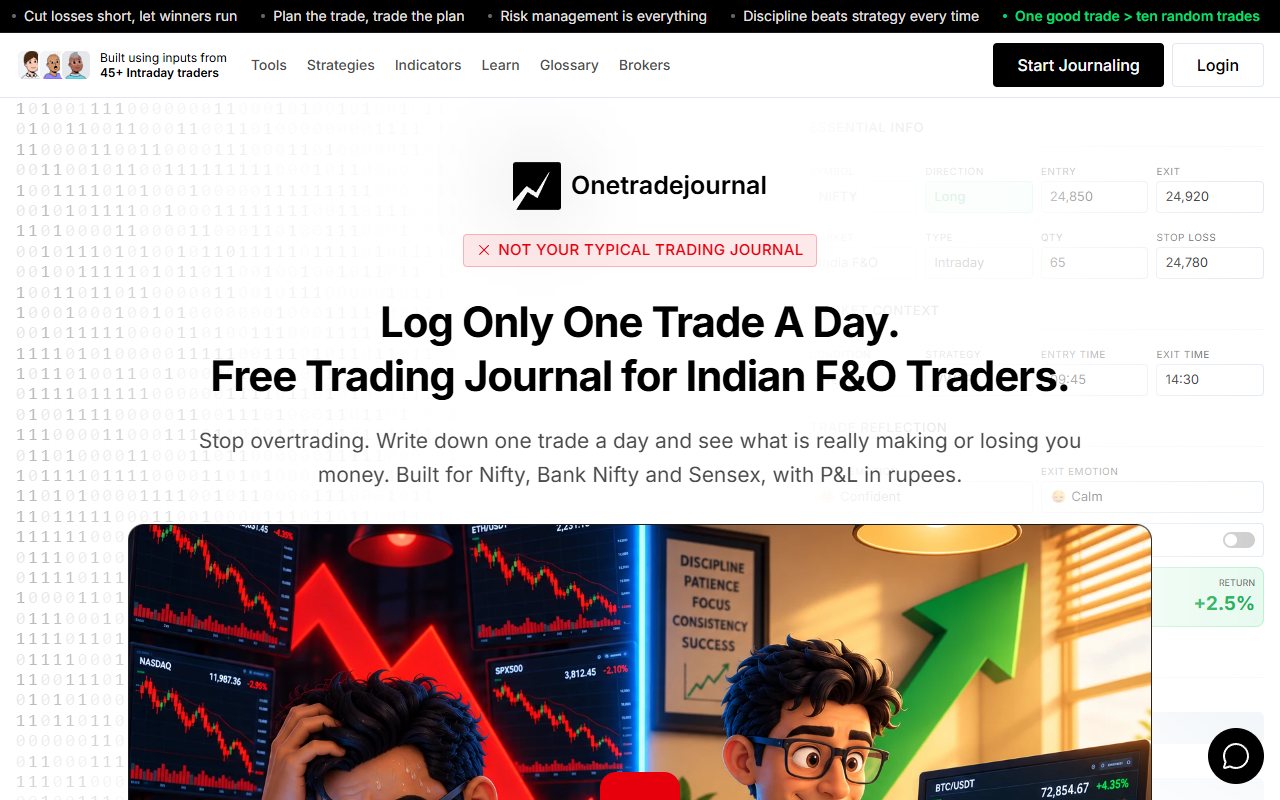
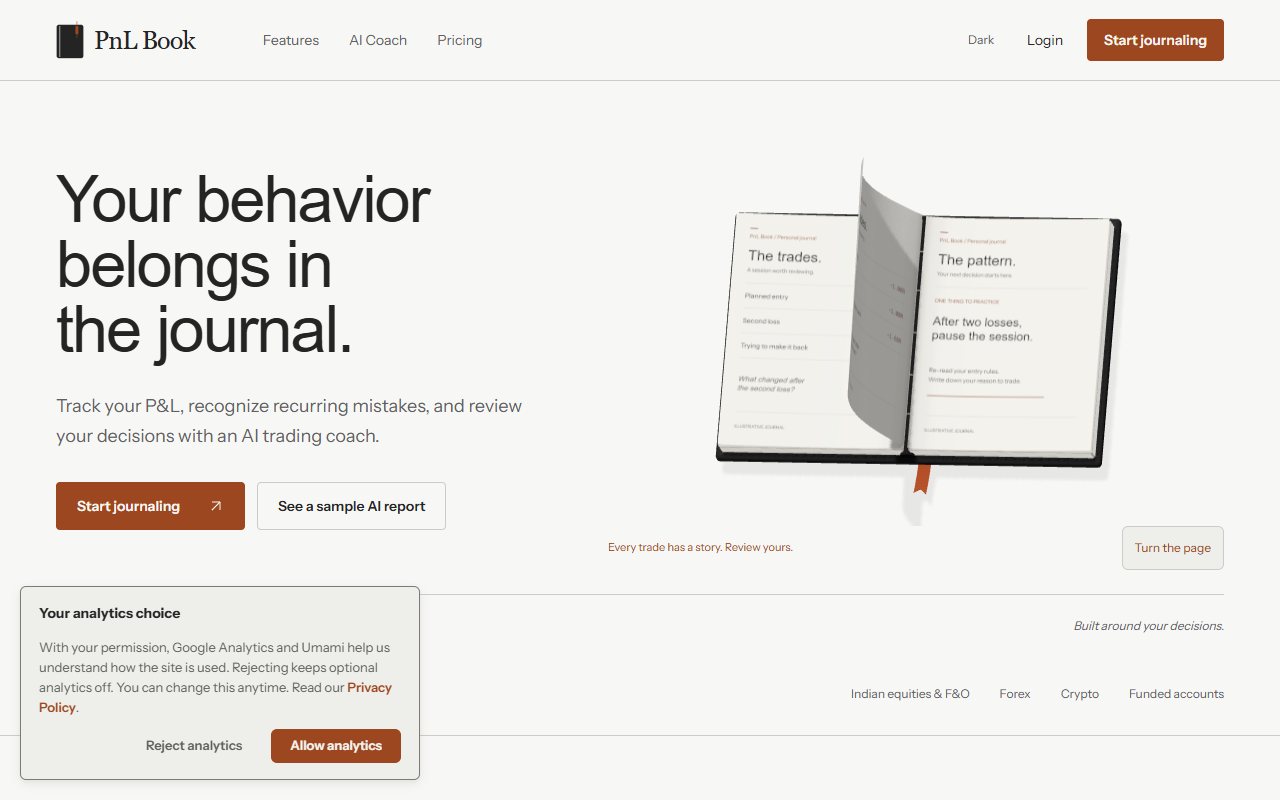
A journal can total the results of trades tagged as revenge. The useful next step is reading why those entries happened. OneTradeJournal is built around writing one daily trade so the plan, feeling and urge stay visible before the same mistake repeats. Write why the setup qualified and whether you changed the size or stop. The aim is to build discipline, reduce overtrading and avoid repeat mistakes that put more capital at risk. It does not promise to save an exact amount. The journal cannot stop broker orders or enforce a cash loss limit. Free OTJ permits one trade per day per market. Paid plans allow extra entries. One focused trade is the daily habit, not a reason to hide a recovery trade or present one selected note as the whole account. PnL Book's homepage describes behavioural reviews, entry reasons and AI coaching alongside imported execution records. Its India page also describes mistake tags and their results. These are real psychology tools worth comparing with OTJ's writing routine. Both products address Indian shares, futures and options. Futures and options, or F&O, are contracts linked to a share, index or other asset. PnL Book can start from captured numbers and add your notes; OTJ starts with the manual explanation and checked numbers together. We checked public pages and current OTJ code on 12 October 2026, without testing either import or a PnL Book account. Connection and trial-price descriptions still conflict. Those limits stay separate from the daily reflection question. ## Numbers do not explain a private reason
A broker record can show an entry, exit and quantity. It cannot know that you doubled the size because you wanted to recover the previous loss. It cannot reliably identify whether a stop was planned before entry or invented after the result. OTJ puts those questions into the manual record. You can capture entry and exit emotions, stress, confidence, impulse reason, deviation, satisfaction, mistake, strategy, stop, target and notes. For an Indian F&O trader, the form also provides familiar index and contract fields, an expiry picker and lot-size hints. Consider a made-up Bank Nifty session. Your first trade follows the plan and loses. The second trade has similar chart conditions, but you enter it immediately, increase size and feel angry. The useful comparison is not simply which trade made money. It is whether the second decision met the same entry and risk rules. In OTJ, record the intended stop and emotional state while the session is still fresh. After exit, state what you changed and why. The second trade can make money and still break the plan. The first trade can lose and still follow the plan. PnL Book also asks you to add entry reasons, risk and feelings after importing. Its homepage workflow describes a review of choices as well as collecting numbers. Both routines need your own motive. OTJ makes writing it part of the daily entry rather than leaving it until the imported history is reviewed. Manual work only has value if you do it. If the form becomes a reason to skip busy days, PnL Book's capture options may produce a more useful record. If imported trades sit without notes, OTJ's structured prompts may better suit the habit you need. Count how many entries receive honest explanations, not just how many appear on a dashboard. ## A tagged loss is not a promised saving
PnL Book's charges engine page describes item-by-item brokerage and other fees for shares and contracts. It also says some lot-size and share-delivery figures are estimates. It asks users to check contract notes. OTJ includes estimated brokerage and statutory charges for its Indian trading workflow. These estimates help you examine the effect of costs. They are not a substitute for a broker contract note or a certified tax record. Keep the broker's records as the financial reference in either workflow. In a made-up same-day trade, profit before fees may look good. After fees, the net result may be much smaller. Reviewing many such trades can show whether frequent entries are adding useful opportunities or just adding costs. A fee breakdown supports that question better than a bright green gross-profit number. PnL Book's India page also describes totaling results by mistake tag. That can show where to look. It does not prove what caused the result. The sum of losses on trades tagged as revenge is an observed result. It does not prove that avoiding the choice would have saved that exact amount. Some tagged trades may win, and several tags may describe the same trade. Use the number to choose a question: after a loss, did your position size change, and did the next setup still qualify? OTJ's free behaviour analytics compare saved emotions and habits with results. Its emotion fields and behavioural flags support that review. Its flags for revenge patterns, size jumps and excess trading are rough checks on entered data. They do not diagnose your state or block an order. OTJ lets you keep the personal reason beside the result. You can distinguish a planned increase in size from an impulsive one, then review the explanation later. That needs honest entries. The software cannot give a true reason you never wrote. ## Bring in the numbers, then check them
PnL Book's Zerodha guide documents Console CSV imports, AI screenshot imports and same-day Kite API sync. It says share and options fills can be joined into completed trades. A fill is one completed part of an order. CSV is a file of rows and columns; an API connects systems to exchange data. It says screenshot rows go to a review list first. Unclear fields and repeats are flagged before saving. These routes may save work for someone with old records or many fills. OTJ has no CSV import, broker sync or bulk migration. Paid voice fill can help complete the manual form, but it does not bring in a broker file. Imagine, as an illustration, a Nifty option trader who enters one position in several fills and exits in stages. A file contains executions, while the trader remembers one idea. The two views do not automatically produce the same trade count. PnL Book's features page describes first-in-first-out pairing, called FIFO. It closes the oldest matching buy with a sell first. It also describes a fill that closes one position and opens another. Before trusting any imported statistics, examine a familiar session. Check whether the grouping matches what you want to study. Counting one closed position can differ from counting one whole strategy idea. Imported sums may be correct while the reason for a change is still missing. In OTJ you decide how to record the idea and enter the values yourself. That gives you control over the review unit, but also responsibility for consistency. If you split every winner into several entries and combine several losses into one, the resulting win rate will be misleading. You still need to use the same counting rule each week. There is a public-source conflict to resolve before relying on a connection. The India edition FAQ says PnL Book never connects to a broker, while the Zerodha page explicitly describes Kite sync. The guide documents a connection. The conflict leaves current account and plan access unclear. Verify it in your account before making sync the reason to subscribe. ## A report and a chat are different
PnL Book's homepage FAQ separates structured daily check-ins from AI-written weekly reviews and reports requested by the user. It says the coach is not a live chat. That is useful clarity for someone expecting a conversation after every session. OTJ's paid tools include in-app Ask Your Journal, Trading Mentor, chart screenshot analysis and pattern feedback. For a trader who wants to ask a specific question about recorded behavior, that is different from waiting for a report. Both products offer AI, and OTJ's AI and voice tools have usage limits. A useful question might be: which logged trades after a losing entry had higher stress and a deviation from the plan? Read the answer beside the actual entries. If the result identifies only three trades, treat it as a starting point for review rather than a reliable rule for future markets. Discussing a chart and importing its numbers are different jobs. OTJ's chart screenshot analysis helps discuss a chart. It does not turn a broker screenshot into saved trade records. PnL Book advertises reading screenshots into trade records. OTJ will not meet a need to read trades from broker images. AI can read a field wrongly, miss a reason or overstate a pattern. A complete number record still needs honest notes, and a thoughtful manual journal still needs all relevant trades. Look for a statement you can check against a trade, then one action you can review later. ## Compare the limits you will actually reach
PnL Book's India plan details list a Free plan with 20 trades and five screenshot imports a month, basic analytics, one lifetime AI review, 90-day history and CSV export. That allows a real start, but the monthly trade allowance matters for active traders. OTJ's ongoing Free plan allows one trade per day per market. It is not an unlimited journal or a paid-plan trial. PnL Book counts trades by month. OTJ's free cap applies each day per market. A quiet week does not let you store five trades on one later day in OTJ Free. PnL Book publishes Indian Pro pricing of ₹499 monthly or ₹4,999 yearly in its homepage FAQ. The India page advertises a 14-day Pro trial, though its price card also displays ₹0 per month beside text saying ₹499 after the trial. Treat ₹0 as trial presentation, not a permanent free Pro offer, and confirm checkout. OTJ's India plans cost ₹499 monthly, ₹1,299 quarterly or ₹3,499 yearly. Both list ₹499 a month in India; OTJ's yearly amount is lower. Checkout was not tested. The tools are not the same. If imports save much more work, paying more may make sense. For a beginner who records one considered trade per day, test the ongoing free habit first. For someone taking several trades each session, budget for a plan that can hold the full record. A record with chosen winners and only one loss will not describe your normal choices. ## A practical choice for the next month
Choose OTJ when you want to write one daily F&O trade and name the urge behind an increased size or rushed recovery entry. Read that explanation before treating the same habit as a fresh setup. Its paid journal questions are useful extra checks. Choose PnL Book when importing execution history, reviewing screenshot extraction or pairing many fills is central to your process. Confirm the exact broker connection, import format and plan in your account, particularly where its public pages disagree. Whichever you choose, begin with a familiar completed session. Match the numbers with the broker record and write the original plan and personal reason. Keep that daily note honest even when the impulsive entry won. A useful routine makes the review easier to repeat; neither product guarantees profit or an exact avoided loss.
Sources and limits
We checked these public product pages and OneTradeJournal’s current product on 12 October 2026. We did not test a private PnL Book account, broker import, payment or AI answer. Check current plans and limits before paying.
- PnL Book reviews and India prices · Checked 12 October 2026
- PnL Book grouping and import tools · Checked 12 October 2026
- PnL Book Zerodha file and sync guide · Checked 12 October 2026
- PnL Book India limits and FAQ · Checked 12 October 2026
- PnL Book fee estimates · Checked 12 October 2026
A journal cannot promise trading profits. AI answers and fee estimates can be wrong. Check trades and charges against broker records. This page does not give trading, investment or tax advice. Competitor names and website pictures do not imply a partnership or endorsement. Any example is an explanation, not a private account screenshot or a real customer result.