The detailed comparison
A closer look at the daily routine, the tools and the limits of each product.
Choose a section
Write down the choice before the story changes
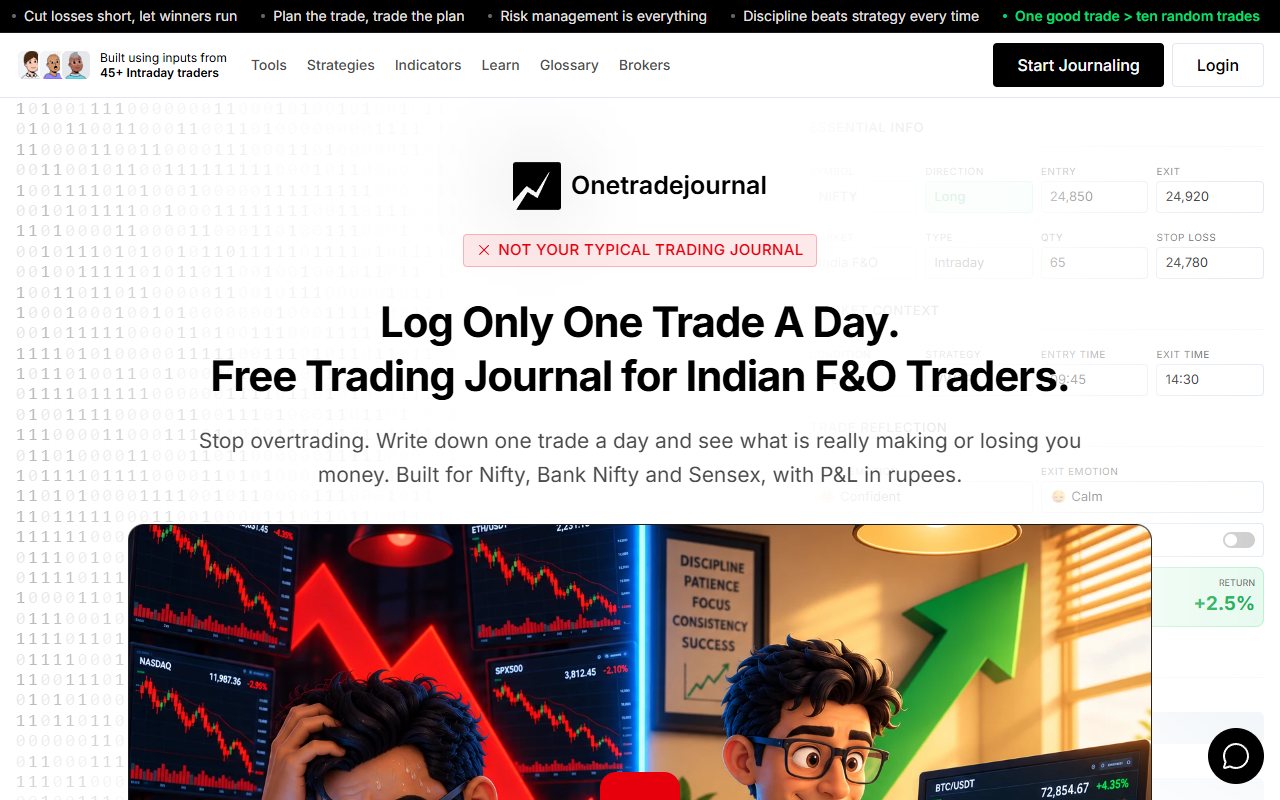
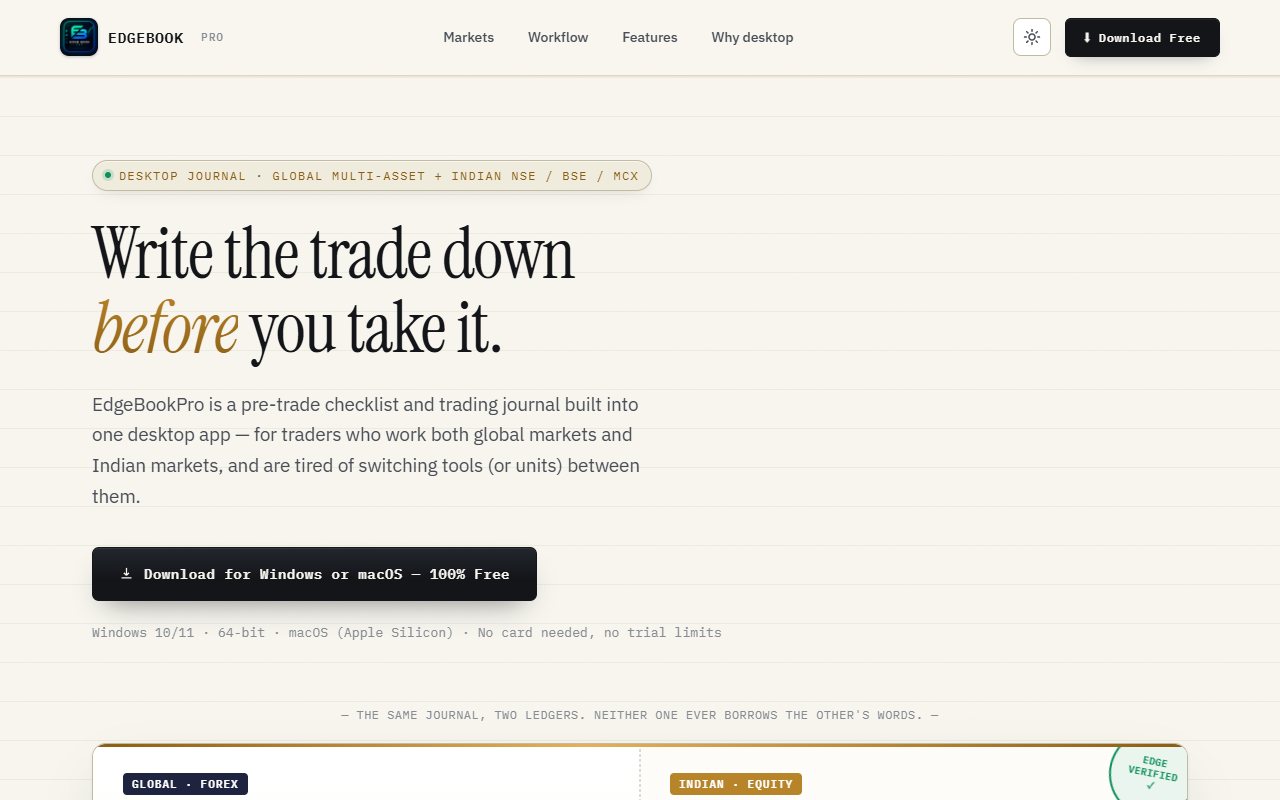
An evening review can turn an early entry into a clever decision just because it earned money. Start with a smaller question: what did you mean to do, and why did you do something else? OneTradeJournal centres a one-trade daily writing habit. Enter the trade, keep its original plan, and name the feelings around the decision. The point is to leave a clear note that you can read later without rebuilding the reason from the result. That is a routine, not an order rule. Free OTJ allows one entry per day per market. Paid plans allow extra entries. The habit does not mean forcing a trade each day or hiding the other trades you took. OTJ does not control your broker account. EdgeBookPro already takes daily discipline seriously. Its desktop app advertises a pre-trade checklist, a diary, mood and habit records, and behaviour alerts. Those are useful reasons to consider it. OTJ does not own the idea of reflection. The practical difference is where and how you will write. EdgeBookPro is advertised as free for Windows and Apple Silicon Macs. OTJ puts named prompts in a browser. Paying for OTJ needs a benefit to your own routine, not a claim that it is cheaper than a free download. ## What would an evening note reveal? Imagine someone who works during the day and reviews an MCX trade after dinner. The trader planned to wait for a condition but entered early after seeing a fast move. The trade later makes money. This is an illustration, not advice to trade that market. A green result does not answer whether the entry followed the rule. Ask what made the trader act before the planned condition. An OTJ note can preserve the early entry and its reason. Record urgency at entry, relief at exit and lower satisfaction with the process if that matches the event. Do not add feelings just because the example includes them. EdgeBookPro may fit if the plan is open on the trading computer and the trader returns to it that evening. OTJ may fit if the first chance to record the thought is through a phone browser. The timing of the note matters. Writing while the reason is fresh may preserve more than a detailed story built days later. Neither screen size nor a free offer guarantees that habit. ## Can you still see the original plan? EdgeBookPro describes a pre-trade checklist and a comparison of planned and actual trades. It also advertises behavior alerts. Planning and discipline are shared ground, not OTJ-only features. A plan is most useful before the result is visible. Write the trigger, allowed risk and exit conditions. Naming a successful setup afterward is easier, but it may not preserve the original reason. OTJ records the planned stop, target and strategy. It has confidence, stress and entry feelings, then exit feelings, satisfaction and changes to the plan. Notes can hold the detail behind those labels. Manual writing is deliberate in OTJ. It has no broker sync or file import. You choose the decision to explain and supply the facts yourself. Those prompts may help if you write plenty about the market but little about your own choice. A fixed stress field can remind you to record something that a blank note would miss. EdgeBookPro's planning routine may already do that well. Public pages do not prove which form will make a particular person more consistent. Test the writing task rather than assuming more fields always mean a better review. ## Did both exits follow the same reason? EdgeBookPro advertises records of partial closes by leg. A partial close means closing some quantity while leaving the rest open. That can be useful for traders who reduce a position in steps. Consider a made-up position with two exits. The first follows the planned level. The rest closes later because the trader becomes anxious. The average exit price may look reasonable while hiding two different reasons. Preserve the order of events. Record how much closed, what remained and why each decision happened. Check those numbers against the broker record before studying the behavior. OTJ should not be chosen on the assumption that it reproduces EdgeBookPro's partial-close handling. It is a manual reflection form. Decide on a clear, consistent way to represent your own trade and its notes. If complex exits are central to every session, record handling may matter more than extra feeling prompts. If the sequence is simple but the reasons vanish, the prompts may add more value. ## What should you do with a behaviour flag? EdgeBookPro's automatic mentor is described as finding behavior patterns. OTJ also flags possible revenge entries, size spikes and too many trades using simple rules. Both offer reasons to look closer. A flag is an interpretation of the record. Two nearby entries may be rushed, or they may follow a plan with several valid triggers. A larger quantity may be impulsive, or it may be a recorded allowed change. OTJ's ordinary behaviour analytics are free. They help you revisit recorded emotions, plan changes and repeated mistakes. They are separate from paid AI reviews. A repeated early exit can become a useful question for the next review, not a diagnosis or a promise to prevent loss. OTJ's named confidence, stress and change-to-plan fields can help explain the sequence. The flag itself cannot establish intent. Read the note and original setup before accepting a conclusion. OTJ's paid Ask Your Journal and Trading Mentor can help inspect context or a supplied chart image. Use limits apply. AI can misunderstand the record and cannot know omitted trades. Neither a mentor label nor a rule flag is an order control. OTJ does not stop an execution at the broker. A clearer review still depends on the evidence you supply. ## Local records need a usable backup
EdgeBookPro advertises offline operation and local SQLite storage. SQLite is a database file kept on the computer. This is a storage choice, not proof of security superiority over a web journal. The current website also advertises an Export All JSON backup. That deserves credit. JSON is a file format that keeps structured data. We did not test whether every listed item restores correctly. Think through a routine device change. Where is the saved copy? Can you find it outside the original computer? Does it contain plans and notes as well as trade totals? Those are useful questions before years of records accumulate. OTJ exports logged trades as CSV, JSON and TXT. It does not offer EdgeBookPro's local-only desktop mode. Its export also needs checking for the fields that matter to your review. A readable export and a fully restored app are different tests. This comparison did neither for EdgeBookPro. Keep the published backup feature separate from a certificate that recovery will always succeed. ## The current desktop build has a clear caveat
The website links to an official GitHub release. The current release lists Windows and Mac files. It also states that both builds are unsigned. Unsigned means the developer has not attached the signing certificate normally used to identify a software publisher. The release says the operating system may show warnings. We did not download or inspect the application. That fact does not justify calling the software safe or unsafe. It means a public download link alone is not our security check. Review the current distribution information before installing any chosen desktop app. OTJ's browser workflow does not need that desktop installer. This is a difference in access method, not a finding that OTJ's private systems are more secure. Make sure the exact platform fits. A Mac download for Apple Silicon does not establish support for every older Mac. A supported platform label also does not prove the app behaves well on your particular device. ## Indian journaling and Indian replay are separate
EdgeBookPro explicitly offers Indian trade records. Its replay examples, however, name global currency pairs, metals, oil and US indices. Those examples do not establish historical replay for NSE or MCX. Replay means stepping through old market prices. Check the exact symbol and history before expecting it to support an Indian practice session. We did not run a replay or verify the data. OTJ has no historical replay or backtesting. Its charts describe the trades you entered. They can help study recorded decisions but do not test every opportunity that occurred in the market. OTJ's risk-based result needs a valid original stop. Exit efficiency compares the exit with the target you logged. It does not find the best possible historical exit. Keep a practice study separate from actual trading results. Different samples and assumptions answer different questions. A tool supporting both tasks still needs the correct market data for each. ## Imports and charges need an exact check
The EdgeBookPro site names MT5 report import. MT5 is a trading platform used in other workflows. That example does not establish CSV imports from every Indian stock broker. OTJ has no broker import or sync. If collecting a large Indian history is the first need, verify a specific file route in the product you choose. The word “import” is not universal support. EdgeBookPro advertises Indian charge calculations. OTJ estimates brokerage and other costs. We did not certify either calculation or any tax output. Compare a representative closed trade with the contract note. Check quantity, dates, prices, fees and partial exits. A difference in included records can change the total before any behavior question is considered. The broker's account records remain the money evidence. The journal explains decisions. A PDF report or detailed decimal display does not make a private journal an official statement. ## Will you return to this note tomorrow? Do not start by asking which screen has more features. Ask whether you can leave one honest note after an ordinary trade. Then return to it. Can you see the original plan, the feeling that changed it, and the action you want to watch next time? For the evening trader in our example, that action could be waiting for the written entry condition. It is not a promise that waiting always makes money. It gives the next review a clear question instead of a vague instruction to “be more disciplined.”
OTJ Free allows one trade per day per market. Paid Indian plans cost ₹499 monthly, ₹1,299 for three months or ₹3,499 yearly and allow extra entries. Paid voice fill can reduce typing. Paid AI review has use limits and can be wrong. Neither adds broker imports. EdgeBookPro's published desktop download is free. Its local routine, planning, diary and partial-close features may be enough for you. A trader who writes well in that app has no need to move simply because OTJ also asks about feelings. Try the writing task with a normal decision that followed the plan and another that changed it. Keep the broker record for the numbers. Keep a saved copy of the journal where possible. Compare what you can explain later, rather than judging the app by one winning trade. The useful aim is a habit that makes a costly repeated mistake easier to notice. Neither product guarantees profit, knows a motive you left out, or takes over responsibility for the next order.
Sources and limits
We checked these public product pages and OneTradeJournal’s current product on 12 October 2026. We did not test a private EdgeBookPro account, broker import, payment or AI answer. Check current plans and limits before paying.
- EdgeBookPro features and downloads · Checked 12 October 2026
- EdgeBookPro current desktop release · Checked 12 October 2026
- OTJ journal features · Checked 12 October 2026
- OTJ paid plans · Checked 12 October 2026
A journal cannot promise trading profits. AI answers and fee estimates can be wrong. Check trades and charges against broker records. This page does not give trading, investment or tax advice. Competitor names and website pictures do not imply a partnership or endorsement. Any example is an explanation, not a private account screenshot or a real customer result.