The detailed comparison
A closer look at the daily routine, the tools and the limits of each product.
Choose a section
Stop letting the daily number write the next reason
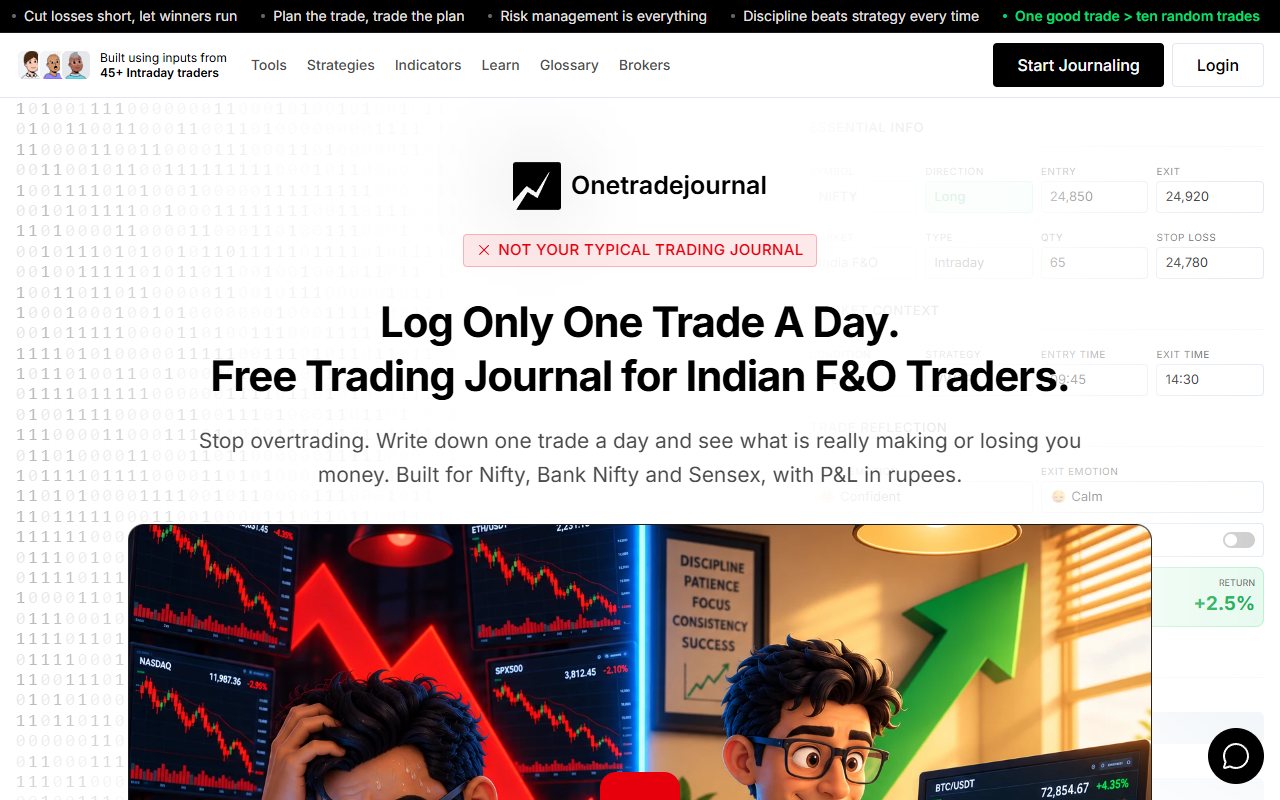
Your earlier gain falls after a planned loss. The next trade can feel like a way to restore the day's number, even without a fresh setup. OneTradeJournal centres a daily habit that names this moment. Write one actual trade, the condition you intended to follow and the emotion behind the next urge. The aim is to recognise repeated mistakes, not to call every drop from a day's high avoidable. Manual writing is deliberate. It asks you to separate the action from the result while the memory is fresh. Free behaviour analytics let you return to the feelings, stress and habits in saved entries. Groww also takes trading psychology seriously. Its journal guidance asks traders to record feelings, reasons and plan adherence. Its F&O dashboard keeps the account's day view and orders. F&O means futures and options. A useful daily note can work beside those records. OTJ complements Groww's broker tools. It does not replace the Groww account, order platform or contract notes. The broker records the transaction and charges. Your written reflection helps explain why you acted and whether the daily total pushed you away from the plan. ## Give the feeling a specific action to describe
Groww's psychology guide recommends recording trade details, feelings, the reason for entry and whether the plan was followed. It includes review questions about the exit. This is learning guidance, not proof that every suggested field is in the account dashboard. That is a useful distinction. Groww has not ignored the human side of trading. Its advice can be followed in a notebook or another clear record. The comparison is about where you will keep the details and how you will revisit them. OTJ provides named fields for entry and exit feelings, confidence, stress, satisfaction, mistakes and changes from the plan. Those fields may make it easier to remember the same questions for each trade. They do not force an honest answer. For example, a “fear” label may describe two different actions. One trader ignores a stop because they fear taking a loss. Another closes early because they fear losing a small gain. Keep the stage and action clear, not just the feeling's name. A short note can explain what did not fit the labels. You do not need a long story about the whole day. Write the detail that helps someone understand this one decision, including what you knew before the outcome. ## A made-up Nifty day with three entries
Imagine a Groww session with three Nifty option trades. The first follows the plan and wins. The second also follows the plan but loses. The trader then enters a third time without a new setup, mainly because the day's earlier gain has fallen. This is a made-up review example. It is not a customer outcome or advice to enter an option. The day could still finish positive, but that result would not settle the question about the third entry. Groww's day chart helps locate the change and its orders. It does not establish that every fall from the earlier high could have been avoided. Planned losses are possible even when a trader follows the written process. In OTJ, the first entry can record satisfaction with following the plan. The second can keep the original stop. The third can state that the reason was to restore the earlier daily number, rather than a fresh entry condition. That gives the review a more useful question: did the trader act on the setup or on the P&L screen? If the third trade happens to win, keep the same explanation. A profit does not remove the missing entry condition. The free OTJ plan will not keep all three Indian-market trades separately on that day. It allows one trade a day in each market. More entries need paid access. A selected example should not be called a complete session record. ## Give Groww's daily chart proper credit
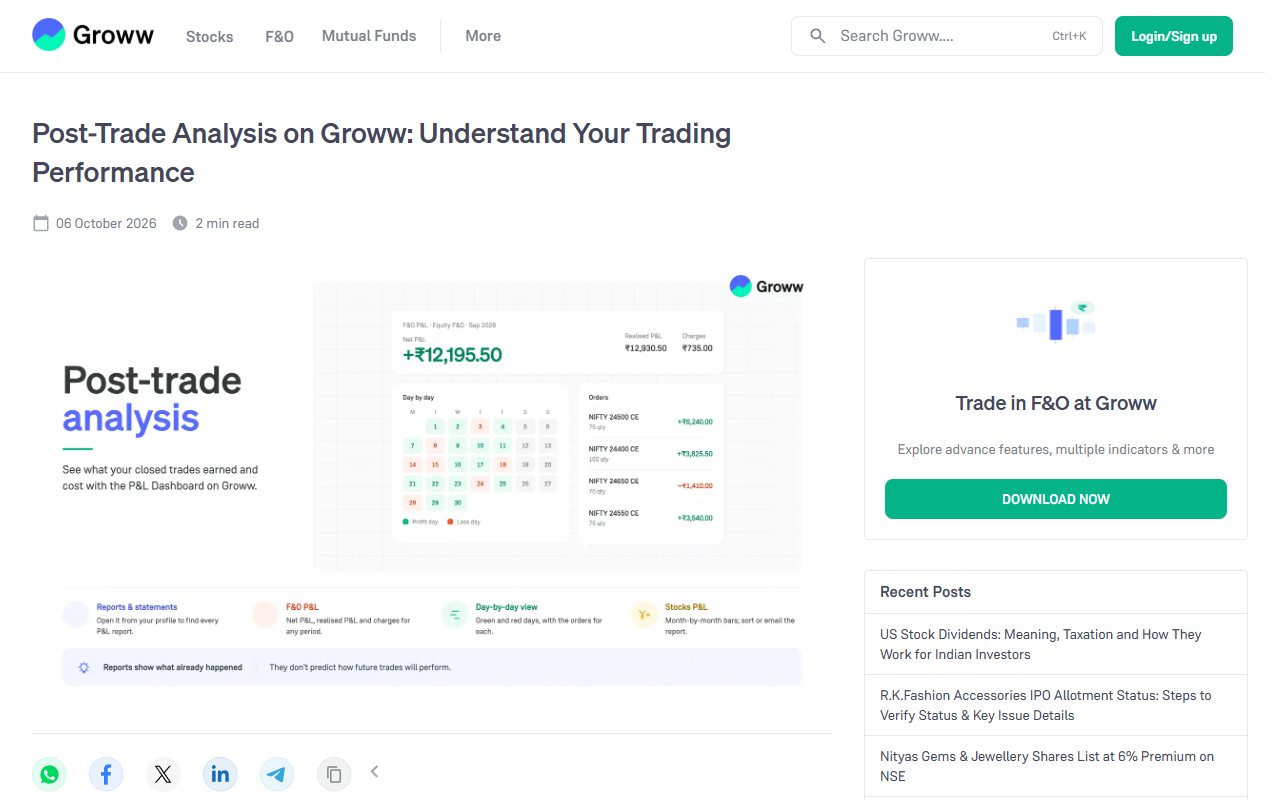
The current post-trade guide describes the F&O report under Reports & statements. You choose a month, then a day. The daily view has a P&L line chart with high and low points, and the orders for that day. Groww therefore shows more than a green or red date. The chart can help you find when the result changed. The order list can help you connect that change with the activity recorded in the account. That is still the start of a review question. A later order may follow a new planned setup. It may also be a rushed attempt to restore an earlier gain. The curve alone does not explain which reason applied. OTJ can keep a timely explanation beside the selected trade. A repeated set of questions may help if you usually write only after a bad day. Winning decisions need an honest explanation too. Do not judge a whole session from the most dramatic moment. A later drop may be part of a planned trade. Find the actual orders and read the original conditions before describing it as a mistake. ## Match the explanation to the right order
Before reviewing a reason, check that the entry describes the correct trade. A wrong contract or quantity can make even an honest explanation difficult to use. Groww's order details are the place to check the account facts. A journal may combine several actions as one review decision, while a broker view lists separate orders. Decide what your journal entry represents. Keep that choice steady when you compare results across days. Do not combine a winning two-part entry as one trade but split a similar losing entry into two merely to improve the count. The review should describe what happened. A neat-looking number is not a reason to change the grouping. For Indian options, check option type, strike and expiry. Strike is the option's contract price level. Expiry is its end date. OTJ has fields for these details, but a suggested value does not check the contract for you. Write enough to find the trade later. A clear date, contract and explanation may help you connect the journal with the saved broker report. This basic check makes the feelings and plan review more useful. ## Make the daily pause something you can repeat
OTJ has no Groww sync or CSV import. CSV is a common spreadsheet file format. A file downloaded from Groww cannot be used as a supported bulk transfer into OTJ. Paid voice help can fill parts of the form, but does not retrieve the account history. If you want to inspect many old trades immediately, use the broker's reports first. A manual journal is better suited to keeping new explanations while you remember them. Rebuilding old feelings from a finished chart can introduce guesses. You enter the trade yourself on purpose. The pause lets you write whether the entry came from the setup or the daily number. Keep the note short and specific enough to finish while you remember it. If you took more trades, preserve their broker records rather than hiding them behind the selected entry. You can choose one issue to make the work useful. If early exits are the question, keep the original target, exit reason and exit feeling. Add whether the setup changed. A few clear facts help more than many vague fields. OTJ can use the same questions for manually entered trades from several brokers. That may help if Groww is only one part of your activity. It does not create a combined broker account or copy missing trades. ## Treat a calculator as an estimate
Groww's brokerage calculator says its charges are tentative and points to contract notes for exact amounts. Tentative means an estimate. This does not mean the actual account report is merely a calculator result. OTJ also estimates Indian trade charges from entered details. A journal cannot infer every account cost or fix a wrong quantity. Keep the broker documents for the actual money check. When two totals differ, compare the period and cost basis first. Are both views about closed trades? Did you include the same orders? Did you count charges in both places? These are useful checks before deciding that a tool is wrong. Do not change a truthful note merely to make the totals match. Correct a wrong factual entry when you find one, and keep the explanation of the decision. The financial check and the review of the plan serve related but separate needs. ## Begin the daily habit and check extra tools
OTJ Free continues without a trial clock, with one trade a day in each market. Use that allowance to try the form. Treat its record as a limited sample if you make several trades in that market each day. Current India prices are ₹499 a month, ₹1,299 for three months or ₹3,499 a year. Paid access adds entries and tools such as voice help, journal chat and chart-image review. AI has usage limits and can be wrong. The cited Groww reporting pages do not give a separate dashboard subscription charge. No price is guessed here. If account reports and your existing notes meet the need, you may not need to pay for a second journal. After trying a short record, ask whether it helped answer the chosen question. Can you now explain the third entry in the made-up example? Did you actually return to the note later? A record earns its place through use. The time cost matters too. A short, accurate note written soon after the decision may be better than a full form reconstructed at the weekend. Choose a routine you can maintain. ## Return to the habit behind the daily curve
Ordinary OTJ behaviour analytics are free. Compare recorded feelings, confidence, stress, planned or impulsive entries and mistake notes. Keep the setup and size in view too, because a repeated feeling is not proof of a cause. OTJ shows a P&L calendar, running result chart and reports by strategy or time for recorded trades. These views can help find a group to inspect. They cannot see omitted trades or decide why you entered them. A valid planned stop can support review in units of the risk you recorded. The exit measure compares the actual exit with your recorded target. It does not reconstruct every historical price or the best possible exit. Flags can point to possible revenge trades, large size changes or too many trades. Revenge trading means entering mainly to recover a loss. A flag is a prompt to read the surrounding notes, not a diagnosis or an order control in Groww. Paid AI can help form a question or discuss a supplied chart picture. Check the answer against the record. A broad reply may sound certain even when your entries cover only a few selected trades. Keep the daily chart and the explanation together. After an actual trade, write whether your plan changed and whether the wish to restore a gain influenced it. Read the note again next week, including rushed trades that won. That is the daily habit OTJ helps you practise. Groww remains the account and execution platform. Its reports and psychology teaching deserve credit. Add OTJ when the deliberate manual note and free behaviour review help you return to a reason you keep forgetting. Free allows one trade per day per market; paid plans allow more. Neither the cap nor the form promises profit or blocks another Groww order.
Sources and limits
We checked these public product pages and OneTradeJournal’s current product on 12 October 2026. We did not test a private Groww Post-Trade Analysis account, broker import, payment or AI answer. Check current plans and limits before paying.
- Groww F&O reporting features · Checked 12 October 2026
- Groww daily-report guide · Checked 12 October 2026
- Groww's journal guidance · Checked 12 October 2026
- Groww charge estimates · Checked 12 October 2026
- OTJ journal features · Checked 12 October 2026
- OTJ paid plans · Checked 12 October 2026
A journal cannot promise trading profits. AI answers and fee estimates can be wrong. Check trades and charges against broker records. This page does not give trading, investment or tax advice. Competitor names and website pictures do not imply a partnership or endorsement. Any example is an explanation, not a private account screenshot or a real customer result.