The detailed comparison
A closer look at the daily routine, the tools and the limits of each product.
Choose a section
Make the next loss a moment to write, not rush
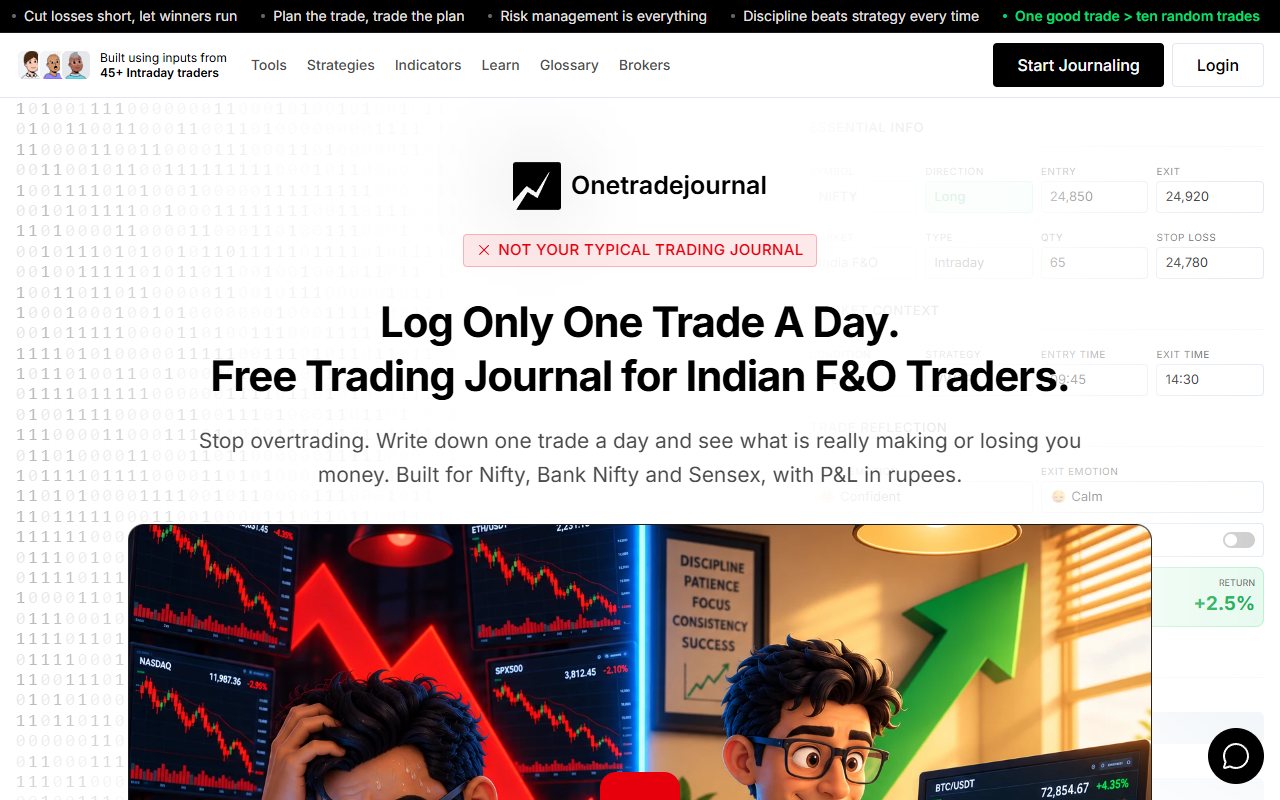
A large loss in an old report can point you toward a habit worth reviewing. It cannot tell you whether the next order came from a new setup or the wish to recover that loss. OneTradeJournal puts a daily written trade at the centre of this review. Save the reason, the plan and the feeling before the next result changes your memory. Manual entry is deliberate. You write the contract and the choice yourself, then return to the emotions and mistakes in that record. Free behaviour analytics support this review. The purpose is to recognise repeated urges and costly habits, not to promise that one trade a day will protect your capital or make money. Upstox Trading Insights offers a useful different view: free initial analysis of an existing futures and options statement. It can be used without an Upstox account, including supported reports from other brokers. Futures and options are often shortened to F&O. Profit and loss is often shortened to P&L. That analysis can help choose where to look. A daily note can preserve why a new decision happened. Keep the broker account where you execute and its full financial records. Neither OTJ nor this report comparison replaces that brokerage account. Using the initial Insights route does not require changing brokers. ## A made-up review of three large losses
Imagine a Nifty options trader finds three losses that stand out in an earlier report. This is a made-up review. It does not describe a customer or suggest a contract to trade. The first trade closes at the stop written before entry. The second uses a bigger quantity after an earlier loss. The third comes after several attempts at the same idea, although the original entry condition is no longer present. The financial result alone puts all three in the loss group. The reasons are different. The first may need a discussion of the setup. The second and third may need closer questions about the changed decision. For the next review period, the trader writes the planned stop, target and strategy before explaining any change. Entry and exit feelings are kept separately. A short note says what happened between the plan and the order. If a larger follow-up trade later wins, it still belongs in that review. Otherwise you would count the habit only when it costs money. That would give a misleading picture of how often it occurs. OTJ can help keep those fields together, but only for trades you actually enter. A manual record cannot fill its own gaps. Keep the broker report to check dates, quantities and completed orders. ## Name the urge before another attempt
A report can show repeated activity or a large share of costs. You still need a reason to decide whether it was excessive. Several entries from a written setup are not the same story as several attempts to erase a loss. Consider another made-up Bank Nifty session. A first trade loses. The trader then makes repeated attempts at a reversal. For each attempt, ask whether a new entry condition appeared or whether the earlier loss drove the click. OTJ's free behaviour analytics let you compare saved feelings, stress, confidence and planned or impulsive entries. Read those notes alongside the reported losses. OTJ stores an impulse reason and a change from the plan. Impulse means acting without the planned process. It can also flag possible revenge trading, size changes or too many trades from the recorded data. Revenge trading means taking a trade mainly to recover a loss. A flag does not prove that this was the reason. Read the note and the sequence. The trader may have followed a different valid plan, or the record may be incomplete. The tool cannot block an order or impose a broker-side limit. A written rule may be useful for your review, but the journal is not a trading control. Keep that boundary clear when deciding what kind of help you need. ## Keep the daily explanation in your own words
After reading the historical report, write one question in everyday language. For example: do I exit sooner after a loss even when the original condition has not changed? Then decide which details would help you answer it. The useful record might include the planned exit, actual exit reason and feeling at exit. Confidence at entry may be different from stress near the close. Keep both if they explain the decision. A note saying “bad psychology” tells you little. A note saying “closed because I was afraid of another loss” names the issue more clearly. Do not add that explanation later simply because it fits an attractive story. OTJ has separate feeling, stress, confidence, satisfaction and mistake fields. Use them to keep facts and feelings clear. The form does not guarantee honest answers or prove why a result happened. OTJ can download the journal information as CSV, JSON or TXT. JSON is structured text data; TXT is plain text. The files preserve the record you entered. They do not become broker-checked financial reports, and another app may not accept every field. The Upstox product page does not fully describe a continuing note editor, journal export or each data-retention setting. Retention means how long the stored record is kept. These details remain unverified here rather than being treated as absent. ## Turn a weak group into a specific question
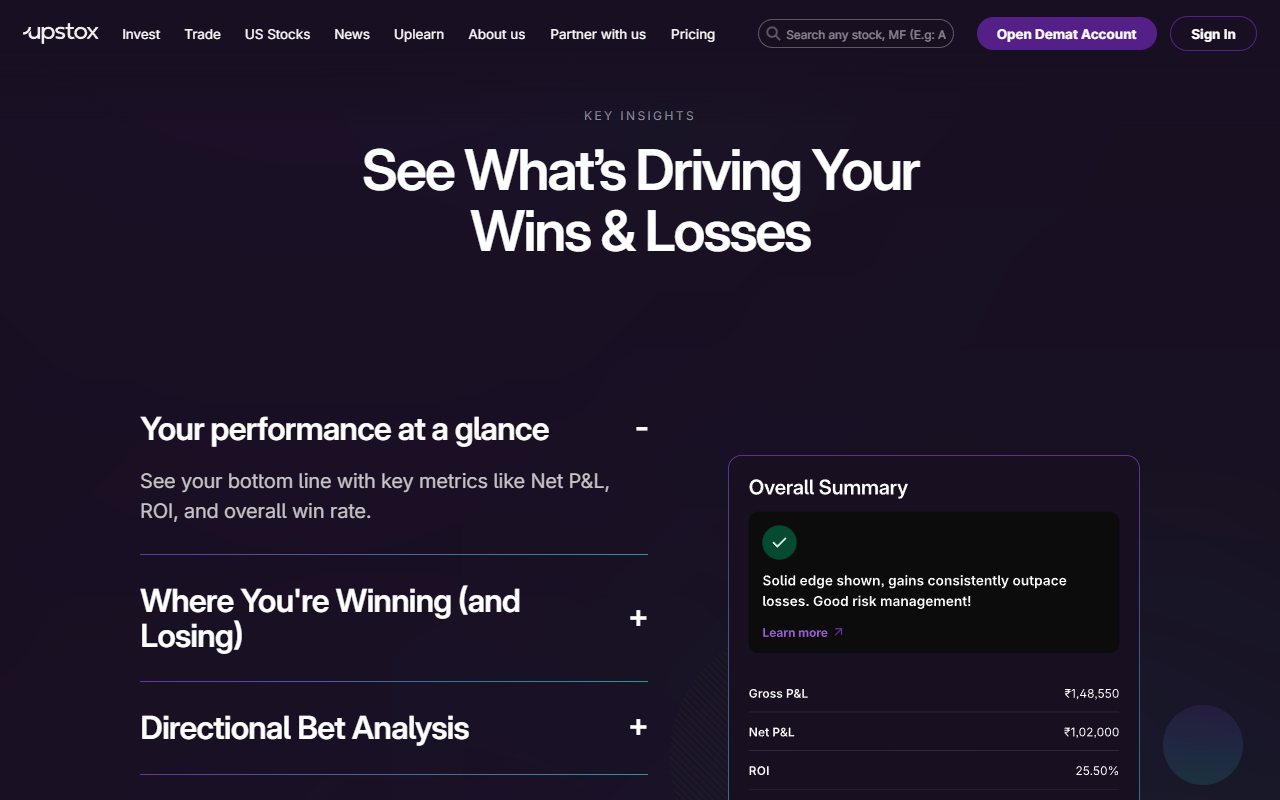
Upstox advertises review by the underlying instrument, calls and puts, risk and reward, large losses and possible overtrading. Its page also shows a days-to-expiry example. The underlying is the index or stock linked to the option. Expiry is the contract's end date. Those groups can point to a place worth looking. They do not tell you why a result happened. A weak group near expiry could contain late entries, different setups, bigger quantities or worried exits. Suppose you notice a weak set of Nifty trades close to expiry. “Avoid all such trades” is one possible reaction, but the report alone does not establish that rule. First look at the actual entries and ask what they had in common. A more useful question might be whether you enter late after missing the first move. OTJ can keep the planned entry condition, confidence, entry feeling and reason for an unplanned action. That gives the next review something more specific to inspect. Keep exceptions too. If one near-expiry trade followed the plan and another did not, record both honestly. A label describing the date does not make their decisions identical. The displayed Upstox figures are published examples. They are not expected results for your account. This page does not use those figures to promise better returns. ## Check your file before choosing the upload route
The current FAQ names report support for Zerodha, Angel One, Dhan, Kotak Neo and ICICI Securities. It also offers a standard format for other brokers. This is a real benefit for traders who do not trade through Upstox. The instructions request at least 20 trades and refer to the past year. Check the current file requirements before expecting an analysis. A short or wrongly formatted report may not meet them. This comparison did not upload a statement. The published route is useful evidence about the offer, but it is not a test of each broker file. Check the selected period and whether the file covers the intended activity. OTJ has no CSV import or broker sync. CSV is a common spreadsheet file format. It cannot turn the uploaded Upstox report into OTJ entries. If your main need is to review a long history with little typing, the statement route has a clear advantage. A manual journal does not need to recreate all those old feelings. You may no longer remember them accurately. Keep the older financial result and begin recording the missing context from now on. ## Start the daily habit and check paid tools
The official page describes the initial Upstox report analysis as free. It is worth considering when you mainly need a starting view of an existing F&O history. OTJ is not presented as the cheaper way to do that job. OTJ's ongoing free allowance is one trade a day in each market. More separate same-market entries on one day need paid access. A selected entry can help you try the form, but it cannot describe the entire busy session. Current OTJ prices in India are ₹499 a month, ₹1,299 for three months or ₹3,499 a year. Paid access adds entries and tools such as voice help, Ask Your Journal and Trading Mentor. AI has usage limits and can give wrong answers. An upload can save work on old numbers. OTJ's daily writing asks for the reason while it is fresh. Keep the routine small enough to repeat, then read it again. The value is in recognising a habit you keep overlooking, not in completing another attractive form. Do not pay merely to have another chart of the same total. Name what the second tool must preserve. A clear record of the reason for a changed exit may justify the effort; a form you never finish will not. ## Make a fair check of the numbers
OTJ has reports by strategy and time, plus a running result chart, for logged trades. Their value depends on the entries behind them. If you record winners more carefully than losses, the picture may look stronger than the account. Keep the contract details clear for Indian options. OTJ includes option type, strike and expiry. Strike is the contract's price level. A familiar index name does not identify the exact contract or quantity. A planned stop can help compare the result with the risk you recorded. OTJ's exit measure compares the exit with your recorded target. It does not replay the price path or identify the best price you could have received. Costs need a separate check. OTJ estimates Indian trade charges. Compare them with the broker's contract note and statement when totals differ. The original report remains important even after you have a useful journal. Ask the same basic questions of either report: does it cover the right period, which trades are missing, and what costs are counted? A weak category may be a useful clue, but a small or uneven sample should not become a certain rule. ## Let the daily habit and the report serve different parts of review
After a trade you have already taken, write the setup, the actual action and how you felt. If a loss made another entry feel urgent, name the urge without guessing that every later trade was revenge trading. At the next review, read the note with comparable entries. Look for a habit to watch, while leaving room for different setups and conditions. OTJ is useful when this deliberate writing is the routine you want to build. Its named fields and free behaviour analytics keep the reason beside recorded results. Free allows one trade per day per market, and paid plans allow more. A selected entry is not a complete account if other trades are missing. Upstox Trading Insights deserves credit when you have a suitable statement and want its free initial F&O analysis. The offer includes other-broker traders. Keep that broader report to find groups worth studying; do not invent old feelings merely to fill a new diary. You may use both parts of the review. One shows where the losses or repeated trades occurred. The other keeps the personal reason for the next actual decision. Neither knows a motive you never recorded, and a small group does not prove a profitable rule. Keep the original broker records for all activity, quantities and charges. Your journal can help you recognise the habit behind a costly mistake. It does not execute, cancel or block the next broker order.
Sources and limits
We checked these public product pages and OneTradeJournal’s current product on 12 October 2026. We did not test a private Upstox Trading Insights account, broker import, payment or AI answer. Check current plans and limits before paying.
- Upstox statement analysis and file rules · Checked 12 October 2026
- OTJ paid plans · Checked 12 October 2026
- OTJ journal features · Checked 12 October 2026
A journal cannot promise trading profits. AI answers and fee estimates can be wrong. Check trades and charges against broker records. This page does not give trading, investment or tax advice. Competitor names and website pictures do not imply a partnership or endorsement. Any example is an explanation, not a private account screenshot or a real customer result.