The detailed comparison
A closer look at the daily routine, the tools and the limits of each product.
Choose a section
Write the next quantity change before it becomes a familiar mistake
A larger trade after a loss may appear clearly in your account history. The reason may be less clear. Was the quantity planned earlier, or did you want the money back? OneTradeJournal's daily habit asks you to write one actual trade and keep that distinction while the memory is fresh. Manual writing is intentional. You record the plan, actual action, confidence, stress and entry or exit feelings yourself. Ordinary behaviour analytics are free. The aim is to recognise repeated urges and costly mistakes, without treating a size change as a diagnosis or a promise that fewer trades will be profitable. NiyataBook also puts discipline and psychology in its offer. Its website advertises feelings checks, notes, tags, preparation, end-of-day review and rulebook scoring. It has an April-to-March calendar and explicitly names Zerodha as live. Broader broker readiness is advertised, so confirm any other connection you need. That routine may fit you well, especially when its imported history and notes stay together. OTJ is useful when deliberately writing the daily trade and answering named feeling questions is the habit you want to practise. Psychology does not belong to only one product. Free OTJ allows one trade per day per market. Paid plans permit extra entries, while the journal remains manual without broker sync or CSV import. The daily focus should not make you force a trade or hide other activity. Keep full broker records whichever journal holds the personal explanation. ## Notice the urge without letting a score define you
NiyataBook advertises checks of feelings and actions with adjustable sensitivity, plus a rulebook score. Sensitivity means how readily a check flags a possible issue. These are published tools, not results we tested in a private account. OTJ's free behaviour analytics compare feelings, confidence, stress and planned or impulsive entries in your saved sample. Paid AI review is a separate tool, not a requirement for reading these ordinary behaviour views. OTJ also has flags for possible revenge trades, size changes or too many trades. Neither kind of flag should be treated as a diagnosis or a certain explanation of intention. A quick re-entry after a loss may be rushed. It may also follow a different planned setup. Read the original condition and the timely note before choosing the explanation. OTJ can keep the trader's own reason in a separate field. NiyataBook promotes notes and tags linked to its checks too. The helpful question is which record lets you inspect the evidence behind the label. A specific question is clearer than calling yourself undisciplined. For example, was the quantity change written before the session? Look for that note on both winning and losing entries. Do not change old labels to make a score look better. ## A made-up review across March and April
Imagine a Nifty options trader reviewing entries around the financial-year boundary. The old year ends in March, and the next begins in April. The trader wants to understand whether a quantity increase after losses continued across those periods. This is a made-up example, not an account result or a suggestion to trade an option. NiyataBook's published April-to-March view can help organise the period. An imported sequence may help locate the entries. The trader finds an old size increase but has no note about the intention. They cannot honestly fill that gap just by seeing the outcome. Leave the reason unknown, rather than deciding that it must have been revenge trading. For new entries, the trader can record actual quantity and explain the intended quantity in a note. OTJ can keep confidence, stress and the reason for a change beside the trade. Revenge trading means entering mainly to recover a loss; it should not be assumed from a loss alone. At the next review, ask whether the changed quantity was planned before the earlier trade. A profitable April day could still contain an unplanned increase. A losing March trade could still have followed the plan. This does not mean the trader needs two subscriptions. If NiyataBook's imported history and notes already support that question, they may be enough. OTJ's benefit depends on whether its manual questions help collect missing context more clearly. ## Put your own reason beside the trade facts
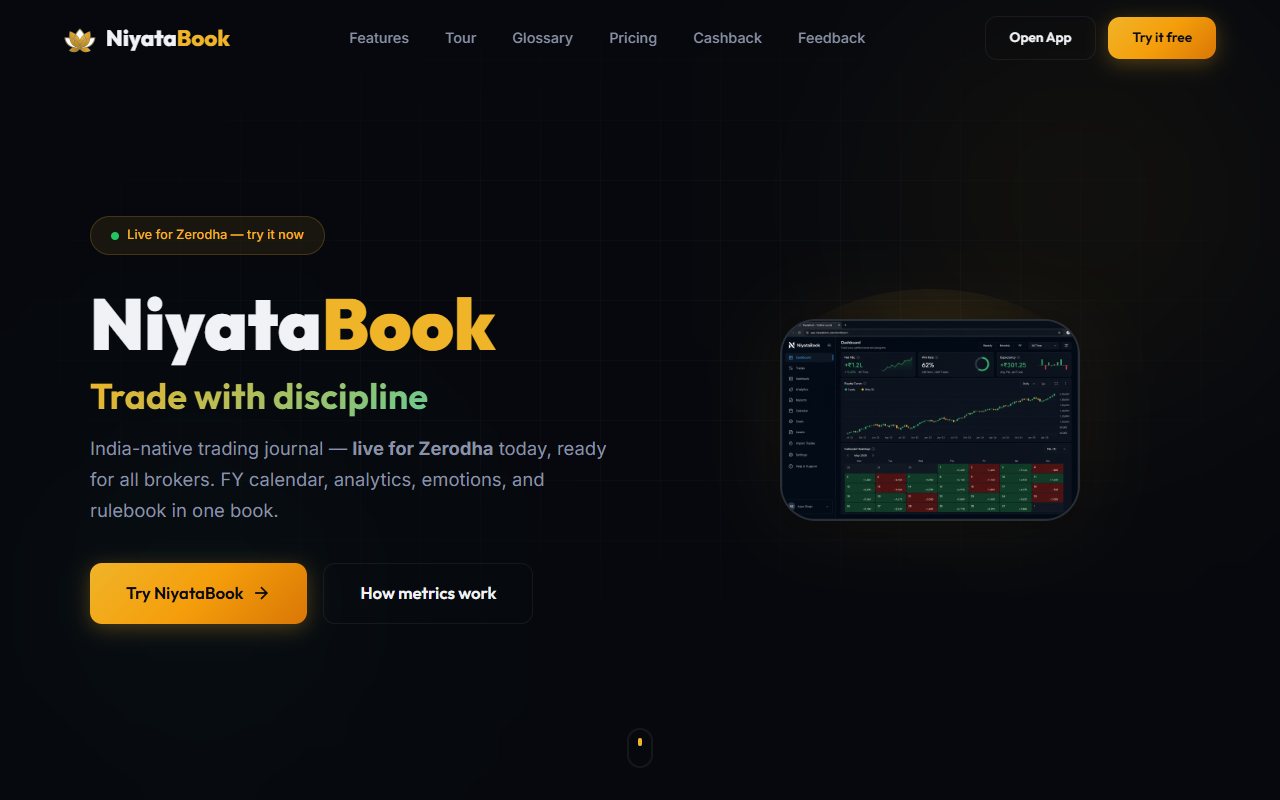
A broker file can supply trade facts that are difficult to retype across months. NiyataBook advertises a connection for current activity and CSV files for older periods. Its public tour describes matching the imported fills. A fill is one completed part of an order. The advertised import may reduce the work of rebuilding a trade record, but we did not test its matches. Check an important trade against the broker before treating an imported group as the final answer. An import does not prove the reason behind the order. A quantity increase may be visible, while the reason for it was never written. Guessing that reason later would give the record more words without making it more reliable. NiyataBook also promotes feelings and rule review. It may already combine the imported facts with the human explanation you need. Do not assume it offers numbers alone. OTJ puts the explanation into the manual record. It has separate fields for entry and exit feelings, stress, confidence, an unplanned-action reason and a change from the plan. The purpose is to make writing that reason part of the daily routine, then return to it when reviewing a repeated habit. ## The free allowances count different things
NiyataBook's Free card lists approximately 30 trades a month and one broker. It includes journal, preparation, end-of-day review and import access, with some other views limited. The “approximately” wording is part of the published limit. OTJ Free permits one trade a day in each market. Its free access continues without a trial clock. An unused day does not create more slots for several Indian-market trades on another day. Imagine a made-up trader who has three decisions on Monday and none on Tuesday or Wednesday. A monthly allowance and a daily allowance treat that pattern differently. Similar-looking monthly totals do not make the plans interchangeable. Use a free allowance to check the routine. Can you find the trade and write the reason? Do you later return to the entry? A capped record should not be described as the whole broker account. Paid OTJ permits additional entries but keeps the same manual start. Paying does not unlock sync or bulk import. If old account history is essential, that limitation belongs near the start of your decision. ## Read the profitable-day price carefully
NiyataBook offers a plan called Fair. The pricing page lists ₹49 for a day with positive net P&L, and ₹0 for losing or no-trade days. P&L means profit and loss. Net is the after-cost measure used by the published offer. A bill based on profitable days can change across months. A fixed monthly subscription works differently. This is a choice about how you want the bill to work, not a prediction of how many profitable days you will have. For example, read the billing rule before deciding that ₹49 is the whole monthly cost. More chargeable days mean more daily charges. Taxes and the required features also matter. We did not make a payment or test the bill. The Fair card lists unlimited trades, one broker and five AI insights a month. It does not include export or all the detailed report packs. A lower starting price is not the same as the same feature access. NiyataBook also has fixed plans. Pro is listed at ₹499 a month or ₹4,499 a year, with export and 50 AI insights a month. The page says GST is extra. GST is the tax added to the listed price. OTJ's current Indian plans are ₹499 a month, ₹1,299 for three months or ₹3,499 a year. Its paid price is not based on daily P&L. That does not prove OTJ costs less for every Fair user or every level of NiyataBook features. ## Read the definition behind a shared number
Two reports can use the same metric name for different calculations. First check what is counted, the period and whether fees are included. A name alone does not make two results comparable. OTJ can compare a trade's result with the risk from a valid planned stop. A stop is the price condition intended to limit a loss. A missing or invented stop cannot support the same interpretation. NiyataBook's public glossary describes its “R-Multiple” as average winning P&L divided by average losing P&L. That is a comparison of average outcomes. It is a different question from the risk originally planned for one trade. Do not compare those figures as though they mean the same thing. If one tool imported a long history and the other holds a few recent entries, the samples differ as well. Match the dates and definitions first. OTJ's exit measure uses the target you recorded. It does not replay all the market prices during the trade. Changing the target after seeing the outcome can also change the meaning of the review. Keep broker documents for the money check in either product. OTJ estimates charges. An Indian calendar, imported file or journal score does not turn a journal into the broker's account ledger. ## Check AI and export at the chosen plan
AI is present in both paid offers described here. NiyataBook lists five monthly insights on Fair and 50 on Pro. OTJ offers paid Ask Your Journal and Trading Mentor with usage limits. AI can give a confident but wrong response. Ask a focused question supported by the record, then read the relevant entries. A reply cannot recover a missing old intention or prove that a trading choice will work next time. OTJ can download journal information as CSV, JSON and TXT. JSON is structured text; TXT is plain text. These copies preserve your own record, not broker-certified performance. NiyataBook lists export on Pro. Confirm the format and required fields before relying on it. We did not test an export, and shared file names do not establish transfer between the two journals. OTJ has no supported bulk import route. If you move to it, you may keep the old export as an archive and start new manual records. That is different from moving every past field into a new app. ## Choose the daily routine you will keep returning to
Take a trade you have already placed and write why its quantity was chosen. Keep the original plan, the actual size and the feeling at the time separate. An old imported row with no reason can stay uncertain. Your next daily note can preserve the reason before the later result changes how you describe it. Return to comparable notes at the next review. Ask whether unplanned quantity increases follow an earlier loss. Read profitable trades as well as losing ones. A pattern is a question to inspect, not proof that one emotion caused the outcome. OTJ fits when manual daily writing and free behaviour analysis help you keep that reflection honest. Its Indian option fields include type, strike and expiry. Check the actual contract and quantity against the broker. Free allows one trade per day per market, and paid access adds entries. NiyataBook deserves a close look for its published Zerodha history route, financial-year calendar, preparation and feelings/rule review. Check whether Fair or a fixed plan includes the reports, AI and export you want. A connected history with useful human notes can support reflection as well as a manual journal. Keep the bill separate from the lesson. Fair changes with chargeable profitable days; it is not a reason to place more trades or a promise about results. Neither an import, a rule score nor an AI reply controls your broker order. Choose the record you will write and revisit, while keeping all official financial evidence.
Sources and limits
We checked these public product pages and OneTradeJournal’s current product on 12 October 2026. We did not test a private NiyataBook account, broker import, payment or AI answer. Check current plans and limits before paying.
- NiyataBook features and live broker · Checked 12 October 2026
- NiyataBook prices and plan limits · Checked 12 October 2026
- OTJ journal features · Checked 12 October 2026
- OTJ paid plans · Checked 12 October 2026
A journal cannot promise trading profits. AI answers and fee estimates can be wrong. Check trades and charges against broker records. This page does not give trading, investment or tax advice. Competitor names and website pictures do not imply a partnership or endorsement. Any example is an explanation, not a private account screenshot or a real customer result.