The detailed comparison
A closer look at the daily routine, the tools and the limits of each product.
Choose a section
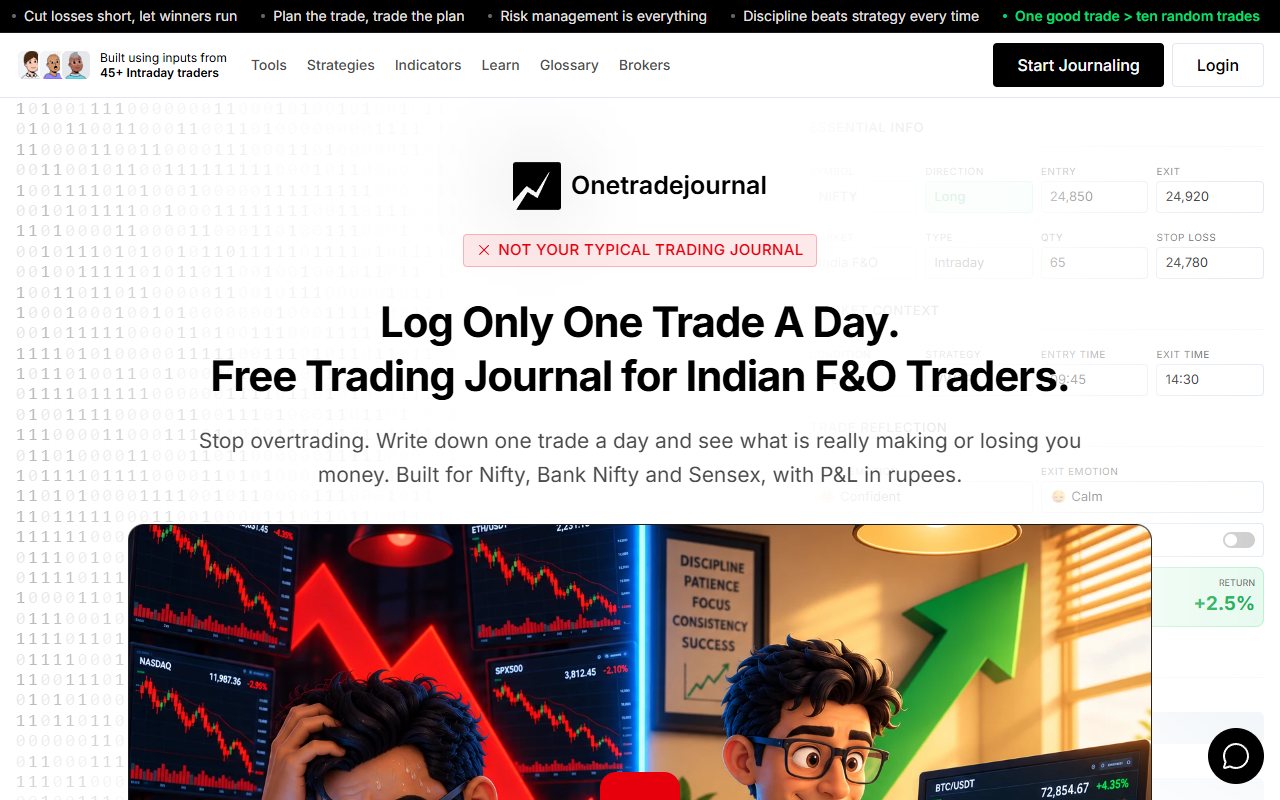
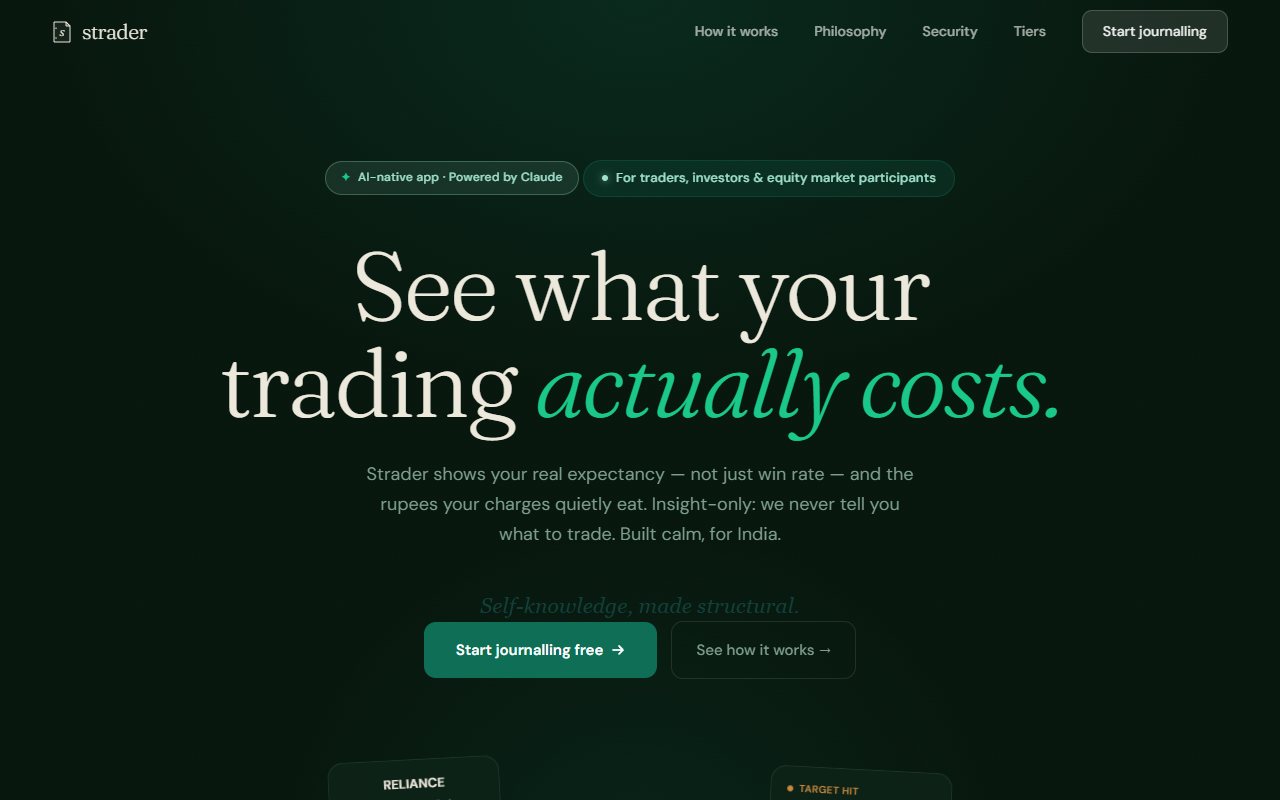
What do you want to remember after a difficult day? A trader can remember the winning second entry and forget the disappointment that led to it. A short daily note gives the next review something firmer than the final result. Write the reason while you can still explain it. OTJ centres a one-trade daily writing habit. You enter the trade, its plan and the feelings around your choices. Manual writing is deliberate. OTJ has no broker sync or file import, because its routine starts with a decision you explain yourself. That habit is not a rule requiring one order a day. Free allows one entry per day per market. Paid plans allow extra entries. Keep other trades in view when judging the whole session, and do not place a trade just to fill a journal. Strader's AI journal page offers a different starting point: a draft made from trades, which the user refines. Its current Apple listing also advertises a daily journal nudge. It takes the habit seriously too. A draft can help when you postpone a blank page. Named manual prompts can help when you want to state the original reason before seeing a suggested explanation. Neither method proves the note is true. The choice is not whether feelings matter. Strader already includes mood and reflection. Compare which routine helps you keep an uncomfortable reason, rather than polish it away. ## Why did you enter again after disappointment? Consider a made-up Nifty options session. The first trade follows a plan but has a disappointing result. The trader enters again without a fresh setup because of that disappointment. The second trade wins. A timeline can show the contracts, prices and sequence. It cannot prove disappointment caused the next order unless that reason is recorded. An AI may offer a plausible explanation, but plausibility is not evidence. In OTJ, the trader can write the impulse reason and change to the plan. Confidence and stress add context. The winning result then sits beside the recorded departure. Strader's draft can help begin the same discussion. Its mood and reflection tools deserve credit. The user still needs to check the note and add what the numerical history cannot supply. Keep three things separate: a verified execution, a feeling reported by the trader, and an AI guess. Do not let a fluent paragraph turn the third into the first. ## Did the feeling change during the trade? Strader's Zerodha guide describes emotion around entry and exit. It is not fair to claim OTJ alone captures those stages. The useful difference is the exact prompts and detail you want. A trader may enter confidently and exit anxiously. Another may enter nervously but follow the holding rule calmly. One overall daily mood can make those paths seem alike. OTJ separates confidence from stress and entry feelings from exit feelings. Satisfaction and mistakes also have their own fields. This may help someone whose short notes leave the action unexplained. Strader's available notes may record the same detail. Exact matching fields were not tested. Try describing when the feeling appeared and what it changed, rather than judging only the label. A later winning result can change how a person remembers the entry. Record important context close to the event and mark later additions. Both products need that discipline of writing. ## What does the behaviour review ask you to check? Strader advertises a process score and AI reflection. The published description says it is not a prediction. OTJ also uses simple flags to draw attention to possible patterns. A quiet week may have fewer chances to break a rule. A better score does not by itself tell you why the process changed. Read the decisions behind it. Likewise, several entries can follow a valid plan. OTJ's possible-overtrading flag does not prove those entries were wrong. Its revenge and size-spike flags also need the original reason. These tools are review prompts, not diagnoses or broker order blocks. OTJ cannot prevent an execution. We did not validate Strader's scoring or whether a particular alert was correct. OTJ's ordinary behaviour analytics are free. They help you revisit recorded emotions, plan changes and mistakes. Paid AI behaviour reviews are separate and limited. A useful pattern should lead you back to actual entries, not turn into a judgement about your personality. A useful weekly review can compare one flagged entry with one ordinary entry. Look at the setup, planned risk and reported feeling. The individual record should support the conclusion. ## Indian F&O support deserves full credit
Strader's F&O page names Nifty, Bank Nifty and stock options. Its current Apple India listing goes further. The release notes advertise lot sizes, strikes, expiries and F&O CSV imports. These are published features, not an app record we tested. They still establish more than a generic mood journal or a store page accessible in India. OTJ cannot fairly claim that only it has local contract fields. OTJ's own form includes manual strike, call or put type, expiry, planned stop and target. Its expiry picker and lot hints assist entry. You still need the correct contract and quantity. Before relying on either journal, check a representative options position. Look at partial fills, exit timing and how a completed position is grouped. Several executions may not mean several independent decisions. The Strader listing is published for iPhone. Its website says Android is coming soon. We did not install the app or certify every device, contract parser or calculation. ## Zerodha sync has conflicting rollout messages
Strader's homepage marks Zerodha available and names several other brokers as coming soon. The app listing also says Zerodha auto-sync works and places automatic import in Forest. The official Zerodha guide still calls automatic import an early-access rollout. It says manual recording is available while access opens for accounts. Both messages were rechecked. That means the public pages do not establish immediate connection access for every new account. Treat it as an advertised feature to confirm, not a working connection we certified. Ask about your plan, history range and available fields. Check a small session against the broker's original records before relying on the full result. We did not connect a broker or test updates. OTJ has no broker sync or CSV import. Paying does not change that. Strader's advertised collection may be a useful strength for a busy session. OTJ asks for manual facts and reflection instead. It does not claim that careful writing makes collecting the full execution history unnecessary. ## Compare tiers and periods carefully
The current Apple India listing lists Grove at ₹299 monthly or ₹2,699 yearly. Forest is ₹599 monthly or ₹5,399 yearly. Forest is described as including automatic broker sync. OTJ costs ₹499 monthly, ₹1,299 for three months or ₹3,499 yearly in India. Grove's monthly and yearly amounts are both lower than OTJ's. Forest costs more and offers a different advertised routine. There is no single price winner across these options. Compare the tier and term you need. Do not combine a lower price from one plan with features from another. Strader's homepage table labels Sapling, Grove and Forest with two, twenty and sixty trade logs per month. It labels Sapling journal retention as thirty days. The exact meaning of a log and the retention effect were not tested. OTJ's free daily market allowance works differently. It permits one trade each day per market. A monthly pool and a daily cap can both miss part of a busy session, so count actual entries before choosing. ## Check the trial with a real task
Strader's current F&O FAQ advertises a seven-day Forest trial for new accounts. We opened the ordinary public FAQ to read that wording. We did not activate a trial or test account eligibility. Use an evaluation for a defined task. If sync is essential, confirm the actual account access despite the conflicting rollout pages. If AI drafting is essential, check that the draft preserves facts and marks uncertainty. Choose one planned trade and one changed plan. An easy successful example can make almost any journal seem helpful. The difficult record shows whether an uncomfortable reason survives the summary. OTJ's continuing free allowance is not a paid-plan trial. It can help test the manual prompts within the cap, but paid AI and extra entries need a subscription. A good evaluation ends with an understandable record after several days. Published speed claims or an attractive demo are not proof that your own notes will remain useful. ## Cost figures still need broker evidence
Strader advertises Indian charge breakdowns and net results. The current release notes also discuss F&O charges. Those are product claims, not calculations certified by this comparison. OTJ estimates Indian brokerage and other charges. Gross result is before included costs; net result is after them. Compare the same trades and costs before interpreting a difference. For several small option gains, charges can matter to the final result. That is a money question. Whether the entries followed the plan is a separate question that needs the reasons. Keep broker contract notes and statements. Check quantity, dates, joined trades and fees when totals differ. A missing trade can change the result before any psychology explanation is needed. Neither a tax-ready marketing label nor a detailed export replaces original financial documents. This page does not certify either journal's tax or charge output. ## Keep a copy and check AI against the source
Strader's current website advertises report exports. Its exact plan allowance and access after cancellation were not tested. Confirm those points before relying on a long history. OTJ exports logged trades as CSV, JSON and TXT. CSV is a table file, JSON keeps structured data, and TXT is plain text. They preserve what you entered, not omitted executions. OTJ's paid Ask Your Journal and Trading Mentor can inspect context or supplied chart images. Use limits apply and answers can be wrong. Strader also presents its AI as reflection, not buy or sell instructions. OTJ's risk-based measure needs a valid planned stop. Exit efficiency uses the logged target, not every price reached during the trade. OTJ has no historical replay or backtesting. Return to the made-up second entry. The next review should still show that disappointment, rather than a new setup, prompted the action. If the note loses that fact, a fluent draft or a detailed form has not served this particular habit. Choose Strader if checked access and drafts help you keep a daily reflection. Consider OTJ if writing through named prompts is the routine you will repeat. Its free behaviour analytics do not require a paid AI tool. Paid plans allow extra entries and limited AI or voice help. A daily note may make a repeated costly action easier to recognise. Neither app can guarantee you will change it or make money. A process score is not permission for the next order. Public pages were rechecked on 12 October 2026; no app, sync, AI output or purchase was tested.
Sources and limits
We checked these public product pages and OneTradeJournal’s current product on 12 October 2026. We did not test a private Strader: AI Trading Journal account, broker import, payment or AI answer. Check current plans and limits before paying.
- Strader plans and broker status · Checked 12 October 2026
- Strader Apple India listing · Checked 12 October 2026
- Strader Zerodha rollout guide · Checked 12 October 2026
- Strader F&O features and trial · Checked 12 October 2026
- Strader AI drafts · Checked 12 October 2026
- OTJ journal features · Checked 12 October 2026
- OTJ paid plans · Checked 12 October 2026
A journal cannot promise trading profits. AI answers and fee estimates can be wrong. Check trades and charges against broker records. This page does not give trading, investment or tax advice. Competitor names and website pictures do not imply a partnership or endorsement. Any example is an explanation, not a private account screenshot or a real customer result.