The detailed comparison
A closer look at the daily routine, the tools and the limits of each product.
Choose a section
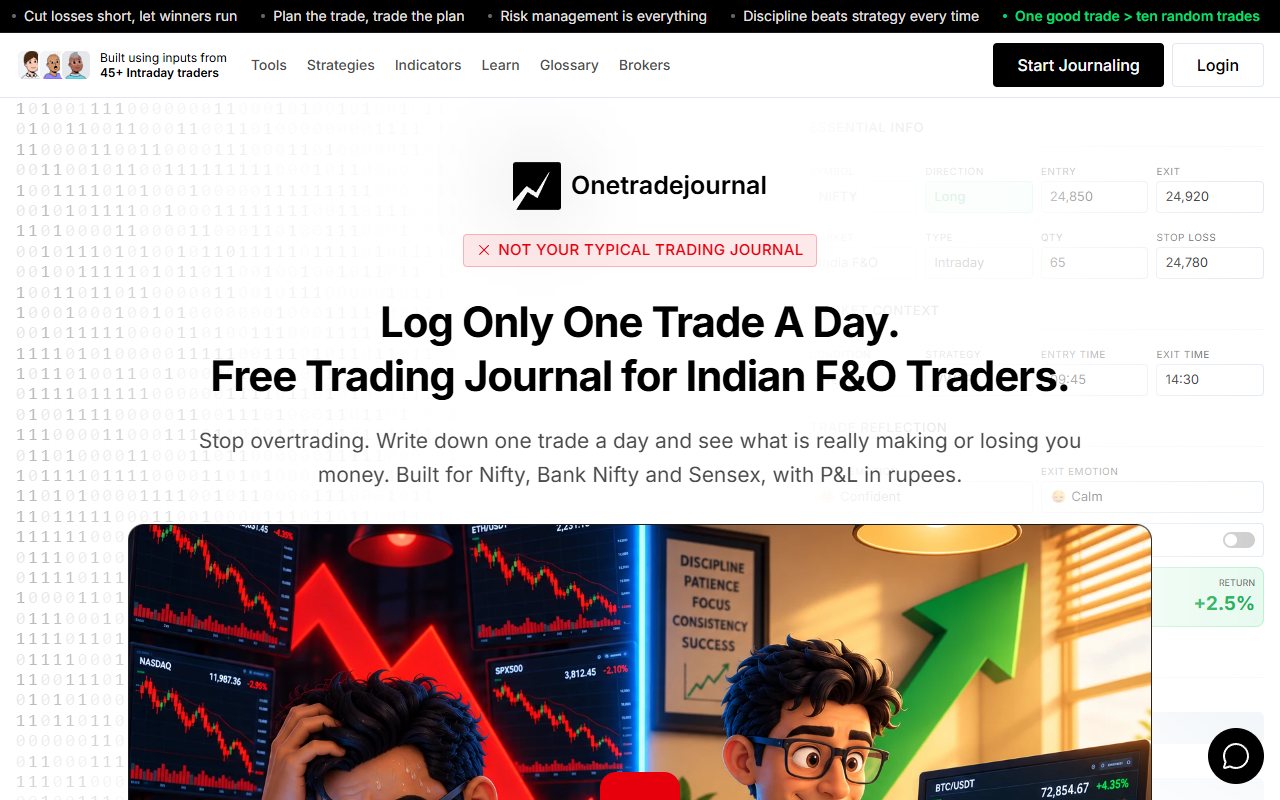
Why did you keep holding today? A position can stay the same while your reason for holding changes. On Monday it may follow a written plan. By Friday you may be waiting mainly because closing would make a loss feel real. A later recovery does not tell you which reason was true. OTJ starts with a one-trade daily writing habit. Keep the plan, name the feeling, and explain the choice in a few honest sentences. It uses manual entry on purpose. A price record can show what happened, but you still have to supply the thought behind a changed hold. A daily habit does not require a fresh order every day. Do not force a trade to fill a journal. Free OTJ allows one trade entry per day per market, and paid plans allow extra entries. A selected note can help reflection; it should not be presented as the whole account if other trades are left out. SwingTradingLog already supports notes and psychology tags. Its NSE stock use and rupee display establish an Indian stock use case. Its active-position tools may help you organise positions held across days. Both products can hold an explanation. Choose the routine that makes you return to it. Ask whether you can still distinguish the original holding rule from the wish to avoid an uncomfortable close. ## A Friday note before the weekend
Imagine two NSE equity positions in a Friday review. One follows the original plan to hold. The other was meant to close before the weekend, but the trader avoids closing because it would realize a loss. This is an illustration, not advice about either position. If the second trade recovers later, that outcome may hide the changed rule. If it falls, hindsight may make the whole decision look wrong. The useful question is what the trader knew on Friday. Was there new evidence that justified a change? Or was the reason mainly avoiding an uncomfortable action? OTJ's change-to-plan field can preserve the altered holding rule. Stress, impulse reason and a short note can explain the reluctance. Later exit feelings and satisfaction can describe the result separately. SwingTradingLog's notes and psychology tags can also preserve that story. Its active-position view answers what remains held; the note answers why. A position total cannot supply that reason on its own. ## Can you name the feeling without judging yourself? The FAQ describes notes, psychology tags and chart images. It says option structure can be recorded in notes. Treating it as a numbers-only journal would ignore those published features. OTJ offers named fields instead of relying only on a flexible note. Confidence and stress are separate. A person can trust the setup yet feel stressed by the quantity or the length of the hold. OTJ's ordinary behaviour analytics are free. They let you revisit recorded emotions, plan changes and mistakes. Paid AI reviews are a different, limited tool. No chart can diagnose a person from a few trades. Separating the feelings can help ask a clearer question. Did stress rise because of size? Did it lead to an exit outside the rule? Read the individual records rather than making a broad claim about “bad psychology.”
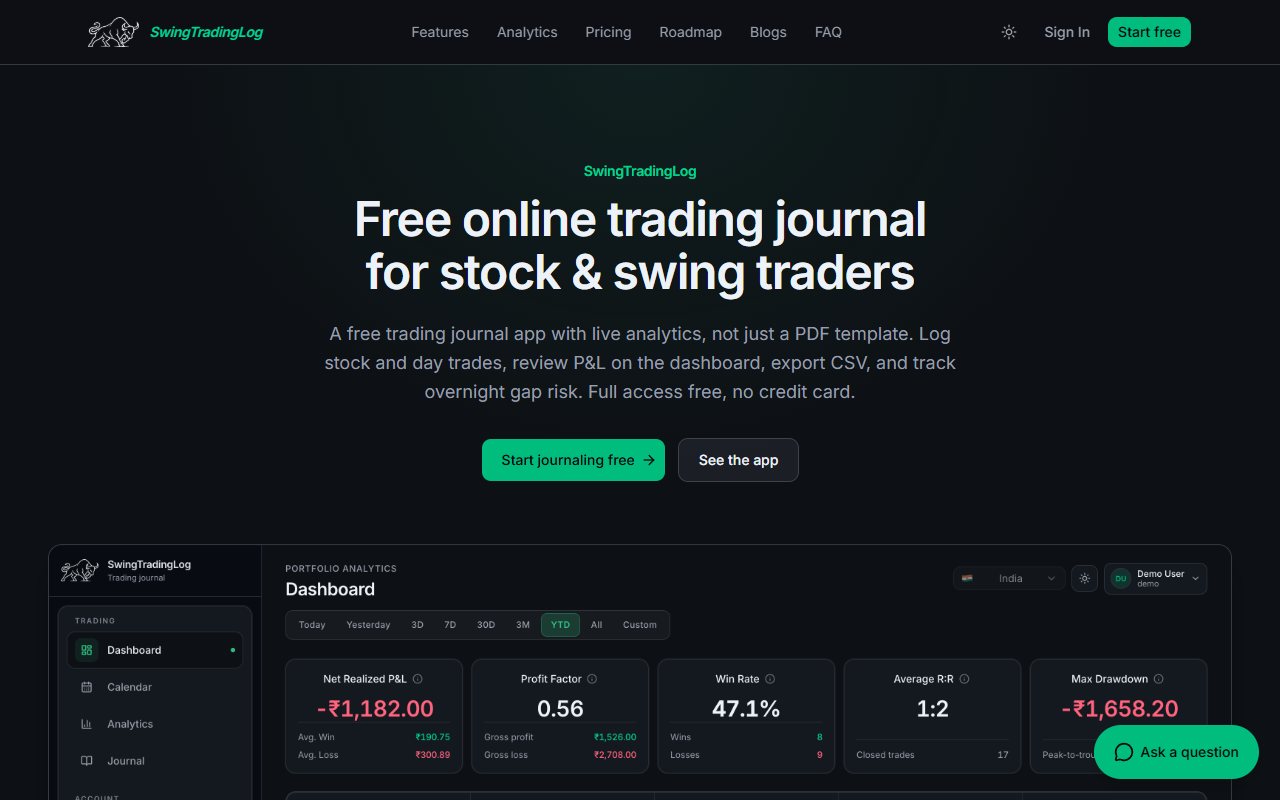
Trade notes can explain the same detail if the writer remembers to include it. A fixed prompt is a reminder, not a truth machine. Both methods can contain vague or flattering explanations. Choose the form that helps you write the missing fact consistently. If SwingTradingLog's tags and notes already do that, another journal may add work without adding useful evidence. ## How much is held, and why does that feel stressful? SwingTradingLog's features page describes exposure on open positions using entry prices. Its roadmap says live quotes for exposure are being built. Here, exposure means the recorded amount of position value held. With an entry-price basis, it is not the current market value. It also is not the loss you planned to accept at a stop. Those are different numbers. A large position value can have a close planned stop. A smaller position can still have a large planned distance to the stop. The exposure figure alone does not explain the intended risk. OTJ can compare a result with planned risk when the original stop and prices are valid. That describes the plan you entered. It does not replace an open-position exposure view. A stop is not a guarantee of an exit at that price, especially when the next session opens at a different level. Neither journal predicts that opening price. Keep the purpose of each number clear. ## What habit sits behind the weekly total? One week's profit can include planned targets, planned stops and unplanned reactions. A single total may hide those differences. Review the process as well as the outcome. For a swing trade, entry and exit may fall in different weeks. Check which date a report uses before interpreting a weekly result. The holding period is not the same as the time of entry. OTJ's strategy and time views describe logged trades. They also show win rate and losses from a peak. Those results are only as complete as the entered sample. Its exit-efficiency measure compares the actual exit with the recorded target. It does not reconstruct every price reached during the hold. A target added after the result is known would weaken that review. Keep the original plan and changed-plan reason beside the result. That helps distinguish a planned loss from a profitable deviation. Neither label alone tells you what to do in the next market. ## Date a chart image and explain its role
SwingTradingLog advertises chart images on records. A snapshot can preserve what the trader saw. It still needs a time and a reason to be useful in review. An entry chart and a closing chart may show very different information. If only the later image is saved, a review can accidentally assume the trader knew the later result at entry. Write which decision the image informed. Was it the first entry, the Friday hold or the final close? Keep the original note if later evidence changes the plan. OTJ can keep a chart link and planned details. Paid Trading Mentor can inspect a supplied chart image under use limits. Its answer may be wrong and cannot recover an unrecorded intention. A later favorable chart does not prove holding was the right earlier choice. Start with what was known then. Use any AI suggestion to inspect that evidence, not replace it. ## Free access is a meaningful advantage
SwingTradingLog's pricing page lists the current product at ₹0. It includes the journal, charts, calendar, CSV export and workspace backup. The page presents continuing free access, not a short trial. OTJ free access continues too, but permits one trade per day per market. Several stock entries on the same day need paid capacity if you want separate records. OTJ has no price advantage over the advertised free product. For a trader opening positions on different days, OTJ's daily limit may be workable. For someone placing several entries after a watchlist review, it may be restrictive despite a low monthly count. Count the busiest day as well as the average month. A record missing some positions cannot describe the full account. A selected free sample can still help test whether OTJ's prompts improve the explanation. Paying for OTJ makes sense only for a clear benefit to your routine. A paid form is not inherently more disciplined than a free one. Accurate facts and honest notes matter in both. ## Exports and backups deserve credit on both sides
SwingTradingLog's FAQ describes CSV export and JSON workspace backup and restore. CSV is a table file. JSON keeps structured data. These are published controls, not restoration tests we performed. OTJ exports logged records as CSV, JSON and TXT. TXT is plain text. Those files can preserve your explanations, but they are not a supported bulk route for importing old trades into OTJ. Before building a long history, inspect a multi-day record in a saved copy. Check entry and exit dates, instrument, quantity and notes. A file that opens but loses the reason may not meet your purpose. An export and a restored workspace are different things. We did not test either product's recovery process. Credit the offered controls without assuming every device change will succeed. Keep the original broker records too. A journal copy may hold feelings and plans the broker never knew. The broker documents still hold the official execution and financial evidence. ## Planned connections are different from today's browser app
SwingTradingLog works in desktop and mobile browsers according to its FAQ. Its roadmap lists broker connections and native phone apps as planned. The FAQ also describes smarter broker CSV import as future work. Do not treat a workspace backup as a live broker feed. A backup restores saved journal data; a broker import brings in executions. They serve different tasks. OTJ is also a browser journal, with home-screen installation where supported. It has no broker sync or CSV import, even when paid. Voice fill helps manual entry but does not collect the account history. OTJ's manual choice is deliberate: write the decision rather than expecting a broker feed to explain a private motive. If you also need a full old account history, keep the broker reports and confirm an exact collection method. A roadmap is a direction, not a working feature you can rely on today. The reviewed pages do not settle a SwingTradingLog conversational AI coach allowance. We leave that point open. Its current free journal, notes and data controls can be evaluated without inventing an AI claim. ## Indian options still need a representative record
NSE and INR references establish a local stock use case. SwingTradingLog's option notes do not prove an automatic Indian multi-leg engine, every expiry convention or every broker-file format. OTJ has explicit manual strike, call or put type and expiry fields. Its contract aids and estimated Indian charges still need checking. They do not make a typed record broker-verified. For several option legs or partial exits, decide what one journal entry represents. Keep quantities and reasons clear. A convenient form should not hide a new choice inside an unchanged-looking summary. Use contract notes when costs or totals differ. Neither product's chart or export should replace the broker statement. We did not certify calculations, tax output or live market quotes. OTJ's Indian paid plans are ₹499 monthly, ₹1,299 for three months and ₹3,499 yearly. Paid AI and voice tools have use limits. Their value depends on whether they help finish a record you will revisit. ## Make the next review small enough to repeat
For a swing trader, the useful daily question may be about patience rather than another entry. Did you follow the written holding condition? Did new information change it? Or did an uncomfortable result change what you were willing to do? Try that question with an ordinary winner, an ordinary loser and a changed holding plan. Write what you knew at the time. At a later review, read the reason before looking at the final result. That may make a repeated habit easier to notice, without pretending every deviation was wrong. SwingTradingLog's free access is a real strength. Its active-position view, notes, chart images and backups may already support a routine you will keep. Stay clear about entry-price exposure and live quotes still being built. Neither number predicts the next opening price. OTJ may fit if separate stress, confidence and plan-change prompts help you explain the decision. Its free behaviour analytics and rule flags support review. Paid entries let you keep more trades; paid AI and voice remain limited and fallible. Paying does not make the explanation more honest. Do not treat either journal as the broker's financial record. Keep execution details beside the note and check any difference in fees or quantity. A journal can help you inspect a repeated costly choice. It cannot promise a safer next session, block an order, or guarantee profit. Public pages were rechecked on 12 October 2026. No account, quote, export or restore was tested. The comparison is about a writing and review routine you can judge for yourself.
Sources and limits
We checked these public product pages and OneTradeJournal’s current product on 12 October 2026. We did not test a private SwingTradingLog account, broker import, payment or AI answer. Check current plans and limits before paying.
- SwingTradingLog Indian use · Checked 12 October 2026
- SwingTradingLog free plan · Checked 12 October 2026
- SwingTradingLog features · Checked 12 October 2026
- SwingTradingLog planned features · Checked 12 October 2026
- SwingTradingLog help and backups · Checked 12 October 2026
- OTJ journal features · Checked 12 October 2026
- OTJ paid plans · Checked 12 October 2026
A journal cannot promise trading profits. AI answers and fee estimates can be wrong. Check trades and charges against broker records. This page does not give trading, investment or tax advice. Competitor names and website pictures do not imply a partnership or endorsement. Any example is an explanation, not a private account screenshot or a real customer result.