The detailed comparison
A closer look at the daily routine, the tools and the limits of each product.
Choose a section
Write a daily note you could show a coach
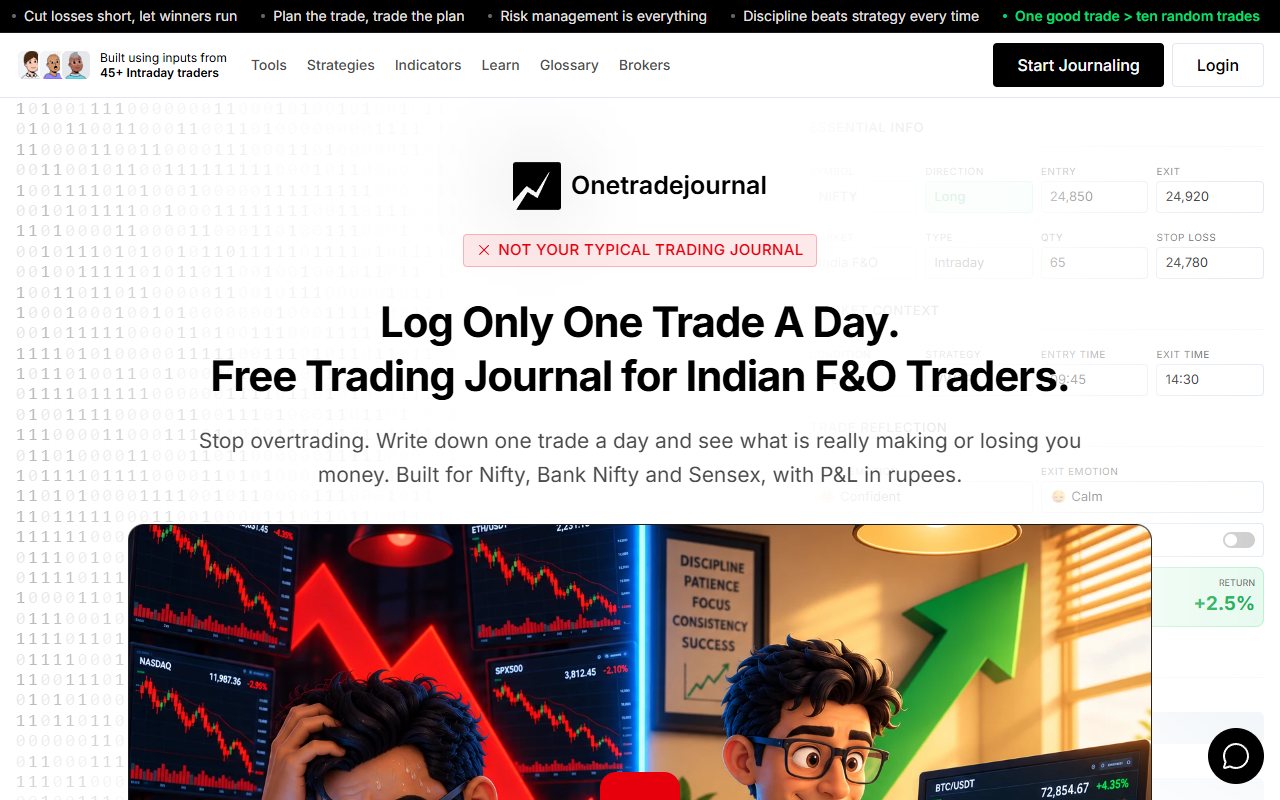
A learner calls an entry a breakout after seeing a fast Bank Nifty move. The planned condition had not appeared, but the price was moving and waiting felt hard. A useful note says that plainly. Calling the trade a breakout does not explain the urge to chase it. OTJ makes one planned trade the centre of a daily manual reflection. Write why you entered, how you felt and whether you kept the rule. This is meant to help you recognise repeated mistakes and avoid turning one uncomfortable result into several rushed entries. Free allows one trade per day per market, with free Behaviour analytics. Paid plans allow more entries. The daily habit is voluntary. It does not stop broker orders, require an order every day or guarantee that you will lose less. Tradervue has a strong route for human mentoring: a coach can read supported records and leave private comments. Its homepage also describes notes for thoughts and lessons. OTJ's daily questions can help you build an honest self-review. Tradervue may suit a trader who needs a coach to read the same wider history. ## Preserve the entry rule before asking for feedback
Consider a made-up learner who takes a Bank Nifty option entry after seeing a fast move. They call it a breakout, a move beyond a price level they were watching. The chart might show the entry price, but it cannot explain whether the planned breakout condition had occurred. Write the condition you meant to wait for. Explain why you entered before it. Include the loss you planned to allow. Without those details, a review can become a discussion about whether the trade eventually won. In OTJ, the learner can record strategy, planned stop and target, confidence, stress and impulse reason. At exit, they can add feeling, satisfaction, plan change and mistakes. Those fields help save the original reason before the result changes their memory. The app's listed mentoring route is valuable where the underlying market and records are supported. A coach can review the recorded trades and leave private comments. The mentoring page says both coach and learner need Silver or Gold. Include both plans in the budget. Write the record for someone who did not watch you trade. Explain the rule, action and reason in simple sentences. A mentor should not have to guess your plan from a screenshot or a familiar strategy name. Start the habit with a trade you have already taken. Explain the rule in a sentence, then name the moment you left it. A note such as “I did not want to miss the move” gives you and a coach more to inspect than a winning or losing label. There is no need to invent a trade for the diary. Manual entry is deliberate in OTJ, rather than a step you have to finish before the real review. Writing the risk, contract and feeling is part of that review. Free Behaviour analytics then helps you return to recorded emotions and habits. Read the notes behind any pattern; a small sample does not prove why all future trades will behave. Tradervue's notes can carry personal context too. Supported imports save collection work, but the raw executions alone do not establish a private motive. Human feedback also needs your explanation. Keep it visible even if you later realise the first description was incomplete. ## Review a disciplined loss and a lucky plan change together
A useful coaching exercise is to select two made-up records. In the first, the trader follows a clear entry and stop plan and loses. In the second, they enter late, move the stop and finish with a profit. The aim is to separate outcome from process. Ask what was knowable at the time of each choice. Did the trader use the intended risk? Did they recognise the invalidation condition? Did they explain a change before knowing the final result? Avoid rewriting the second trade as a good choice merely because it paid. OTJ's daily habit fields and free Behaviour review can organise that exercise. Its flags may draw attention to possible revenge trades, size spikes or excess activity. The flags are review prompts based on logged data; they can be wrong and do not control broker orders. A mentor using the app can bring another perspective to supported records. The value lies in the specificity of the feedback. A comment about the recorded entry rule is more useful than a general instruction to be more patient. Keep the review question consistent. If one trade uses a different strategy or market condition, note the difference rather than forcing a direct comparison. Two examples can teach you about those choices. They cannot prove a rule for all future trades. ## Check the market before you share a trade
The official supported assets page describes U.S. equities and options, active forex pairs and listed futures from several overseas markets. Its published list does not show NSE or BSE index-option coverage. This gap matters for an Indian options trader. It does not mean every person living in India is an unsuitable Tradervue user. A trader based in India may trade a listed global instrument. Where you live and what you trade are different checks. It does mean a Nifty or Bank Nifty trader should obtain confirmation before building their review around the app. Ask about the exact contract, quantity handling, price charts and the import route from the actual broker. Do not infer those details from the general word options. OTJ has Nifty, Bank Nifty, Sensex and Indian stock/F&O entry fields, plus expiry selection and lot-size hints. Estimated brokerage and other required charges help with manual review. Those estimates remain different from a broker contract note and should not be presented as a certified account record. For a reader whose main task is Indian F&O review, that familiar manual workflow is a practical OTJ advantage. For a reader trading supported U.S. stocks or futures and working with a coach, the app's listed approach may be a better fit. ## The price page and free-limit help show different parts
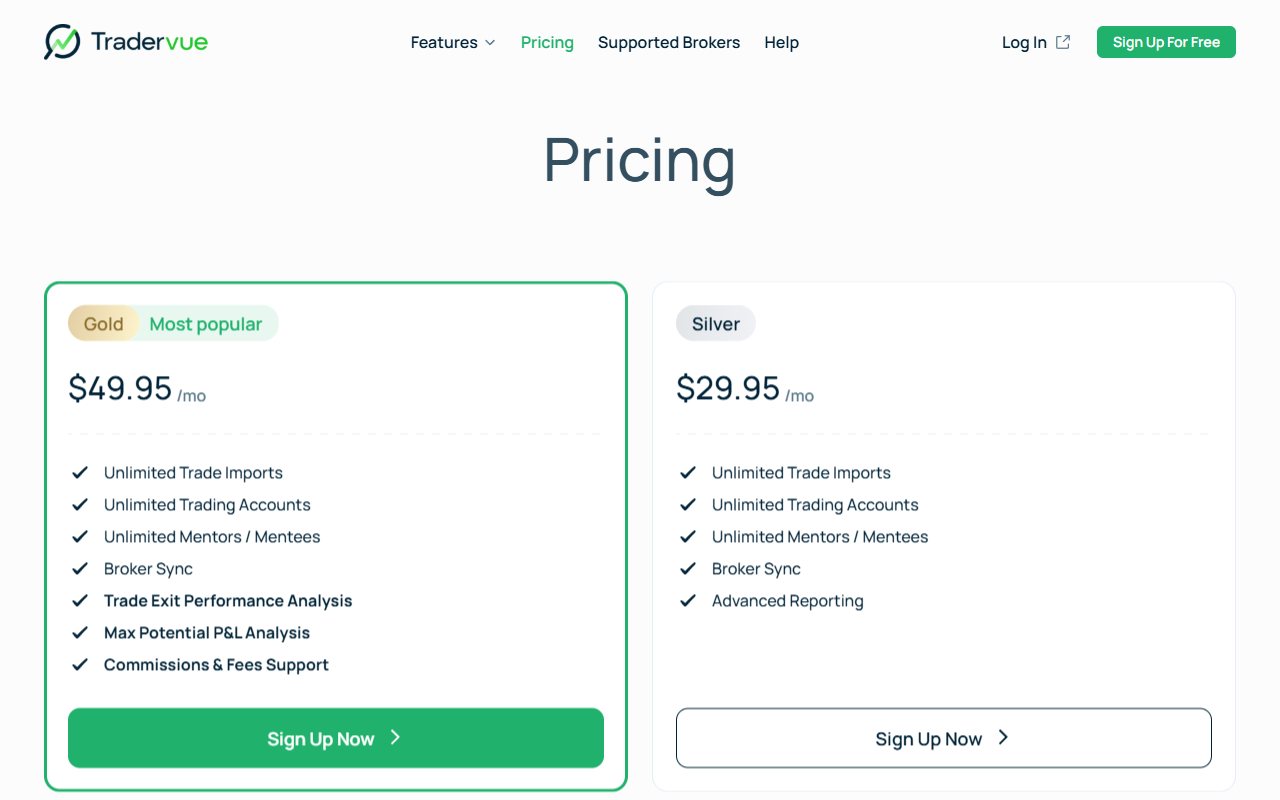
The app's main pricing page prominently displays Silver at $29.95 per month and Gold at $49.95 per month. The page focused on those paid plans when rechecked on 12 October 2026. A missing free card should not automatically be interpreted as no free access. Its official import quota help explicitly describes a free plan limited to thirty grouped trades imported per calendar month. It also explains that the allowance concerns when trades are imported, not when the trades occurred. This detail can matter during a move from another journal. Importing old history can use the month's allowance even if the positions were taken long ago. The quota counts grouped trades. It does not count every fill separately. A fill is one completed part of an order. OTJ's free plan is capped at one trade per day per market. Its paid India plans are ₹499 monthly, ₹1,299 quarterly and ₹3,499 yearly. Behaviour analytics is free. Paid plans allow extra trades, AI and voice tools with usage limits; consult the paid plan page for the current options. These are different ways to limit a free workflow. A handful of active days may fit a monthly quota but exceed a daily allowance. One daily trade may fit OTJ well. Compare your actual pattern of activity and avoid selecting only pleasant trades to fit either limit. ## Importing records and writing context are separate tasks
The app's broker help page documents broker/platform imports and a generic import format. For supported instruments and source files, that can make collecting history easier than entering every record manually. OTJ has no broker sync or CSV import. Paid voice fill assists the form, but you still check the fields and supply the context. It is not a bulk transfer path for a large existing archive. If you already have years of notes, keep the old journal. Start a new review period in OTJ. Its CSV, JSON and TXT exports help you retain the new records you create. Do not assume the product will ingest an export from another journal. If you are considering the app, test a small supported sample first. Compare quantities, times and grouping with the broker history. Check that the generic format records your instrument correctly. The format does not add support for a new market by itself. Once the numbers are in place, add reasons. An importer knows the money event it received. The execution data alone does not establish whether you hesitated, abandoned a rule or felt rushed. Add that context in Tradervue's notes or OTJ's manual entry so the review has more than prices and times. ## Match the analysis to the plan and market
The official pricing page describes advanced reporting and lists MFE/MAE statistics, with exit results features highlighted for Gold. Those tools deserve attention if the instrument and data coverage fit your needs. OTJ shows daily profit and loss, results over time and the share of trades that won. Drawdown shows a fall from an earlier high. Profit factor compares total wins with total losses. Strategy and time views use your saved trades. Risk-based results need a valid stop. The exit comparison uses your saved target, not every historical market price. For a made-up early exit, a target-based review asks whether the action matched the plan. MFE/MAE reports study the biggest moves in favour of and against a position while it was open. Those are different questions. Choose the report that answers the question you actually intend to study. A coach may use either kind of evidence, but they should know where the number came from. A target entered after the session is not the same evidence as a target planned before entry. A missing record can change a summary even if all the visible charts look orderly. ## AI access is a separate consideration
OTJ offers paid Ask Your Journal, Trading Mentor, chart screenshot analysis and pattern feedback. These features can help organise your own entries and questions. They can be wrong and cannot know unrecorded trades or thoughts. The reviewed pages did not confirm a similar built-in Tradervue AI feature or its plan limits. This remains unknown. If AI is essential to your choice, confirm the current product and plan directly. AI review and human mentoring also do different work. An assistant can help find a set of entries quickly. A coach can ask you to explain a rule or question your reason. Neither makes incomplete money records complete merely by discussing them. Ask OTJ's paid AI to find saved plan changes. Ask it to separate your notes from its guesses. Open the entries it references. That gives you a way to check the answer instead of trusting it because it sounds sure. ## Choose a daily self-review or a shared coaching routine
OTJ fits an Indian options learner who wants to reflect before the next urge becomes an unplanned order. Its prompts help save the plan, feelings and change in risk. The focus is a repeatable daily habit with free Behaviour review, rather than a promise that writing makes every decision correct. Tradervue is worth considering when your supported market and coach already fit its workflow. Imports, notes, private comments and read-only mentor access are meaningful strengths. Confirm the exact Indian instrument and both users' paid access before relying on that route. For a practical check, read a losing entry and a winning rule break. Can you tell what each trader meant to wait for? Can you name the reason for acting early? A coach should be able to question the written rule, rather than guess it from the eventual outcome. Keep the full financial record even when your daily note highlights one trade. If other entries occurred, they still matter. OTJ's free cap is one trade per day per market, and paid access permits more. Select the routine that helps you return to an honest explanation, with no claim that a journal or a coach can remove trading risk.
Sources and limits
We checked these public product pages and OneTradeJournal’s current product on 12 October 2026. We did not test a private Tradervue account, broker import, payment or AI answer. Check current plans and limits before paying.
- Tradervue Silver and Gold pricing · Checked 12 October 2026
- Tradervue official free import quota · Checked 12 October 2026
- Tradervue supported markets · Checked 12 October 2026
- Tradervue supported brokers and generic import · Checked 12 October 2026
- Tradervue private coach instructions · Checked 12 October 2026
- Tradervue trade notes and daily reflection · Checked 12 October 2026
A journal cannot promise trading profits. AI answers and fee estimates can be wrong. Check trades and charges against broker records. This page does not give trading, investment or tax advice. Competitor names and website pictures do not imply a partnership or endorsement. Any example is an explanation, not a private account screenshot or a real customer result.